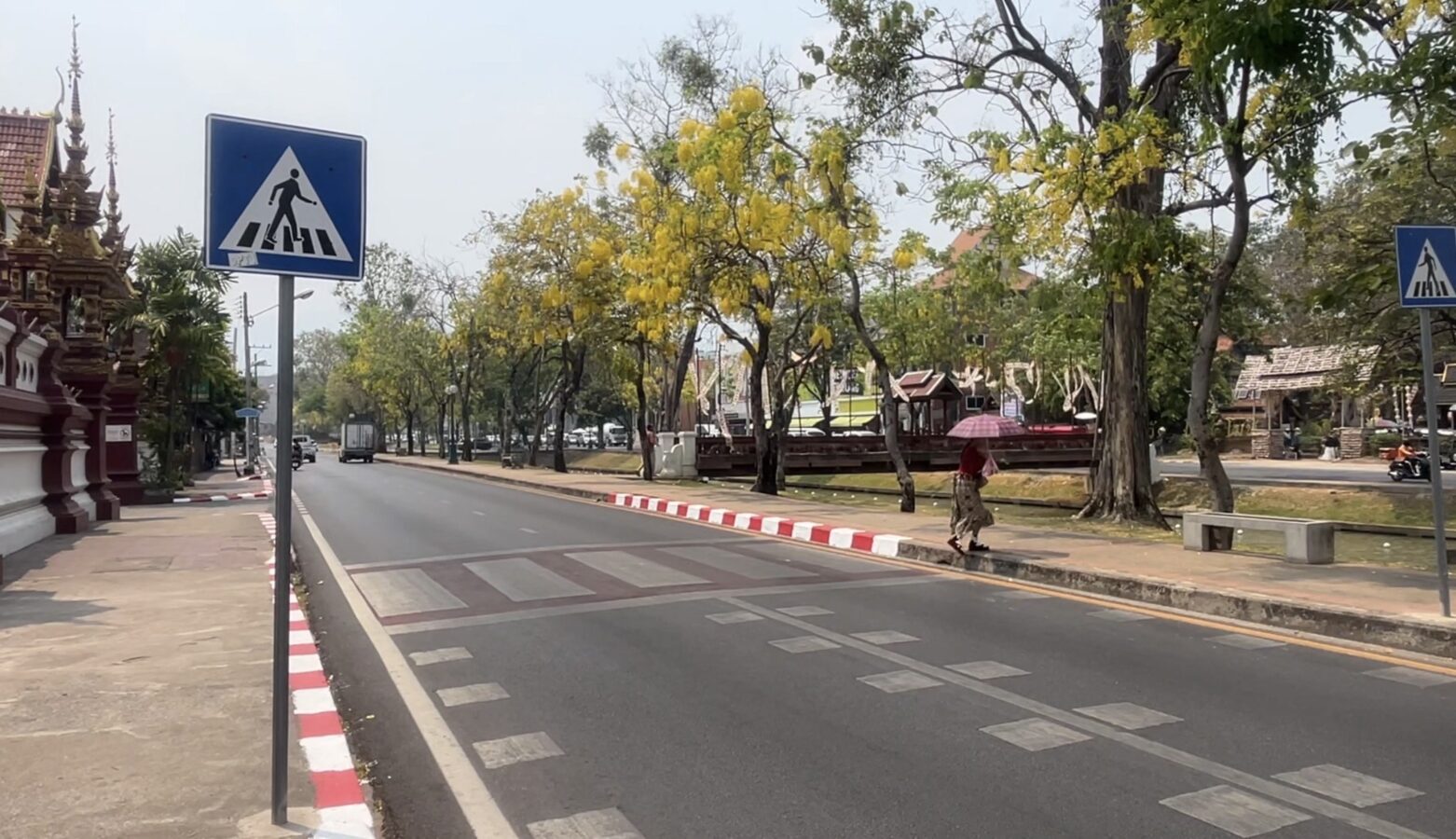
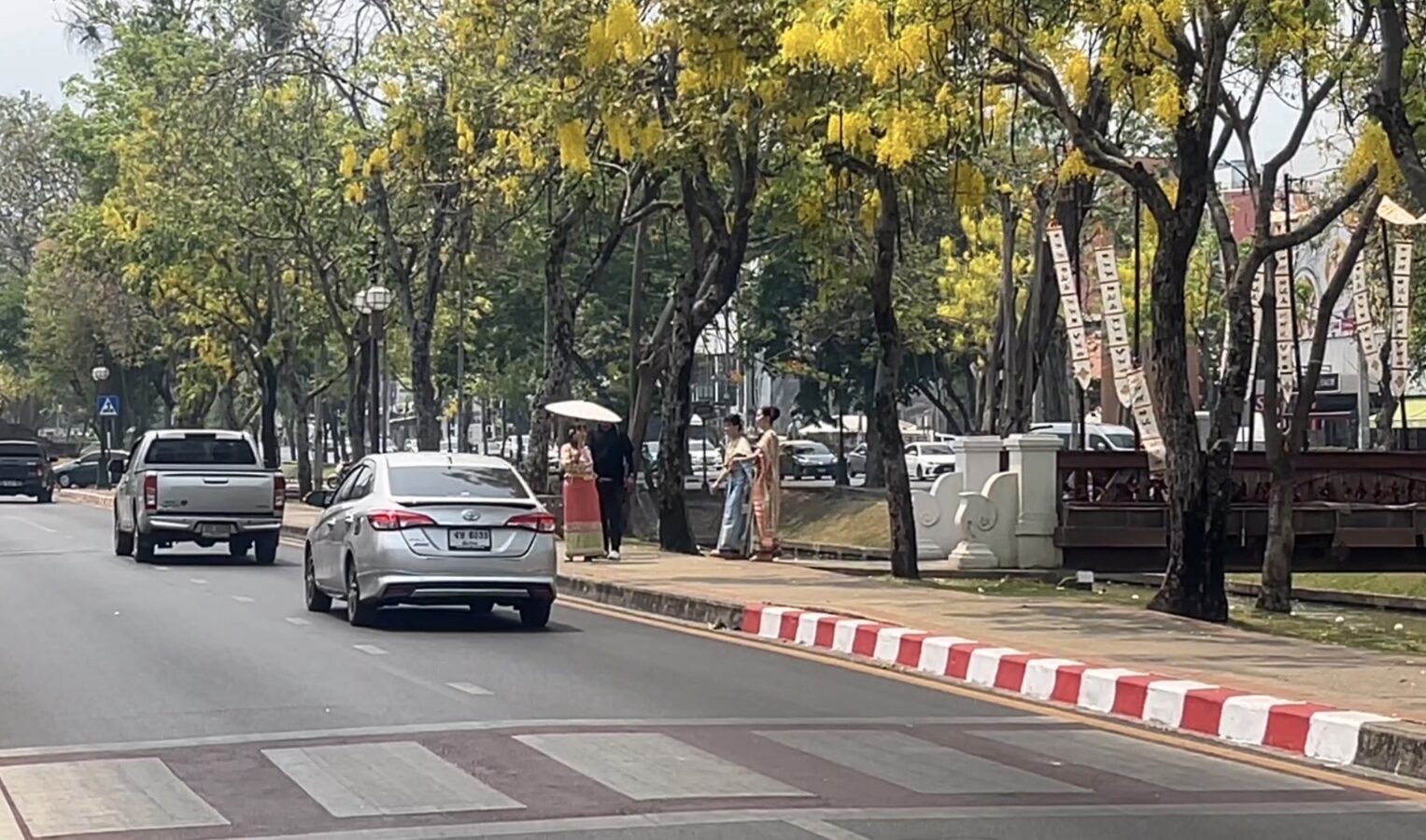
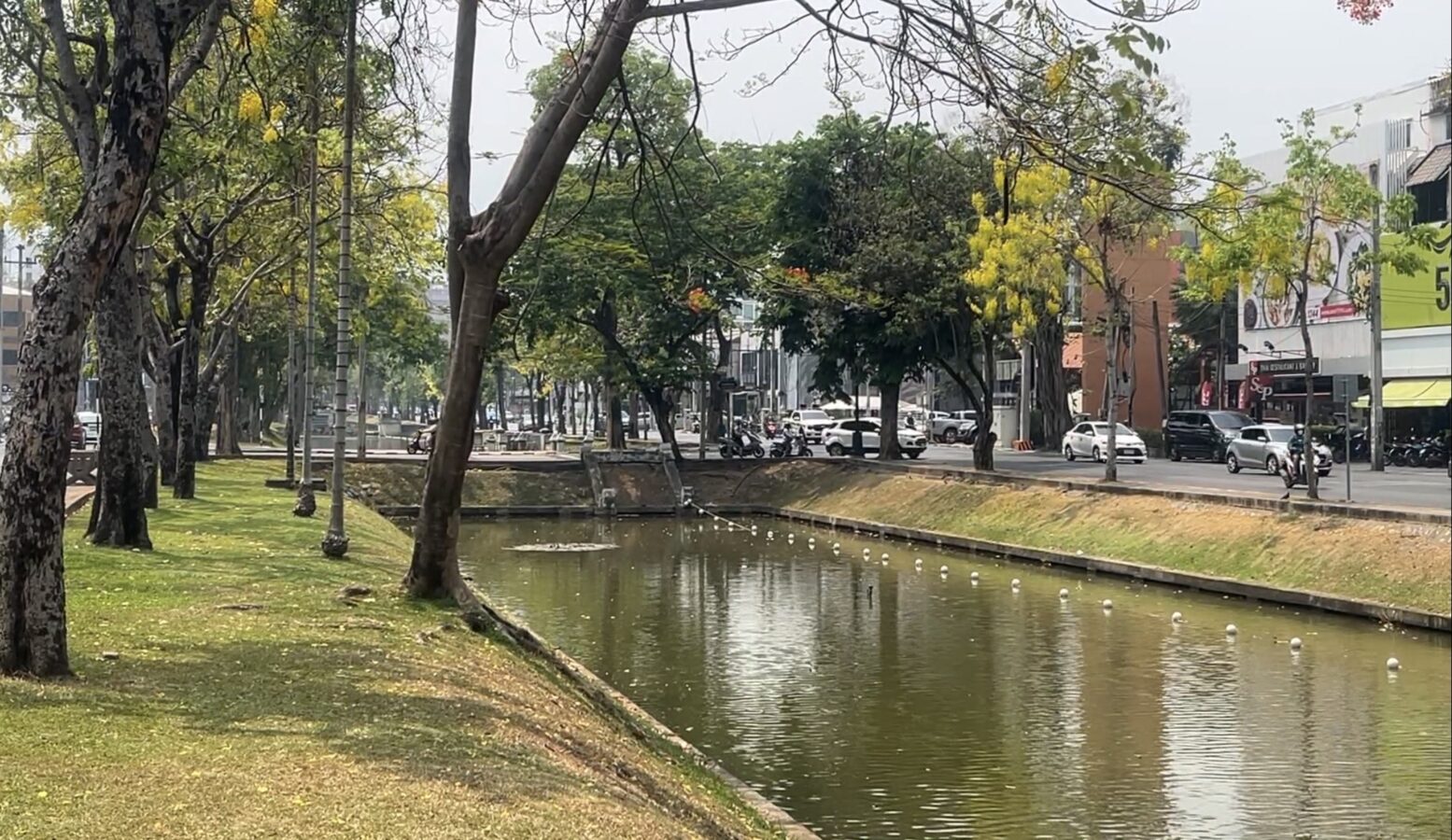
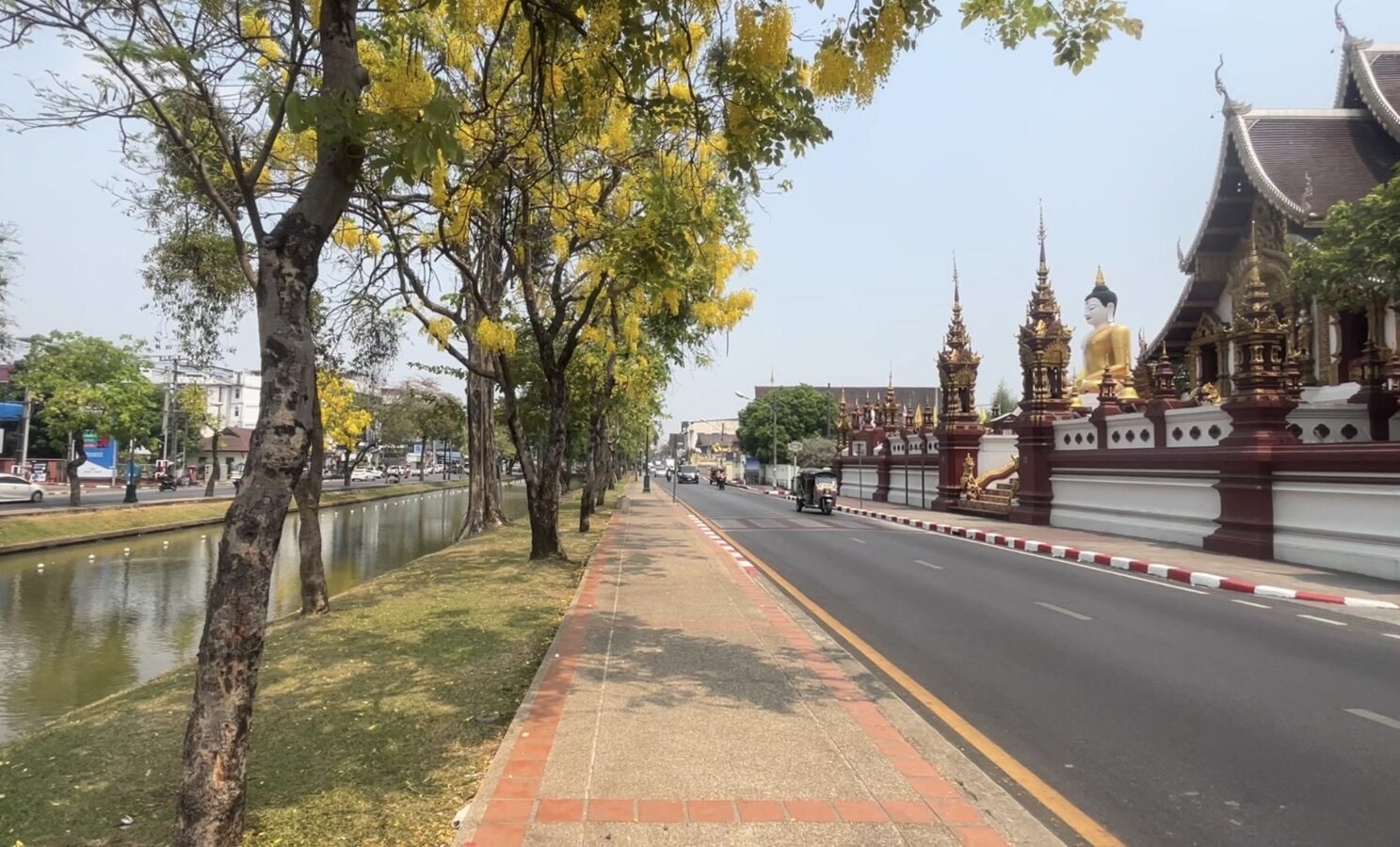
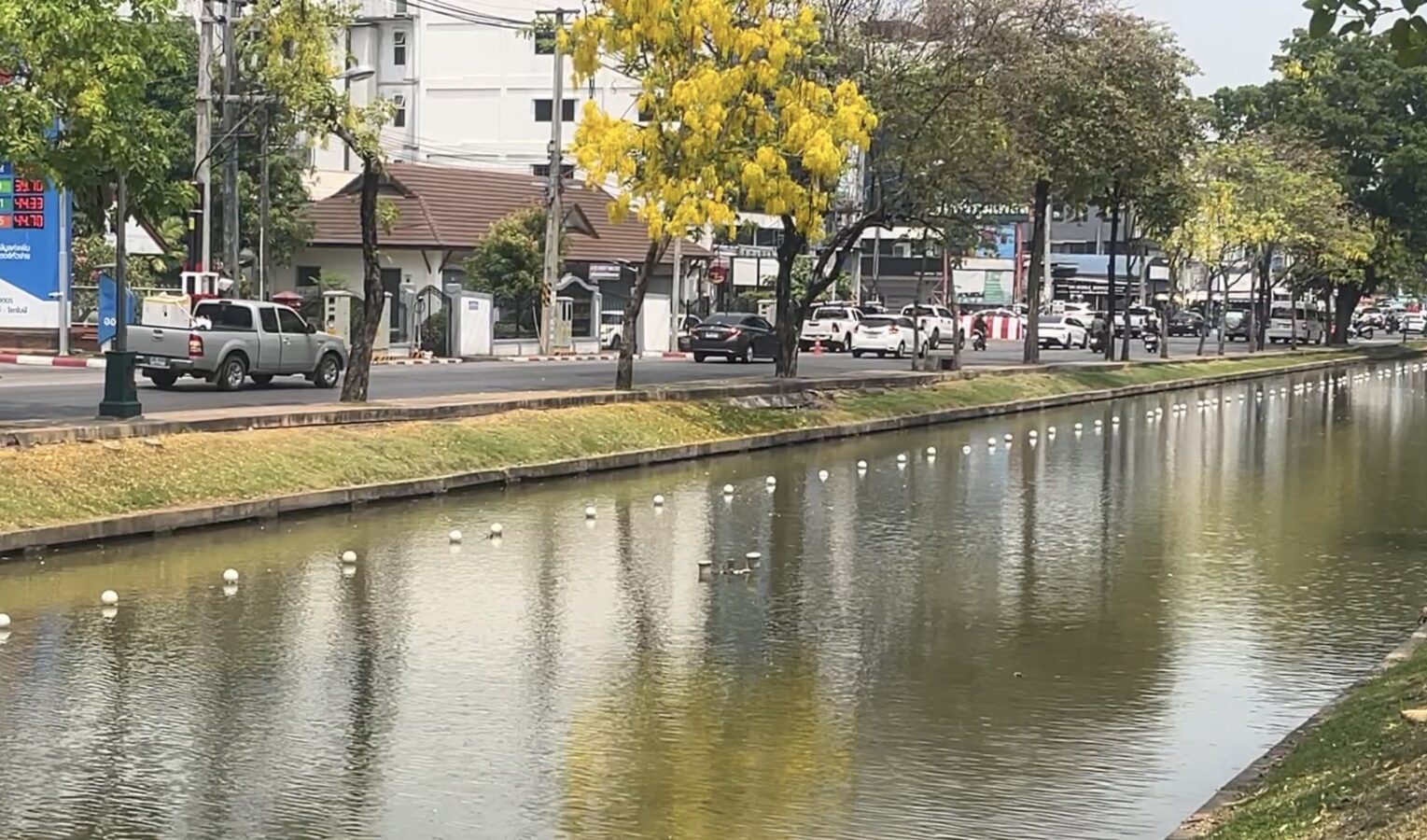
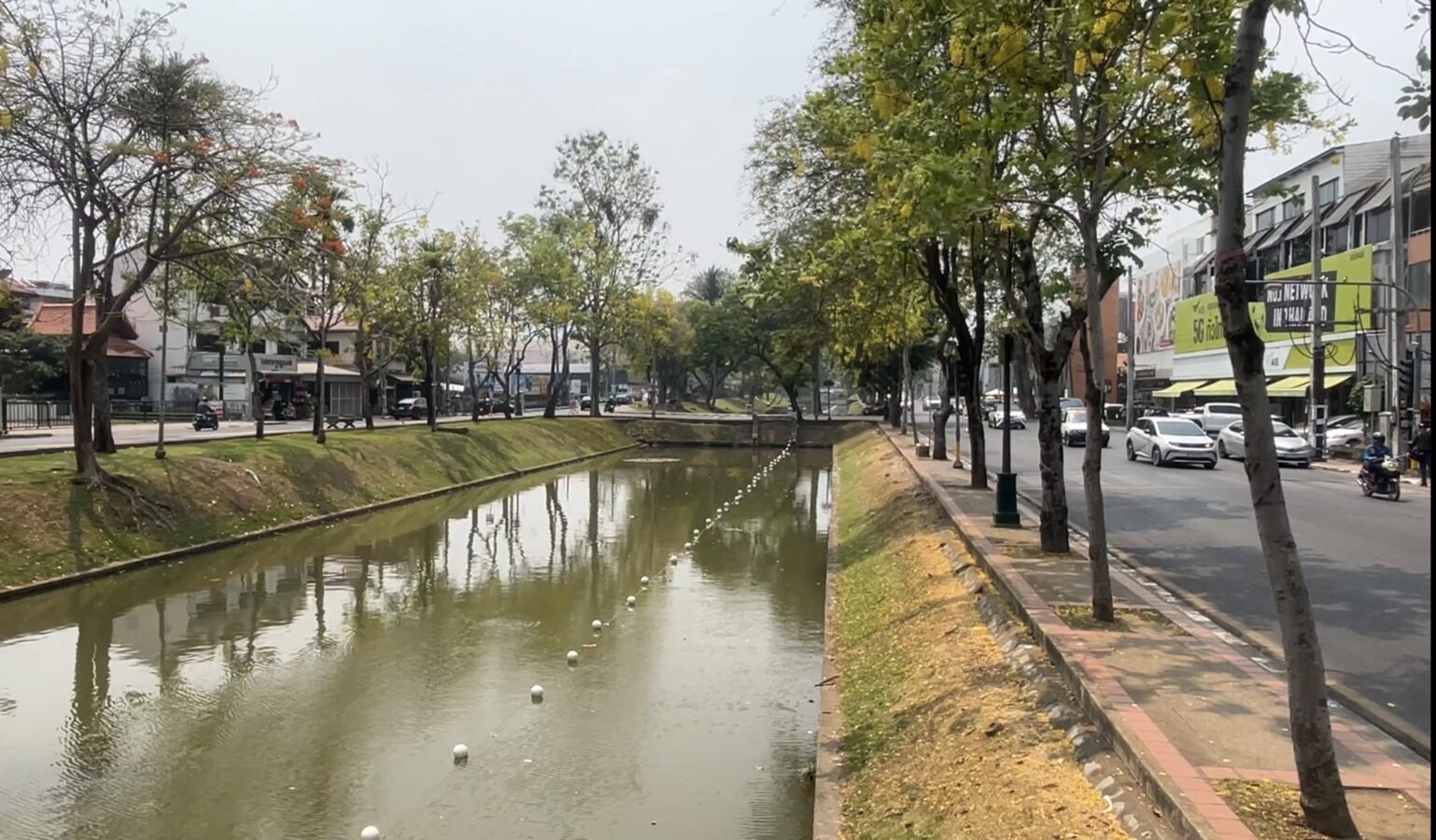
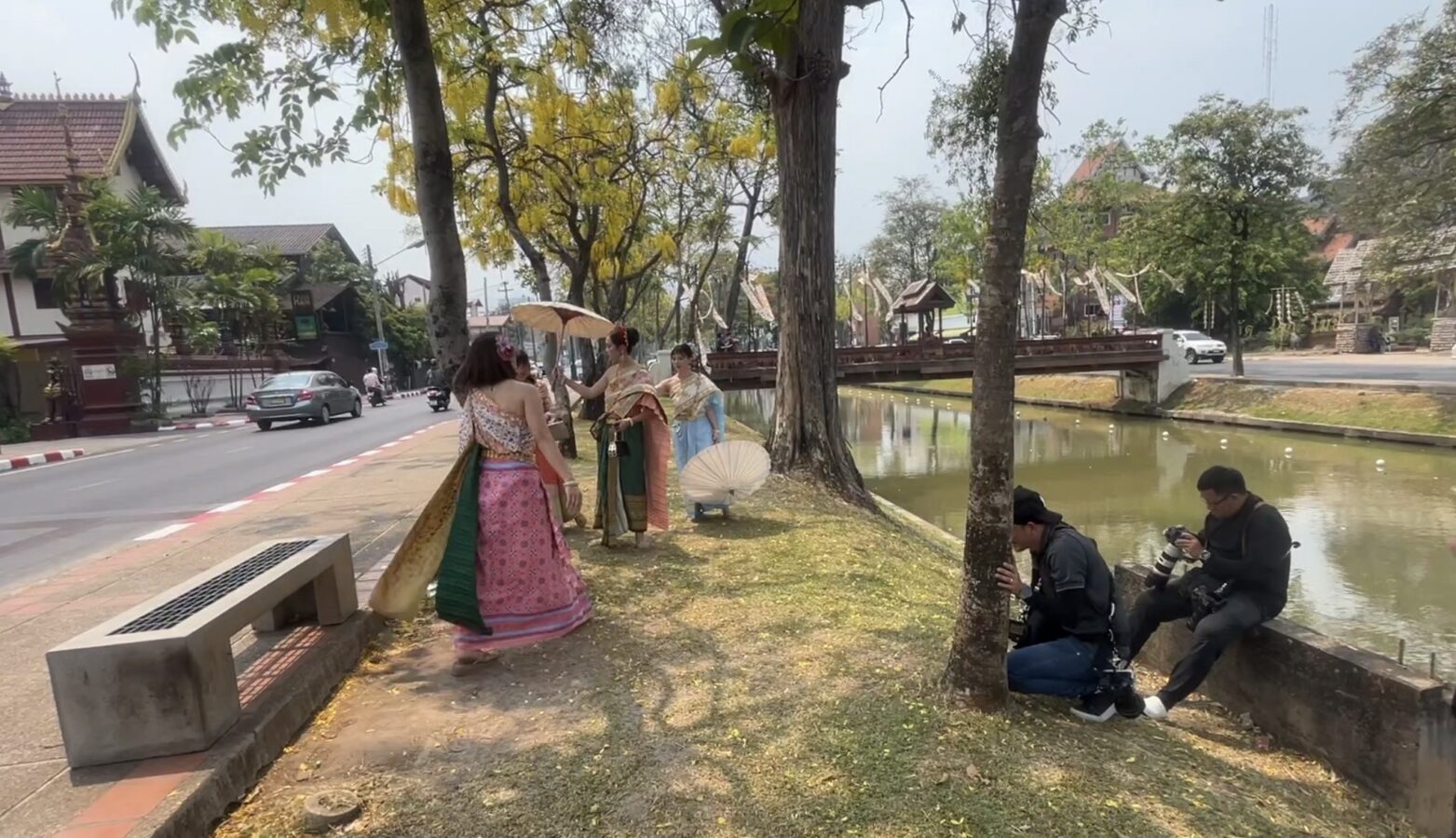
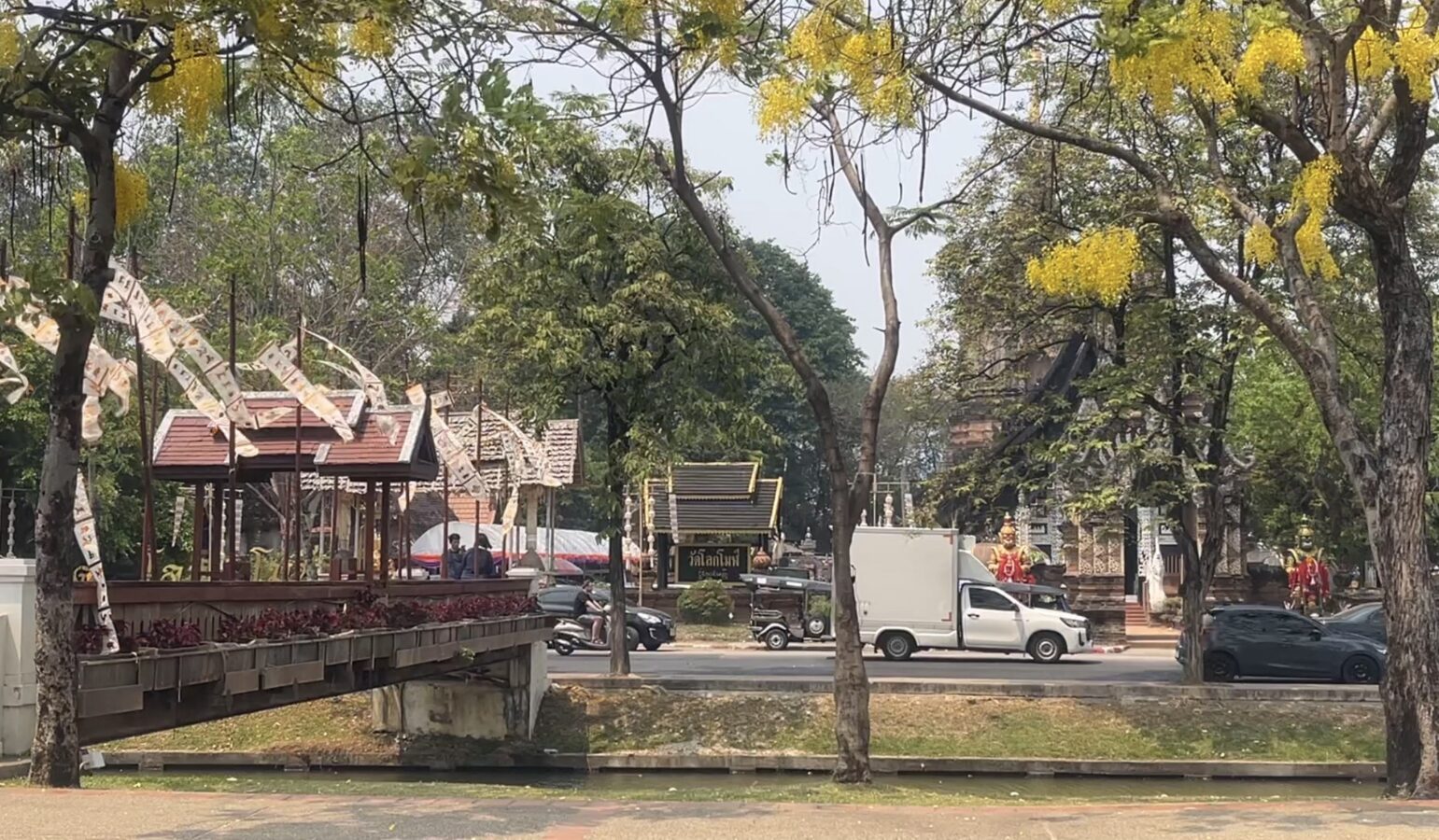
Golden cassia trees are blooming along Chiang Mai’s moat, their yellow flowers a familiar signal that Songkran is approaching — but this year, the festive mood is tempered by concerns over tourist numbers, air quality and the state of the moat water itself.
Hotel bookings for the long Songkran holiday currently stand at just 50–60%, according to Paisan Sukcharoen, acting chairman of the Chiang Mai Tourism Industry Council — well below the 80–90% occupancy typical for this period in previous years. Middle Eastern tourist bookings dropped by around 10% following regional instability, and news of Chiang Mai’s PM2.5 levels ranking among the worst in the world has prompted a further wave of cancellations and delayed bookings, with travellers holding off to see whether air quality improves before the festival. Some recovery has been seen in early April, with Asian tourists beginning to book, but numbers remain subdued.
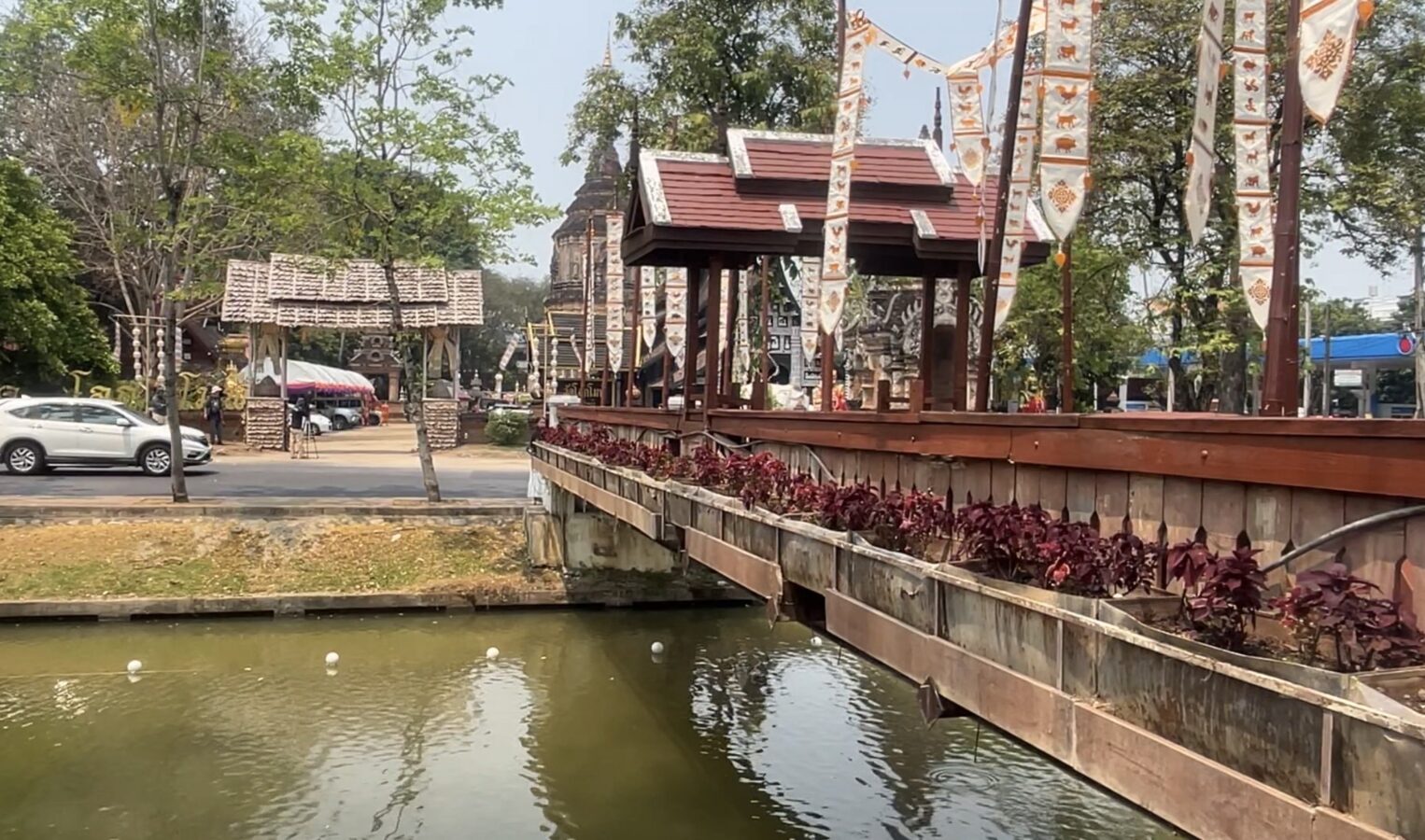
Closer to home, residents have been raising concerns on social media about the quality of the moat water ahead of the water fights. Multiple points along the moat have been observed to look unclean, and the Chiang Mai Municipality has yet to carry out its usual annual maintenance — draining the old water, dredging the channels and pumping in fresh irrigation water — along with water quality testing that is typically completed before Songkran each year.
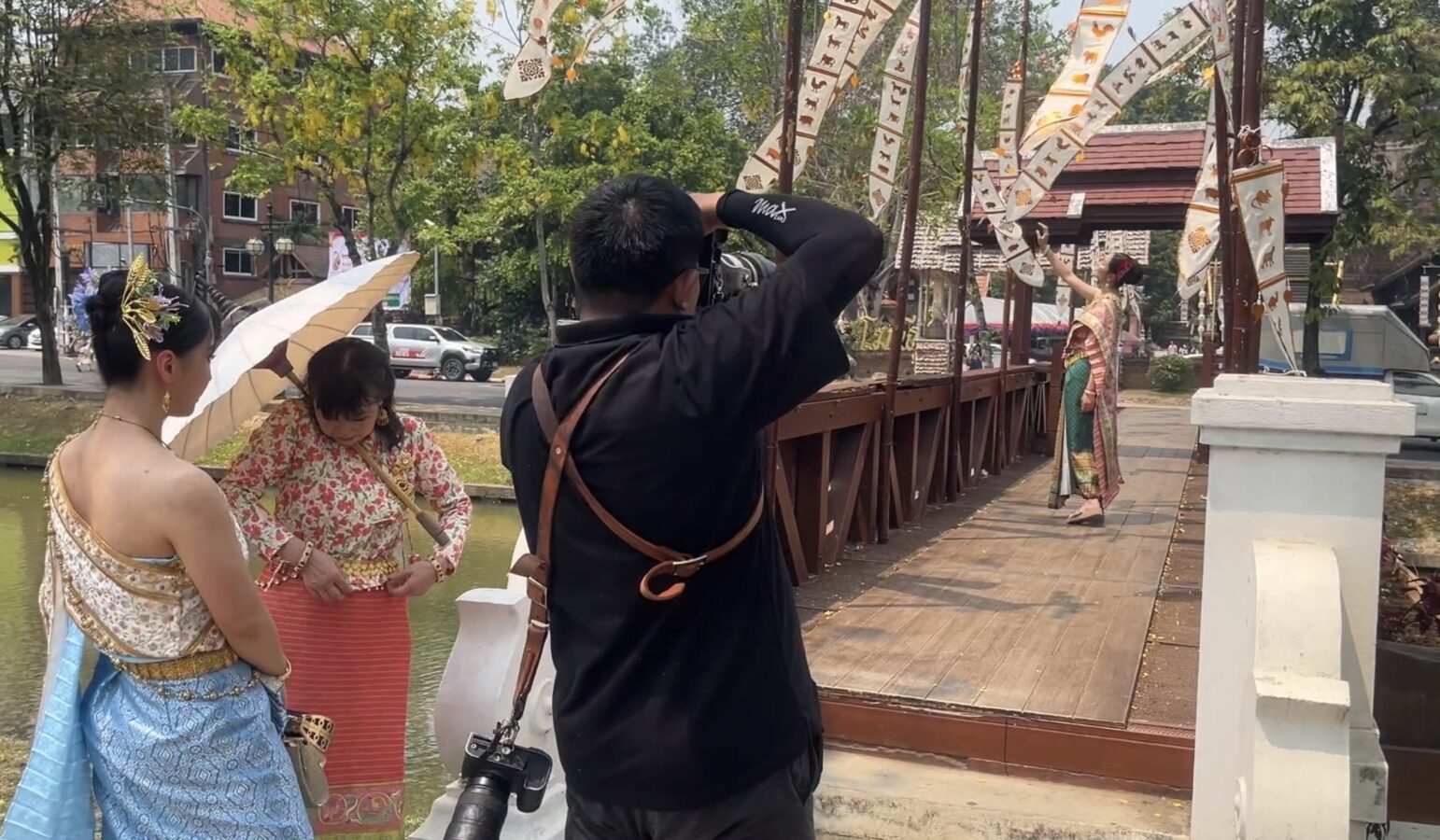
Despite everything, the moat remains a draw. The stretch in front of Wat Lok Molee on Maninopparat Road has become a popular photography spot, with the temple’s Lanna-style architecture framed by the moat and flowering cassia trees pulling in both Thai and foreign visitors — even against a backdrop of haze pushing daily PM2.5 readings above 100 micrograms per cubic metre.
Another hugely popular area will be the less-patrolled sold Chiang Mai Lamphun road, where locals head now to get back to a more free-style Songkran water throwing.