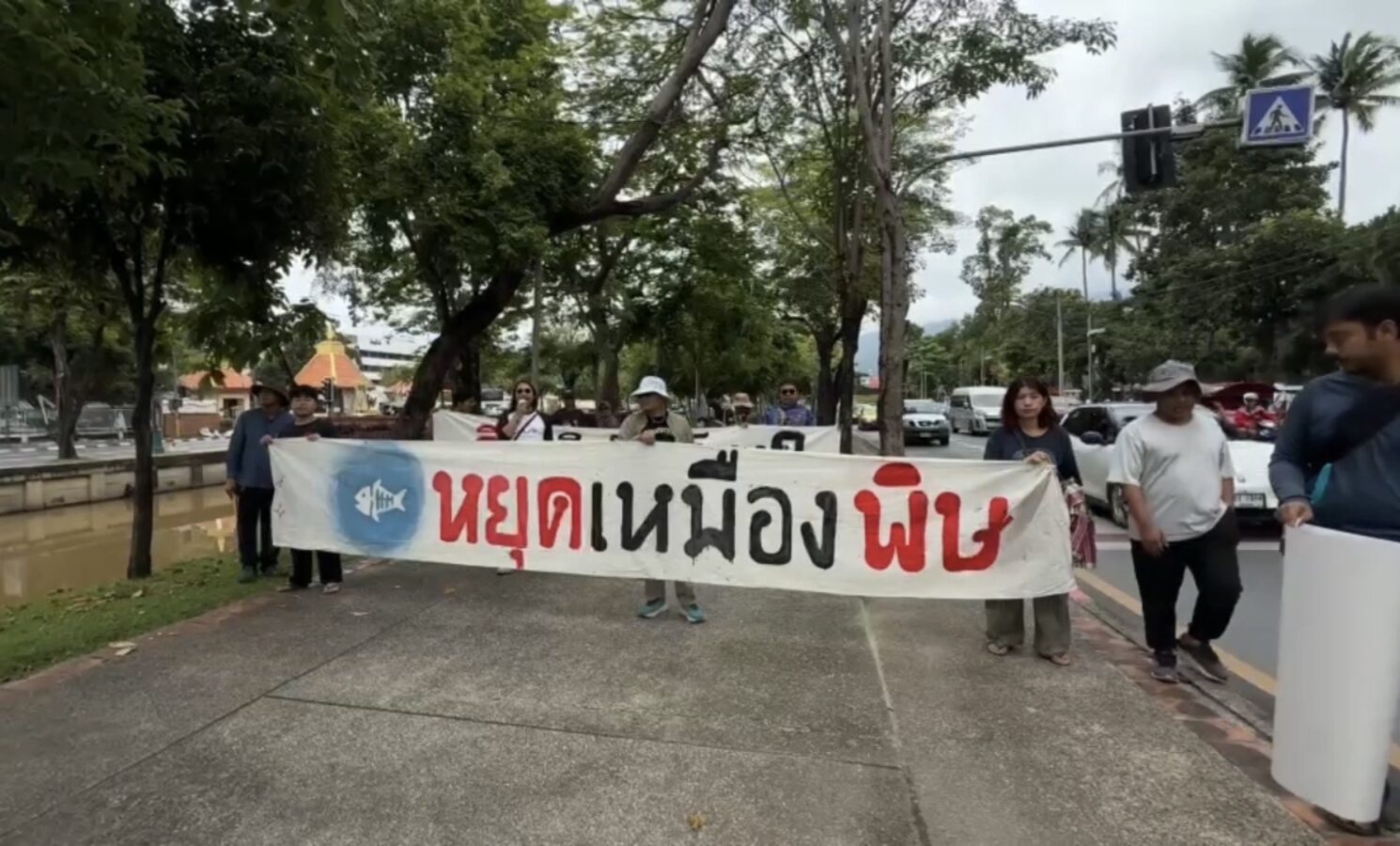
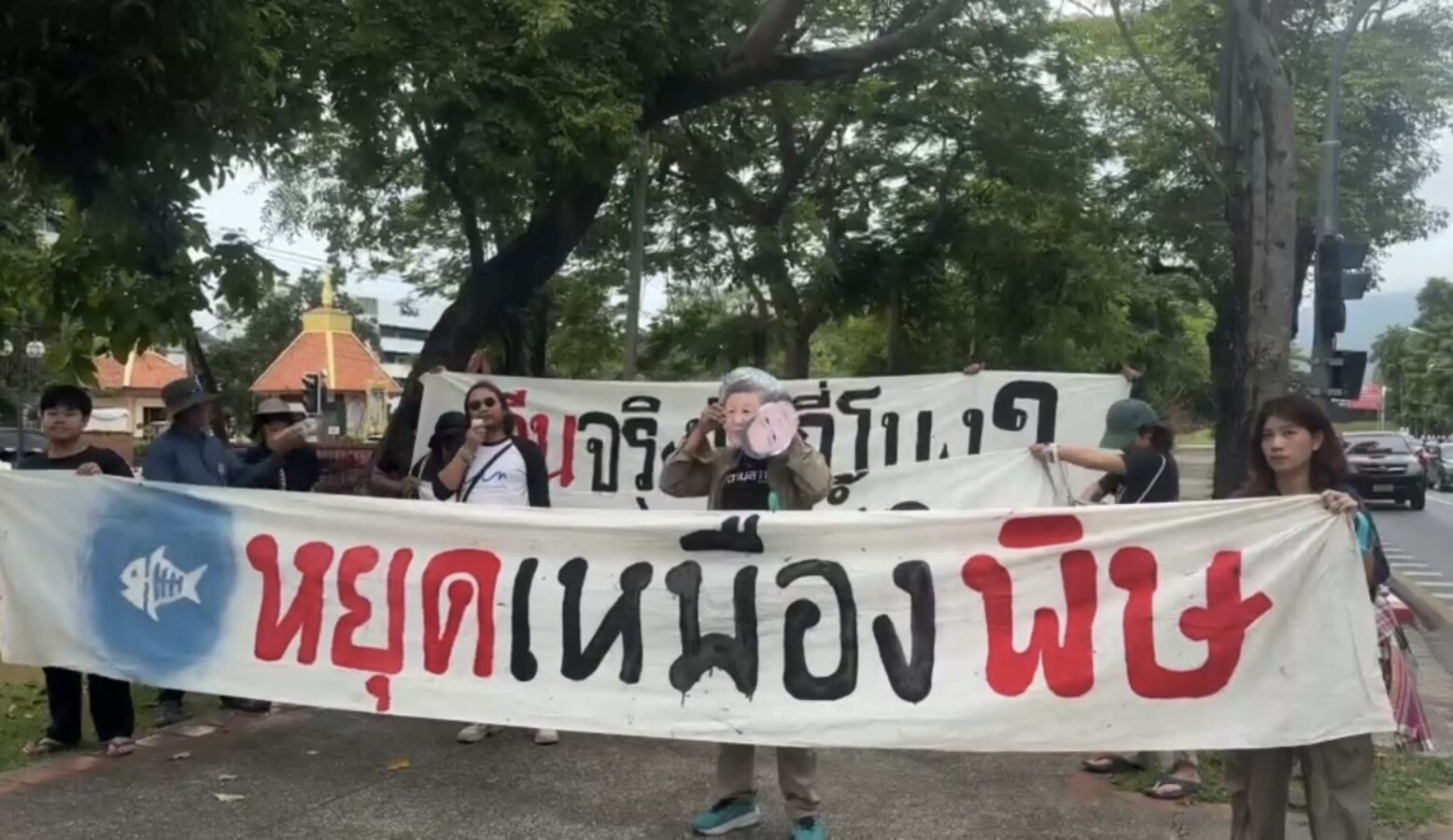
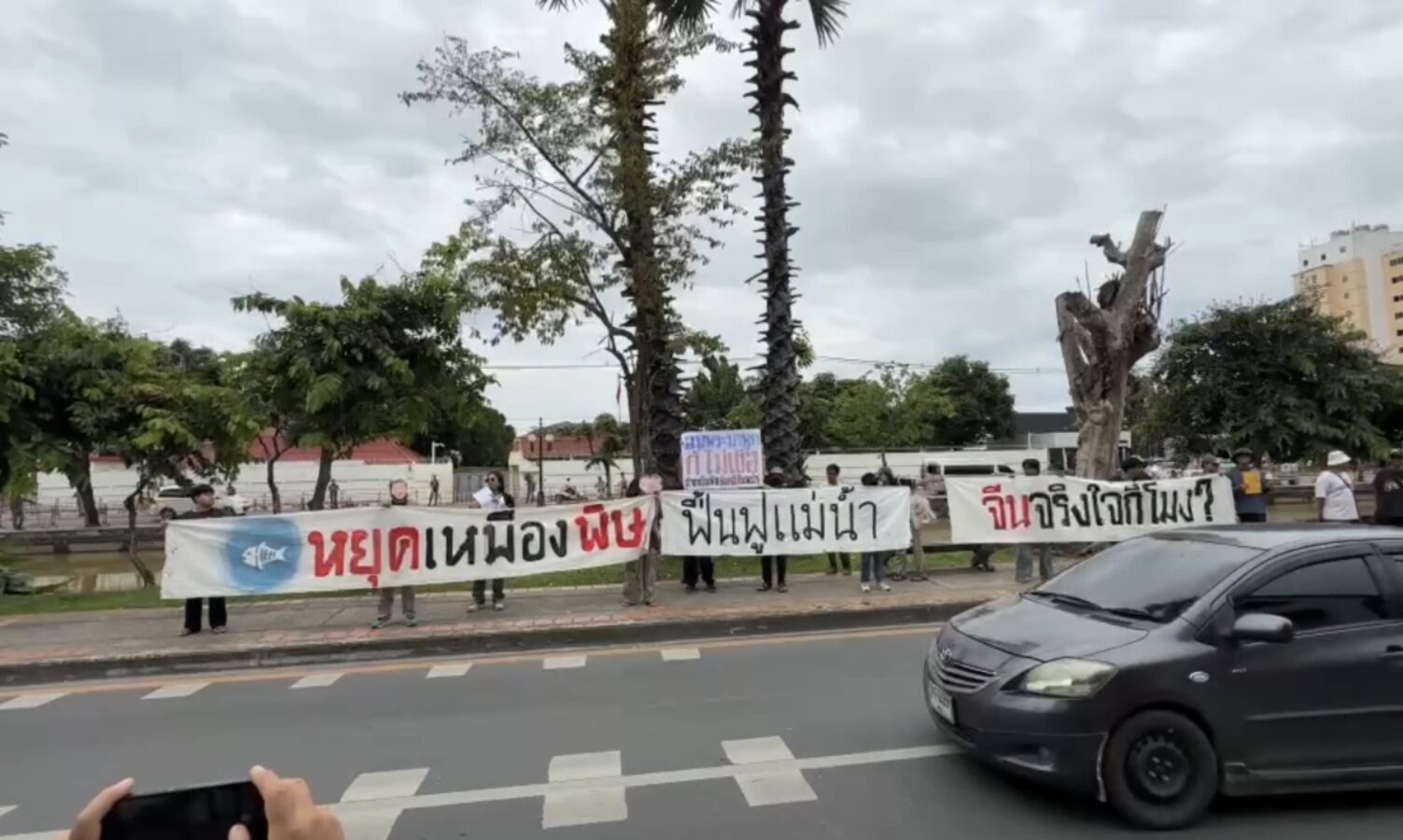
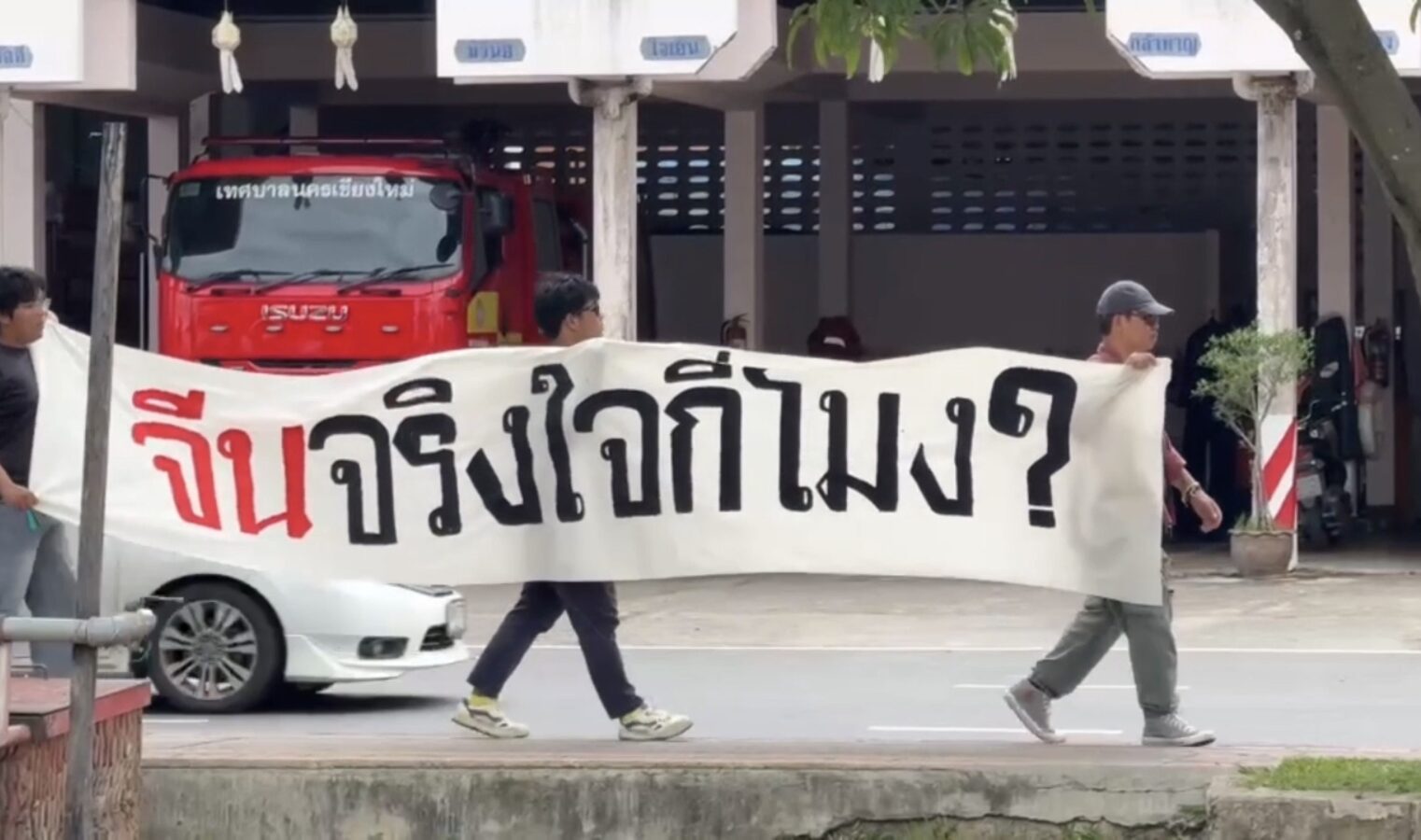
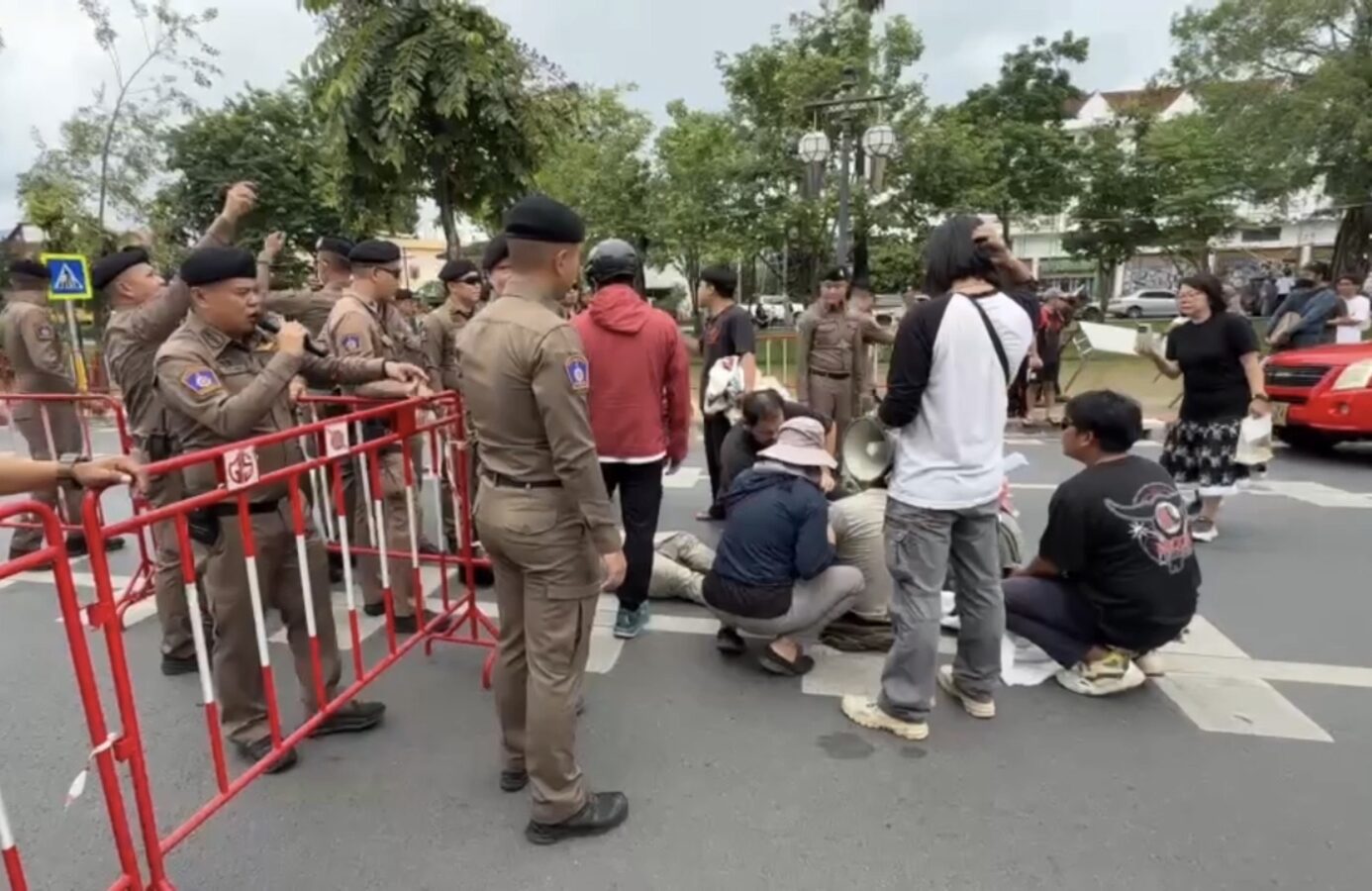
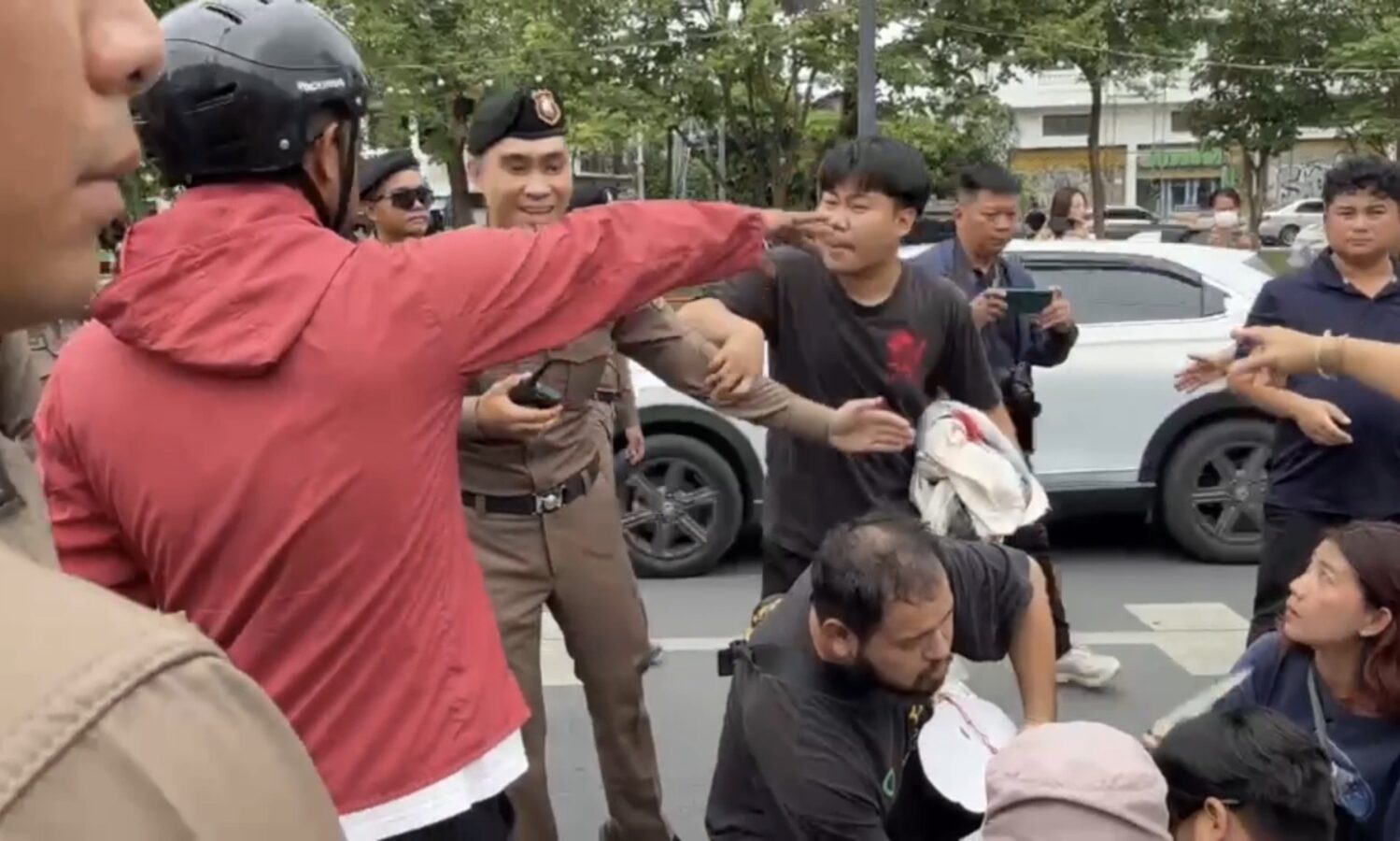
Civil society and environmental groups marched through Chiang Mai’s moat area this morning (6th July) to deliver a letter to the Chinese Consulate-General, demanding action on cross-border pollution they say originates from Chinese-backed mining operations in Myanmar.
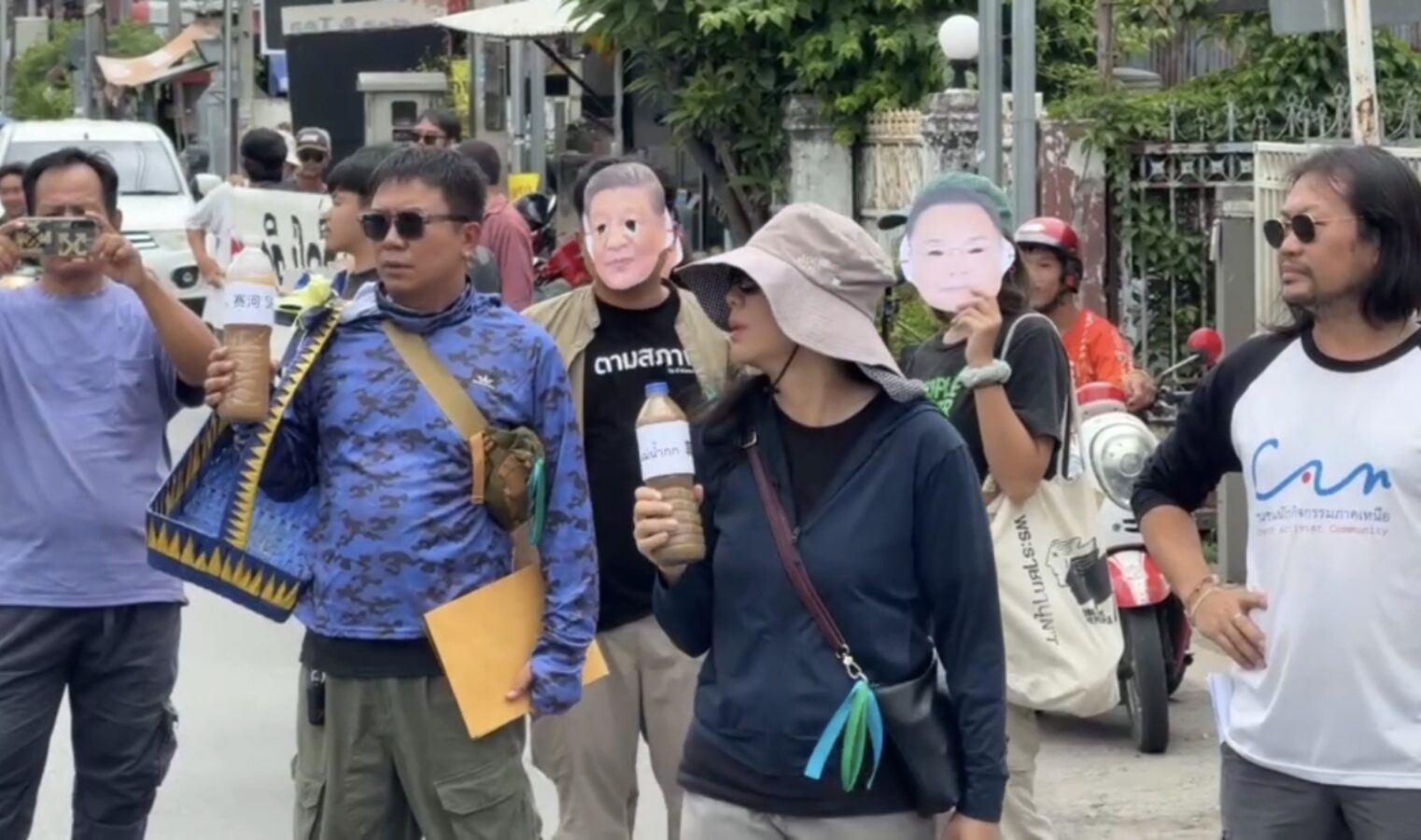
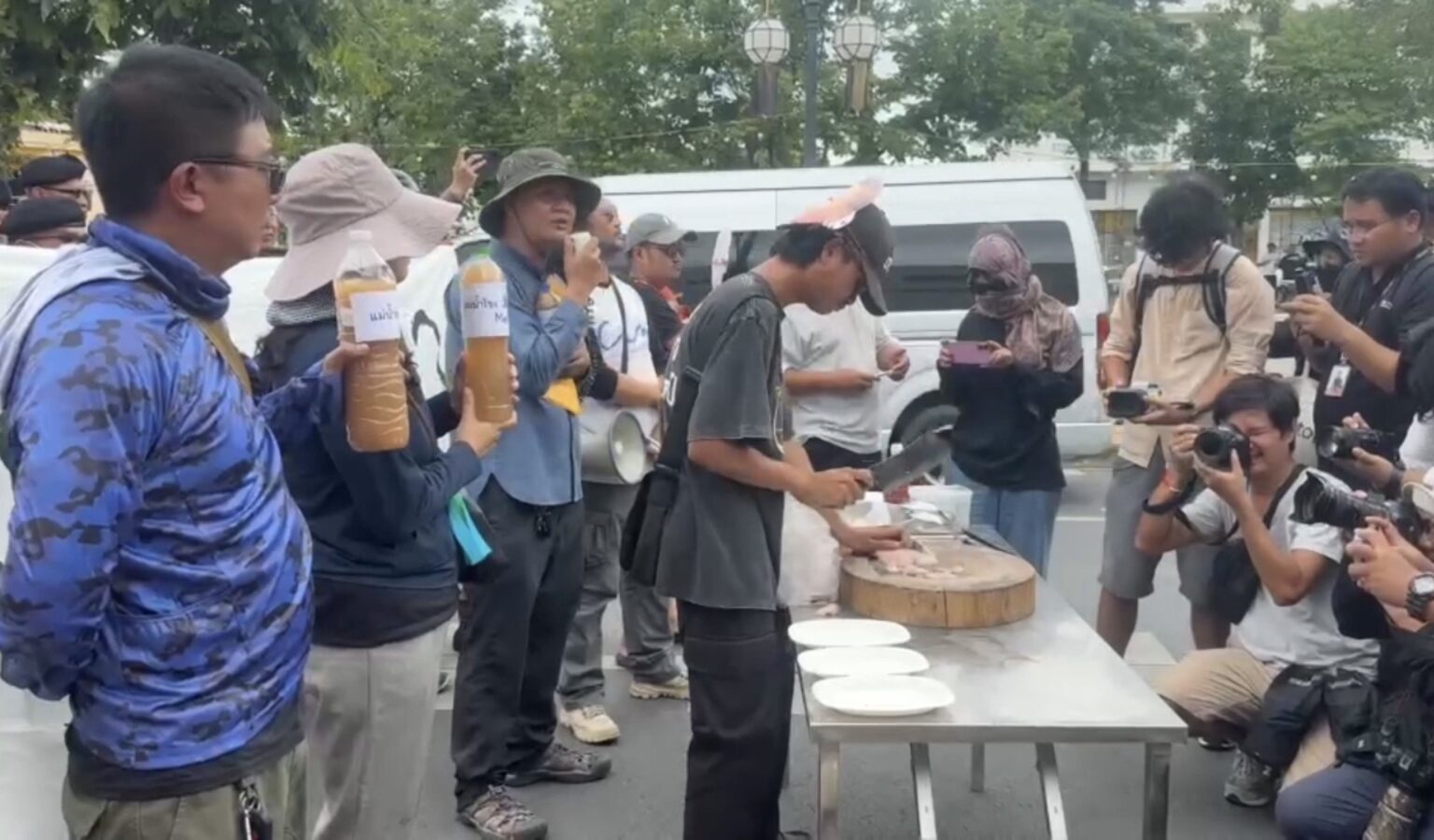
The protest focused on contamination affecting several transboundary rivers including the Kok, Sai, Ruak, Mekong, Salween and Kraburi, which campaigners say is damaging ecosystems and livelihoods across northern Thailand’s river basin communities. Organisers presented water samples to consulate officials and staged a symbolic act: preparing laab from fish caught in the Kok River, to highlight risks to public health and the environment.
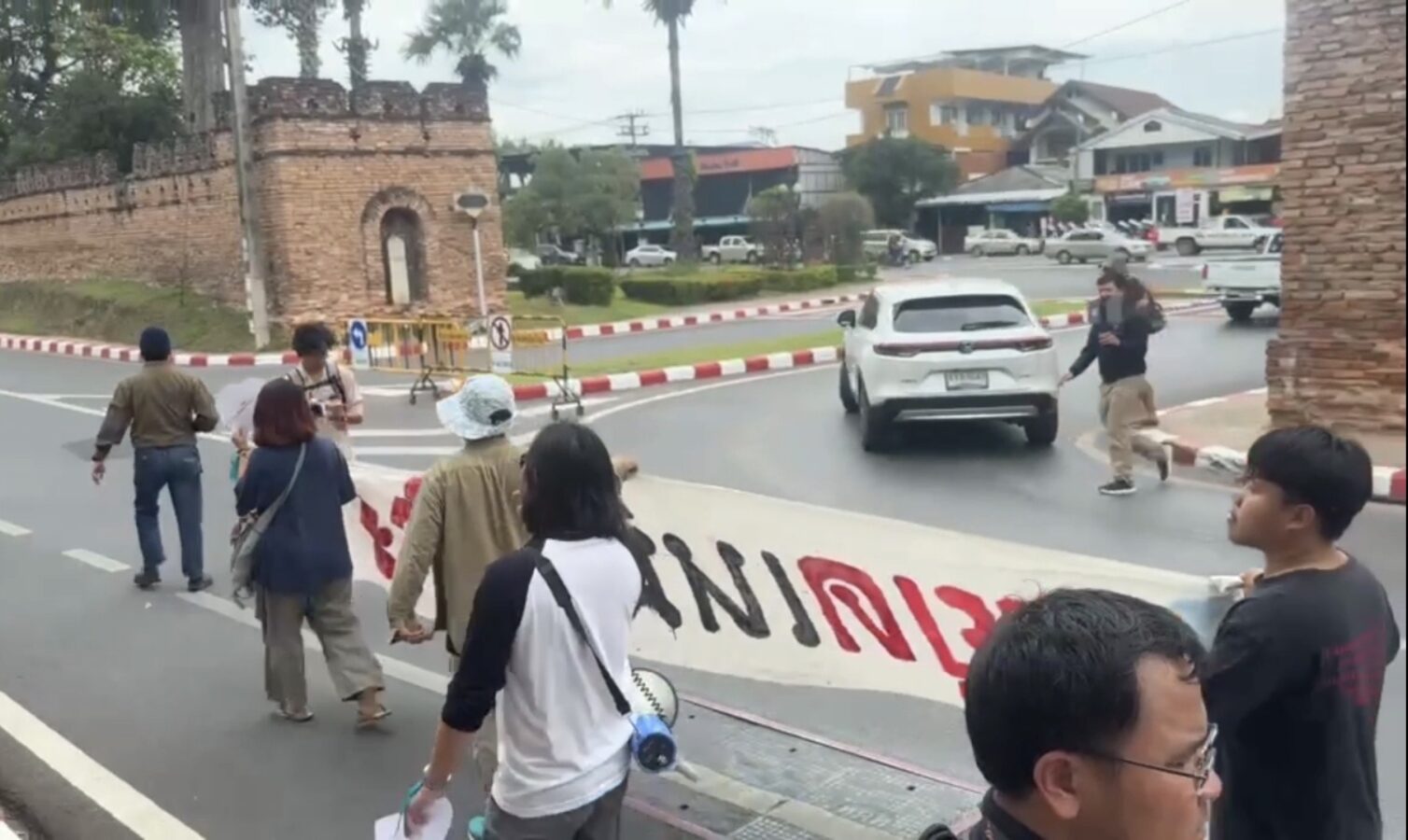
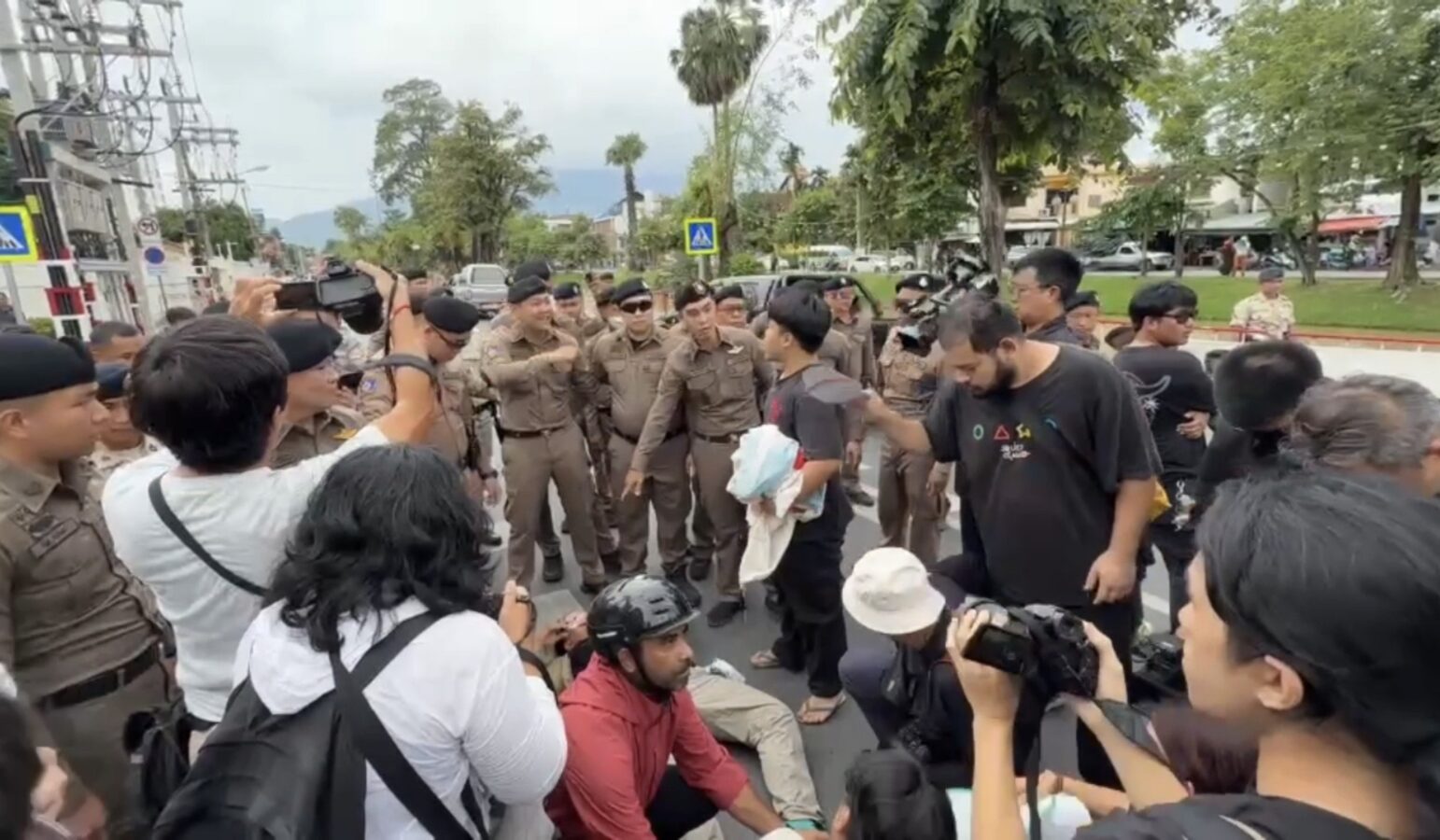
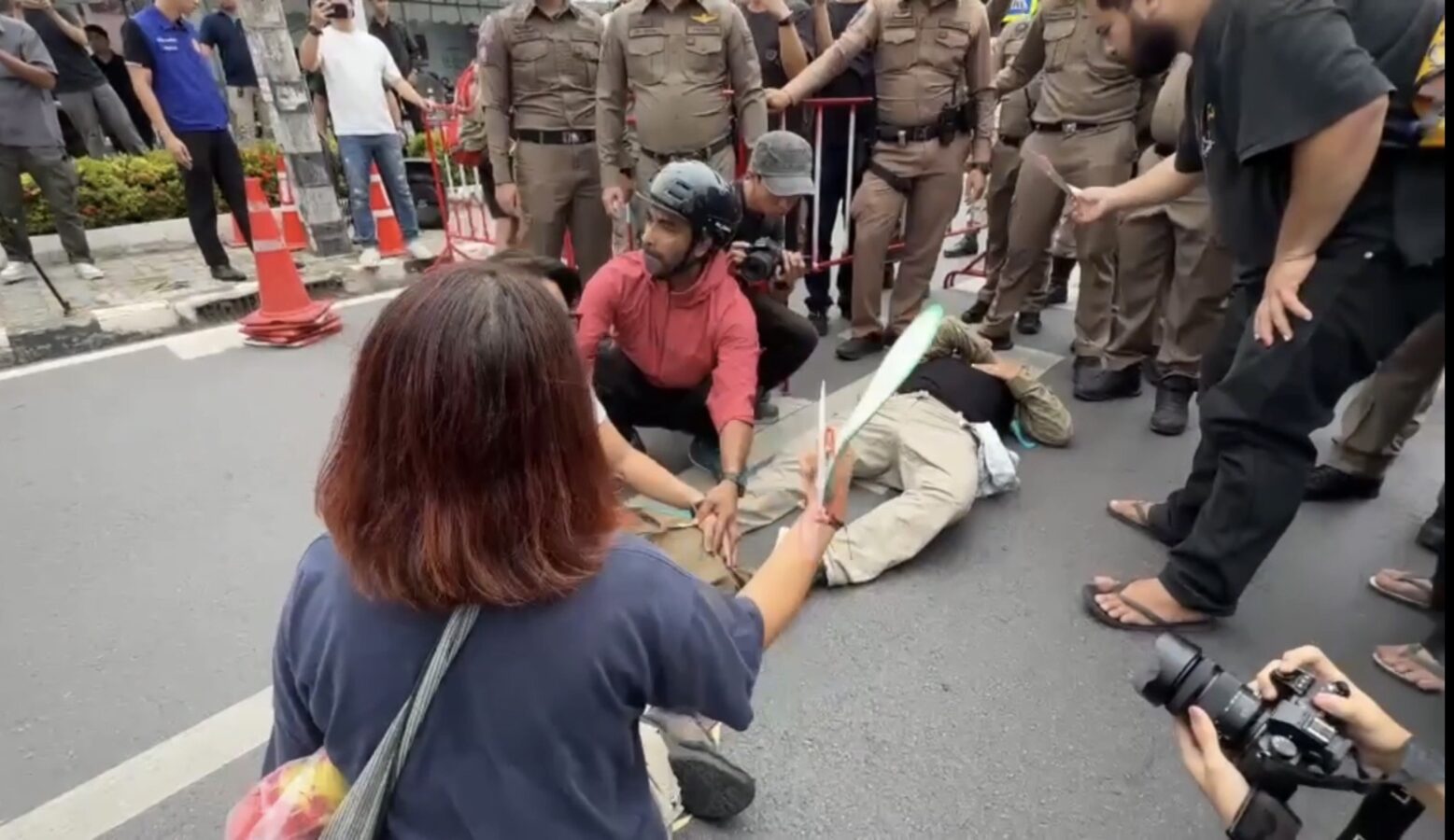
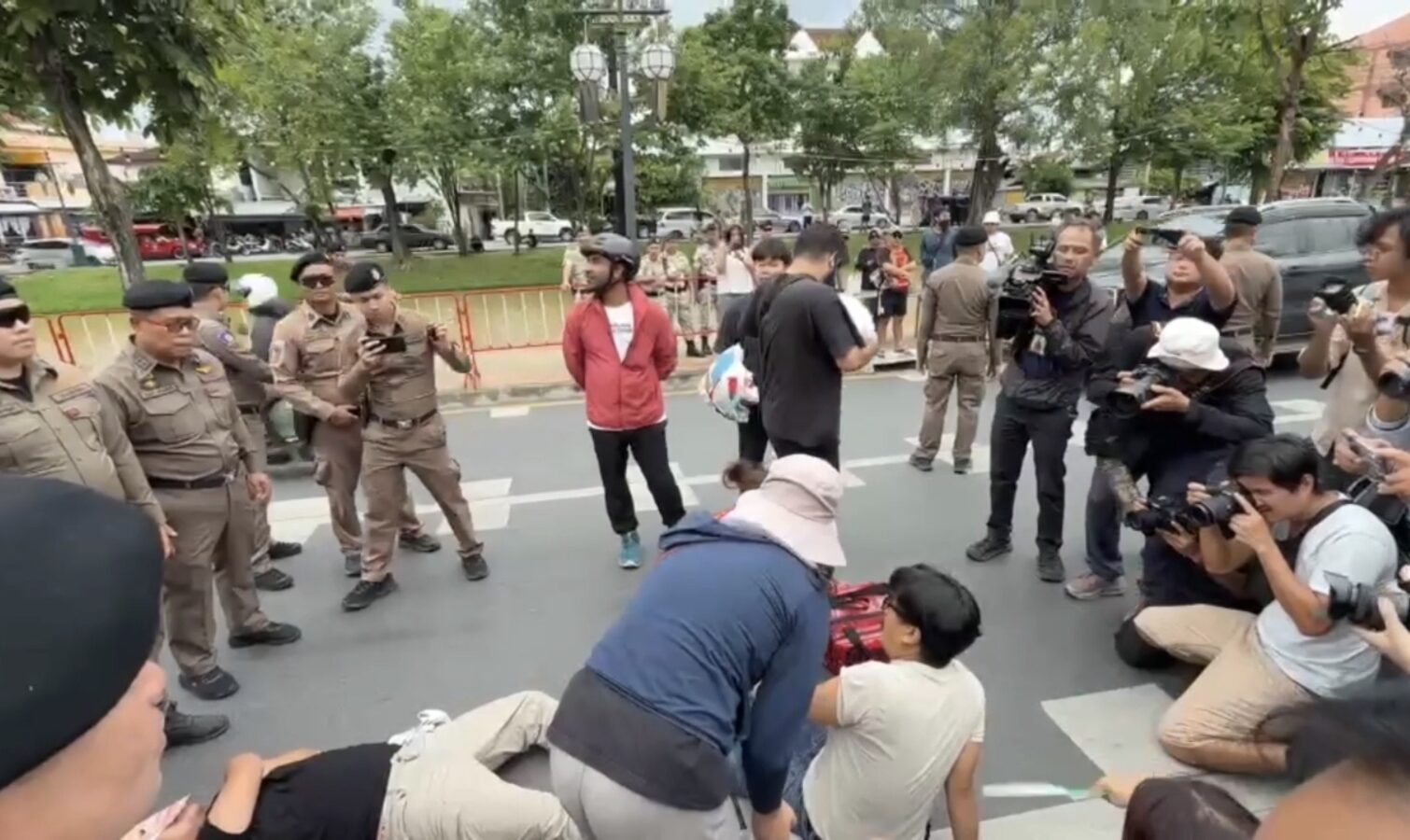
Tensions rose when demonstrators tried to move beyond the area designated by police, leading to a scuffle as officers held the line and pulled back protest signs. Two participants were injured and taken to hospital by ambulance.
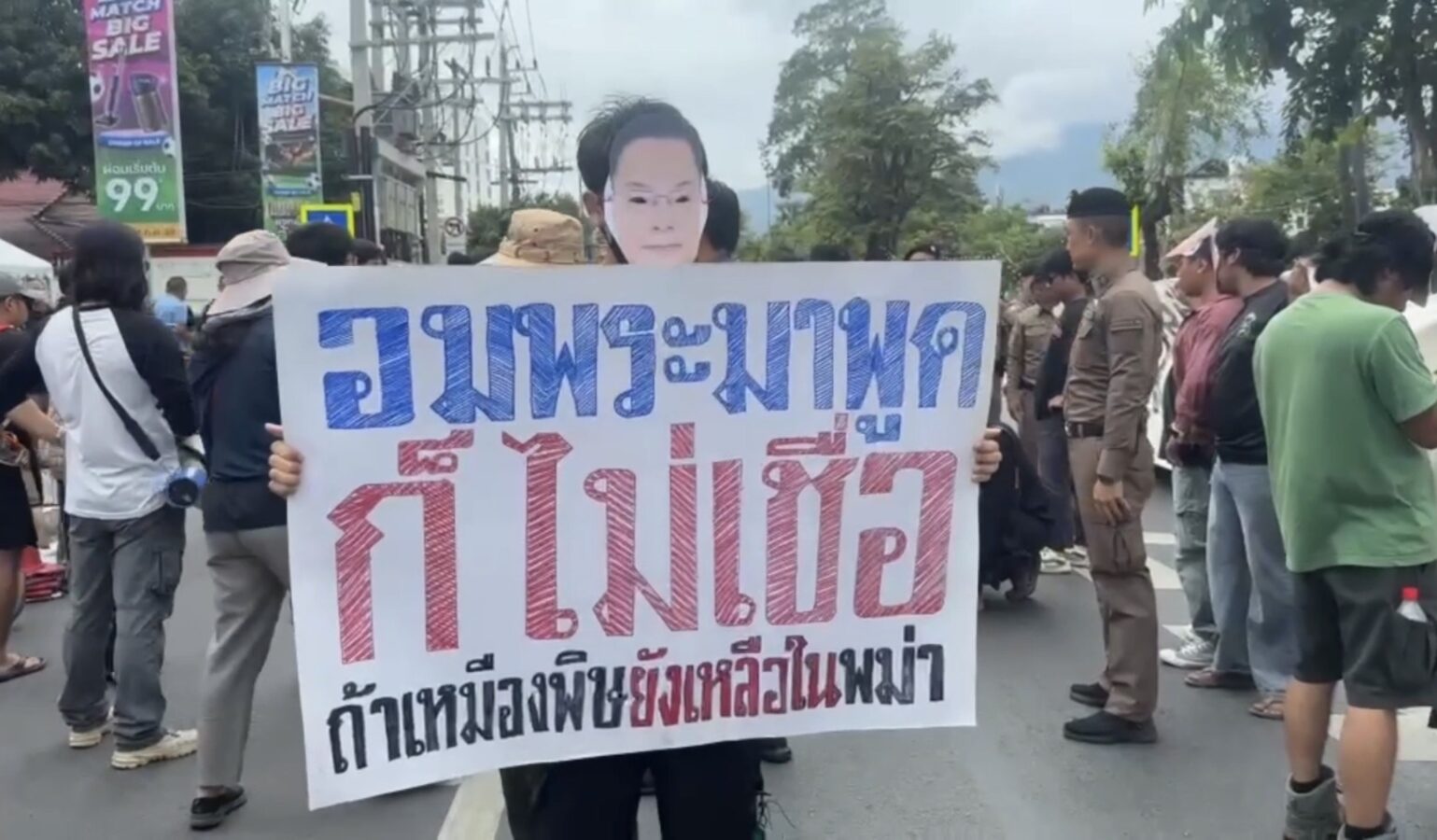
Protesters carried placards, including images of Chinese President Xi Jinping, calling on Beijing to hold Chinese companies and investors accountable for the mines, which sit in Myanmar but are Chinese-invested.
In their statement, organisers noted the Chinese Embassy in Thailand had acknowledged the pollution issue in three Facebook posts (8th June 2025, 31st May and 5th June 2026), stating that China does not condone environmental damage caused by Chinese enterprises abroad and expressing willingness to use the Lancang-Mekong Cooperation mechanism to protect the river basin’s ecology and water quality.
The statement, addressed to the Chinese government, set out four demands:
4. That a joint inspection team, including Thai representatives, visit the mining sites in Myanmar along the rivers in question, to verify compliance with international environmental standards, with findings made public urgently.
The statement closed by invoking the phrase “sharing the same river binds our friendship and shared fate,” urging China to honour this through action rather than words alone.