The Department of Highways has reversed course on its proposed elevated highway along Route 121, the canal road, dropping both the flyover and underpass options that had drawn widespread public criticism since last year.
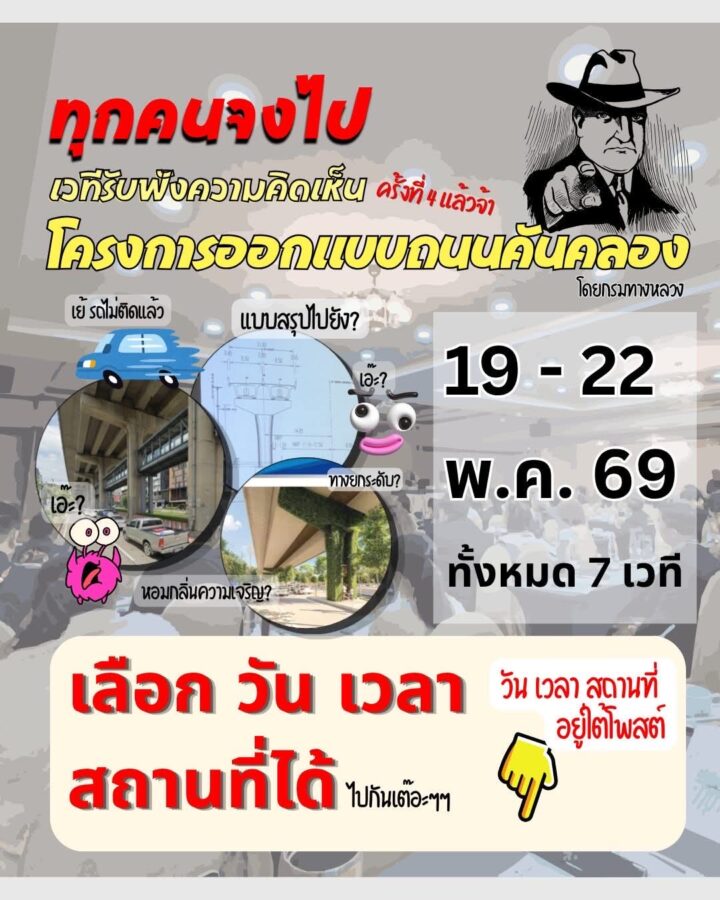
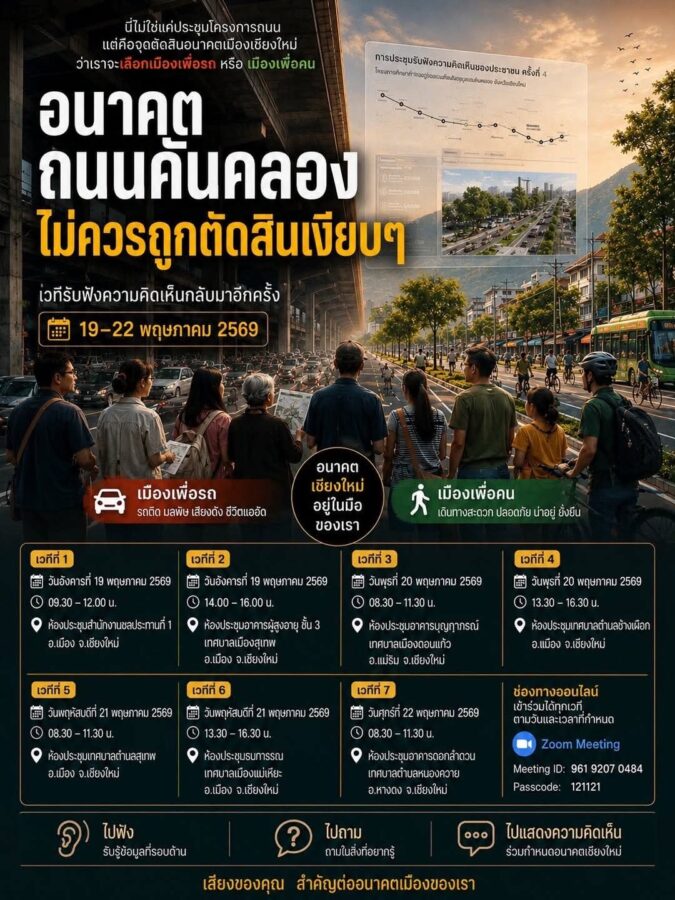
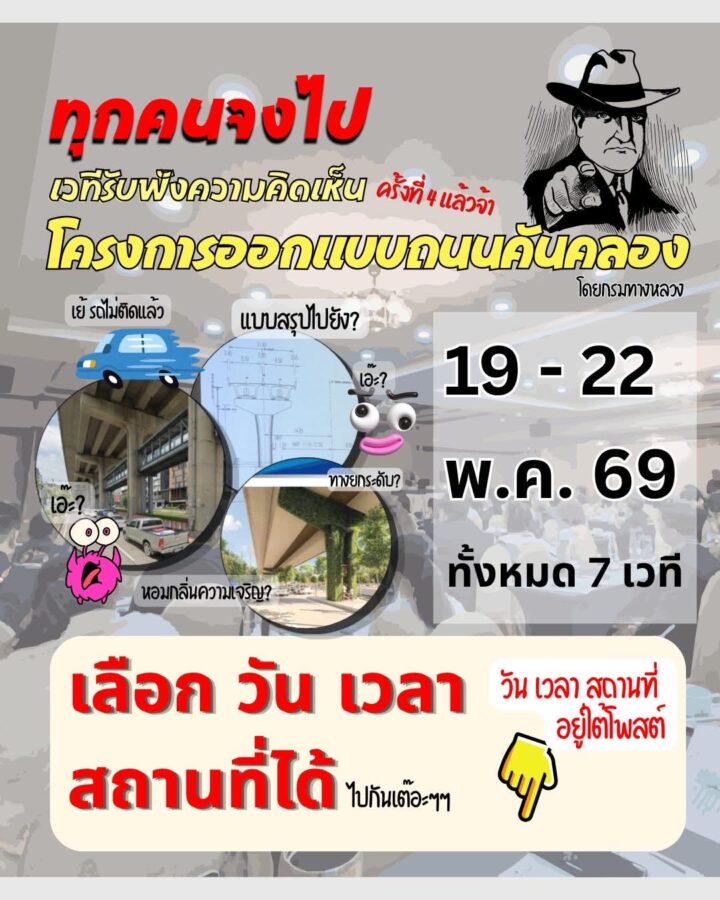
At the fourth round of public hearings on 21st May, the department’s consultants presented a revised approach focused on lane expansion and traffic flow adjustments within the dense urban stretch, with a commitment that no additional private land would be acquired.
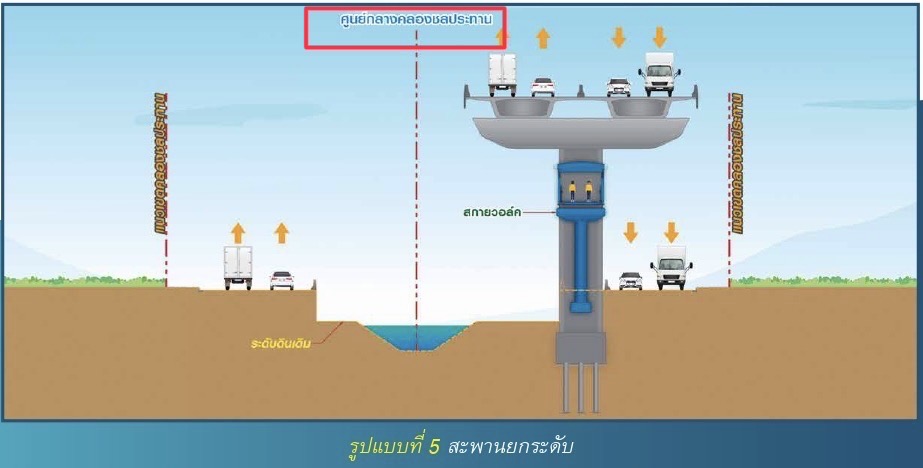
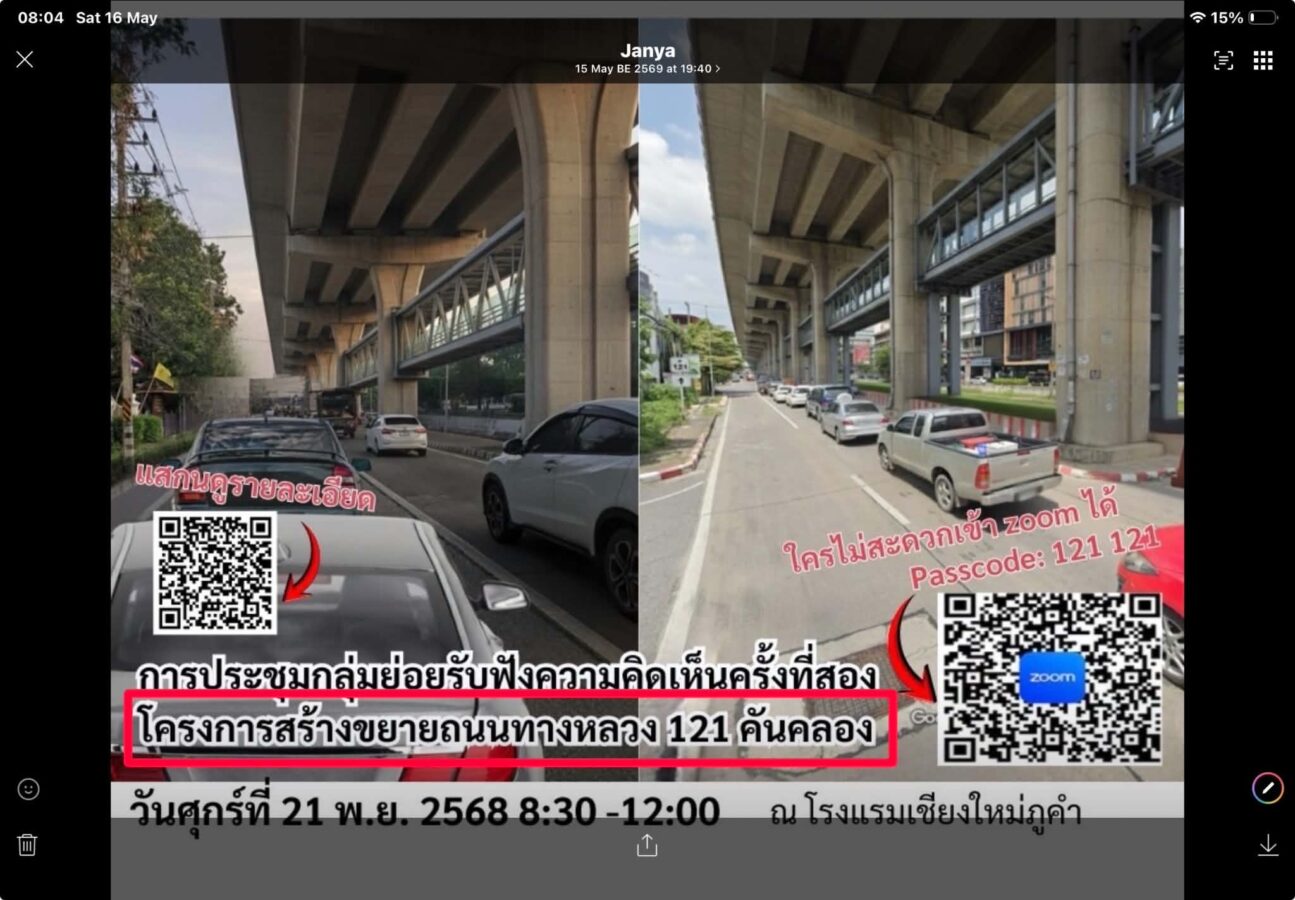
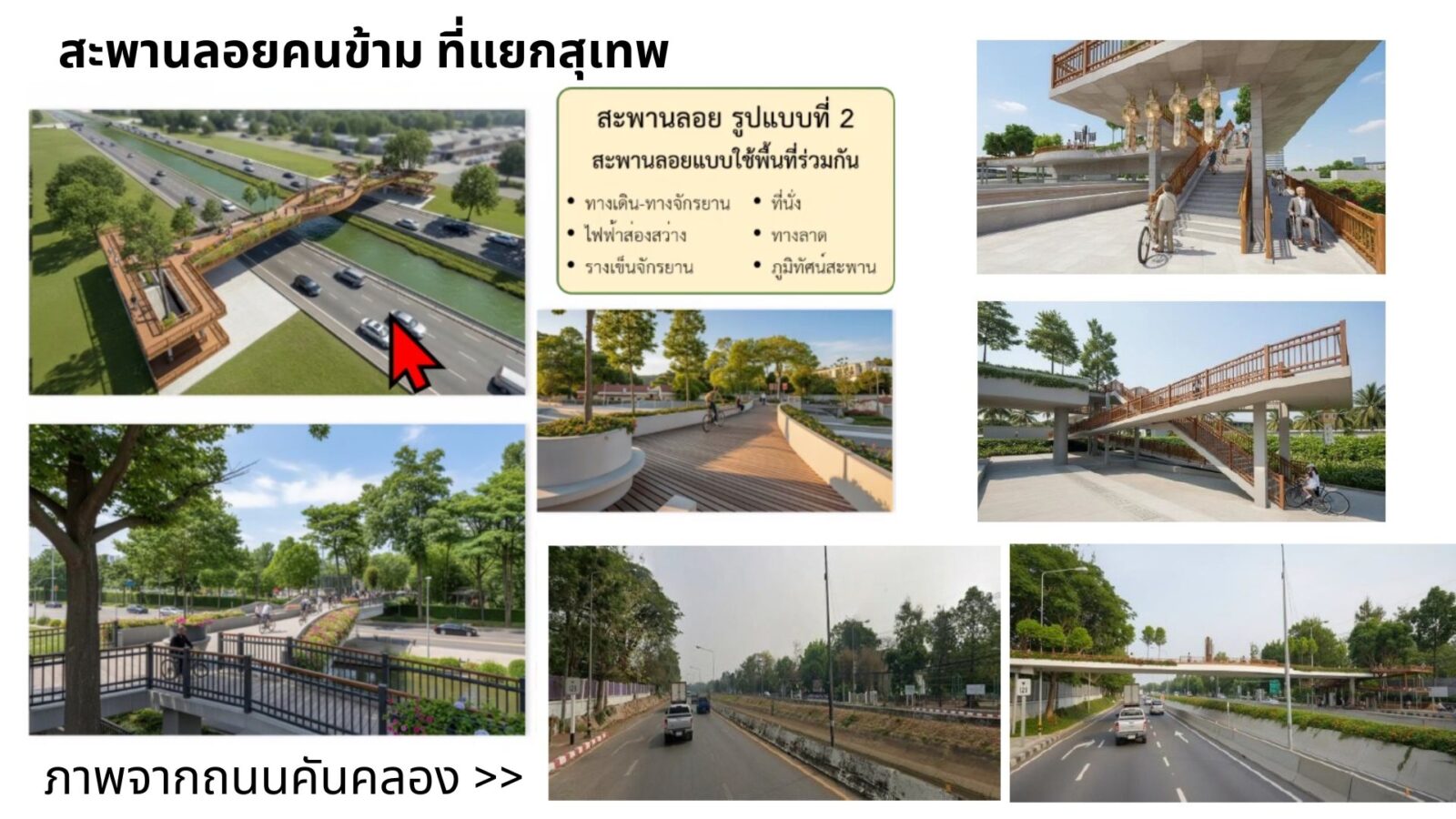
The shift follows a November 2025 seminar in which the department had selected Option 5 — a four-lane elevated bridge with skywalk — as its preferred design from six proposals. That decision had prompted significant pushback from residents and road users who questioned whether Chiang Mai’s development direction was being decided by central bureaucracy rather than the people who actually live and move through the city.
Civic groups have also raised concerns about the impact any large elevated structure would have on views of Doi Suthep, which defines Chiang Mai’s skyline and is considered a long-term cultural and economic asset. A four-storey structure running the full length of the corridor would have permanently altered one of the city’s most recognisable viewlines. Some have called for a formal Doi Suthep Viewshed Protection Zone — a policy that would require future development to account for the mountain views that give the city its character.
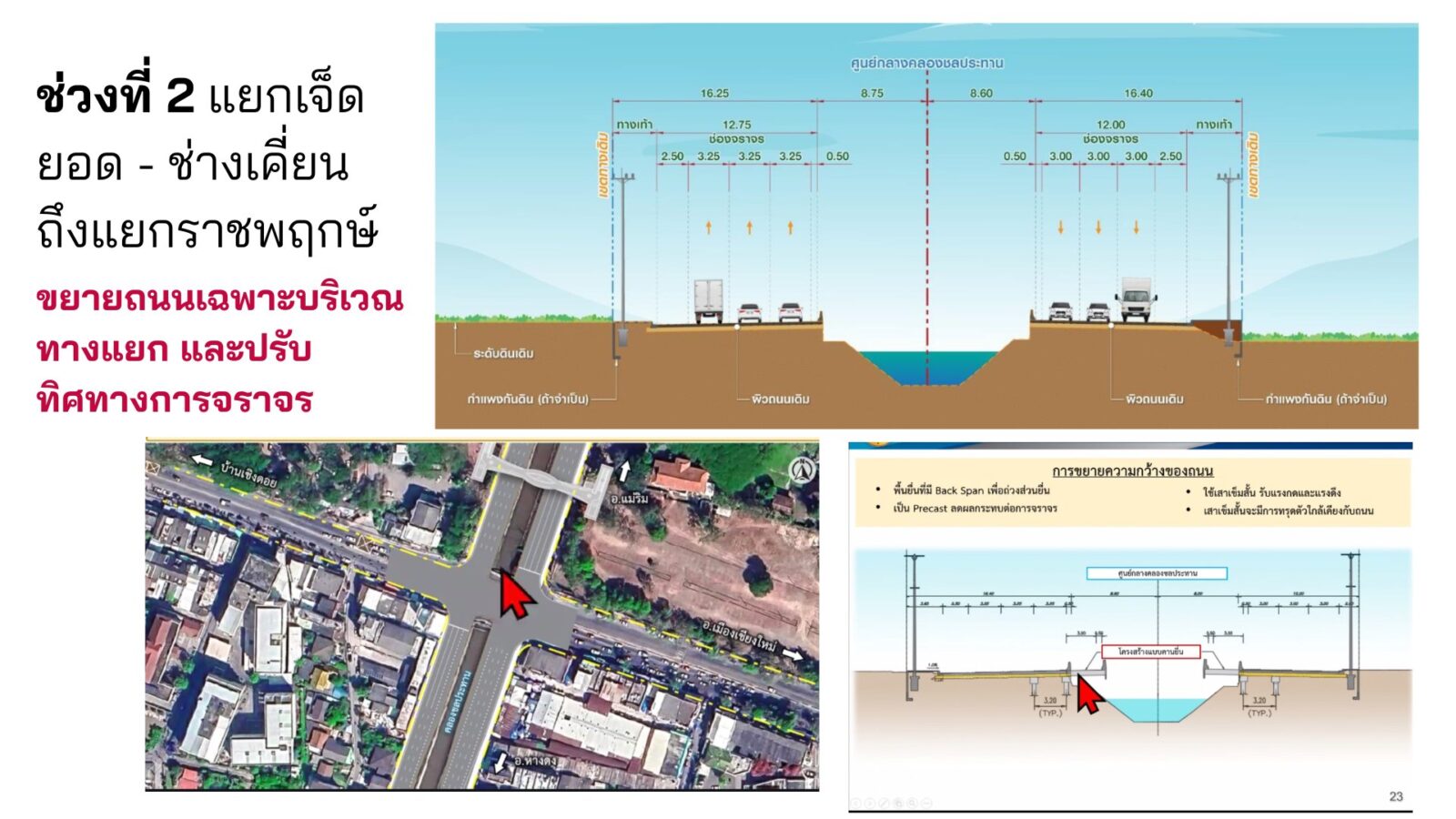
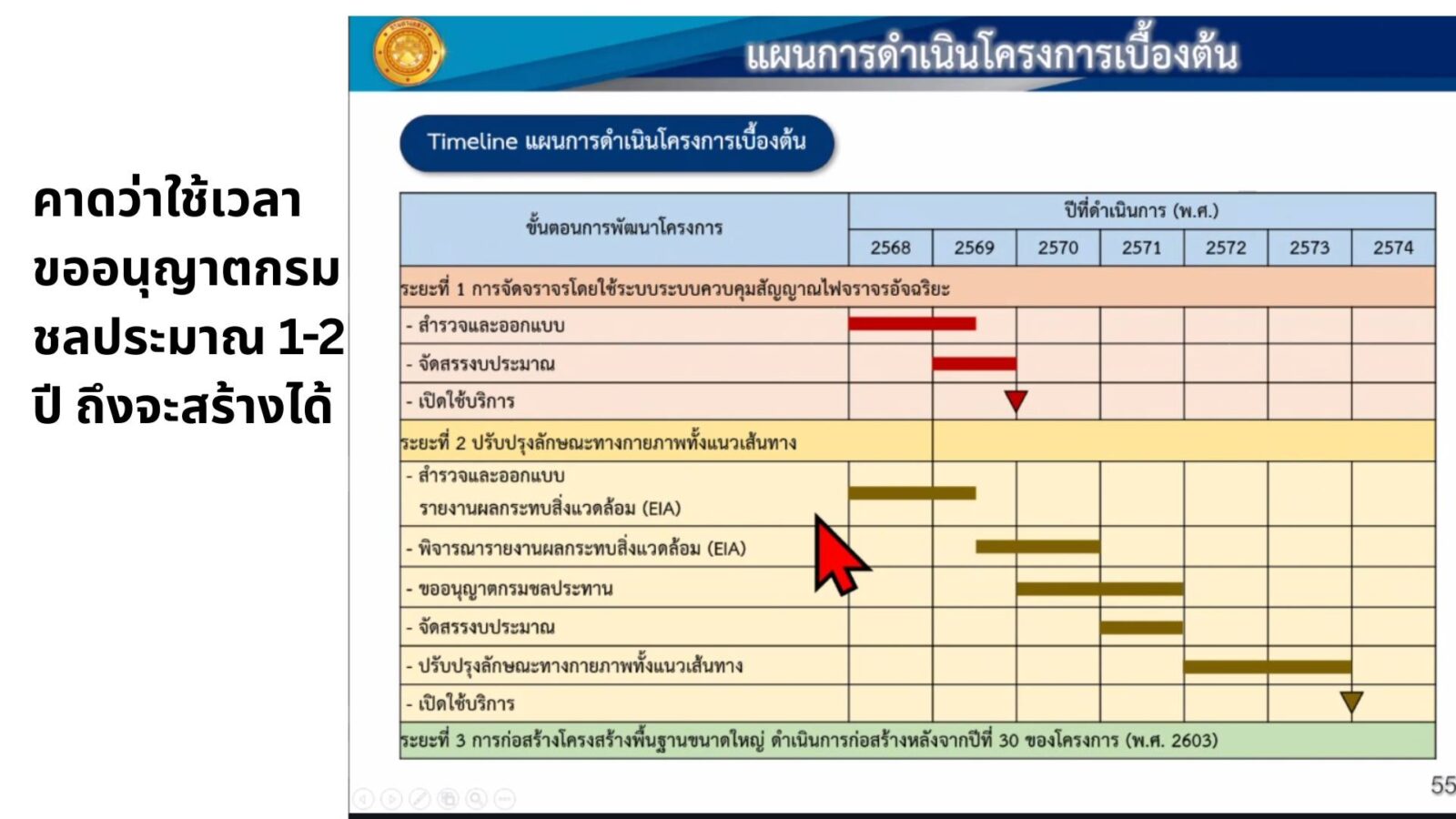
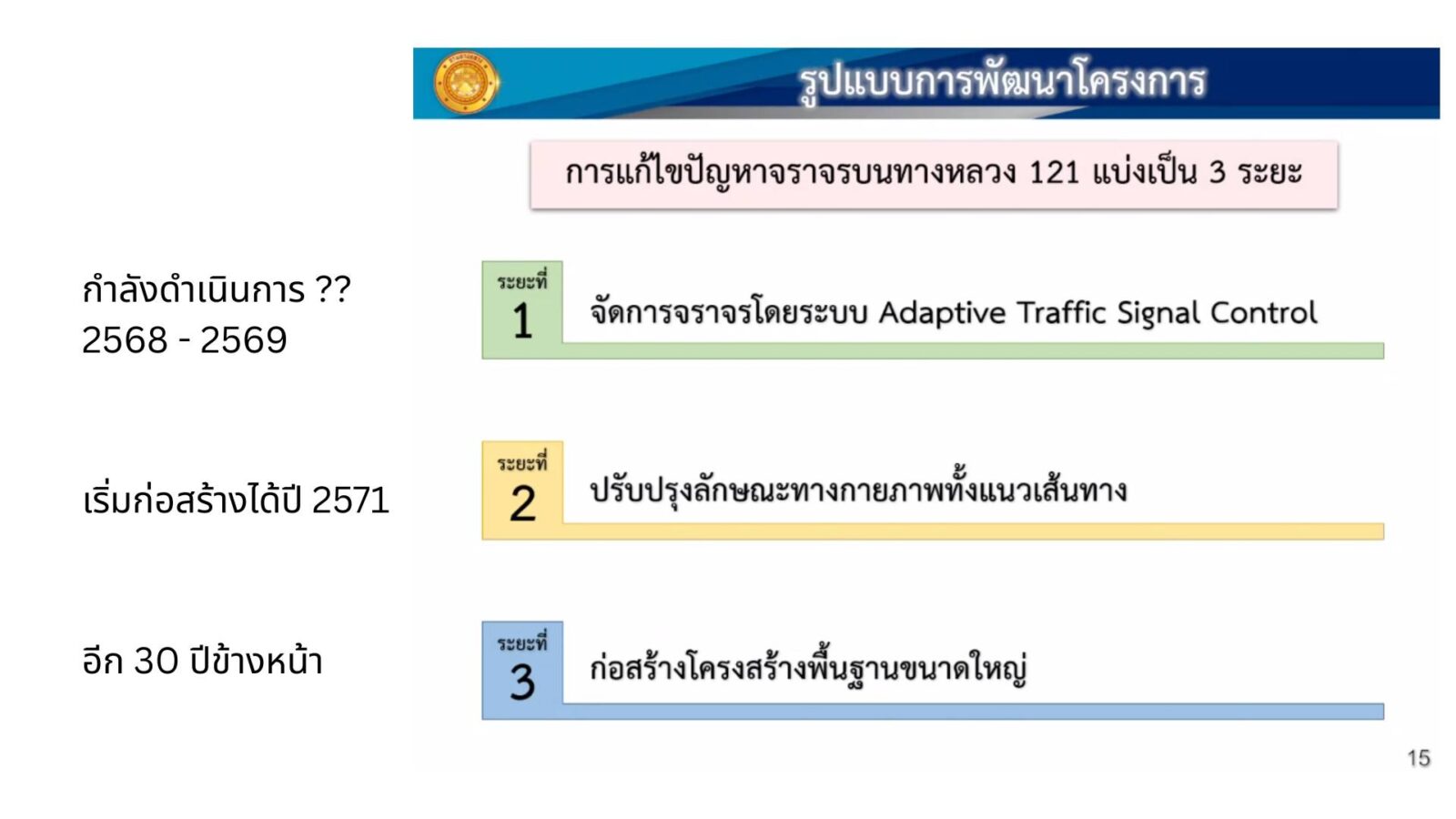
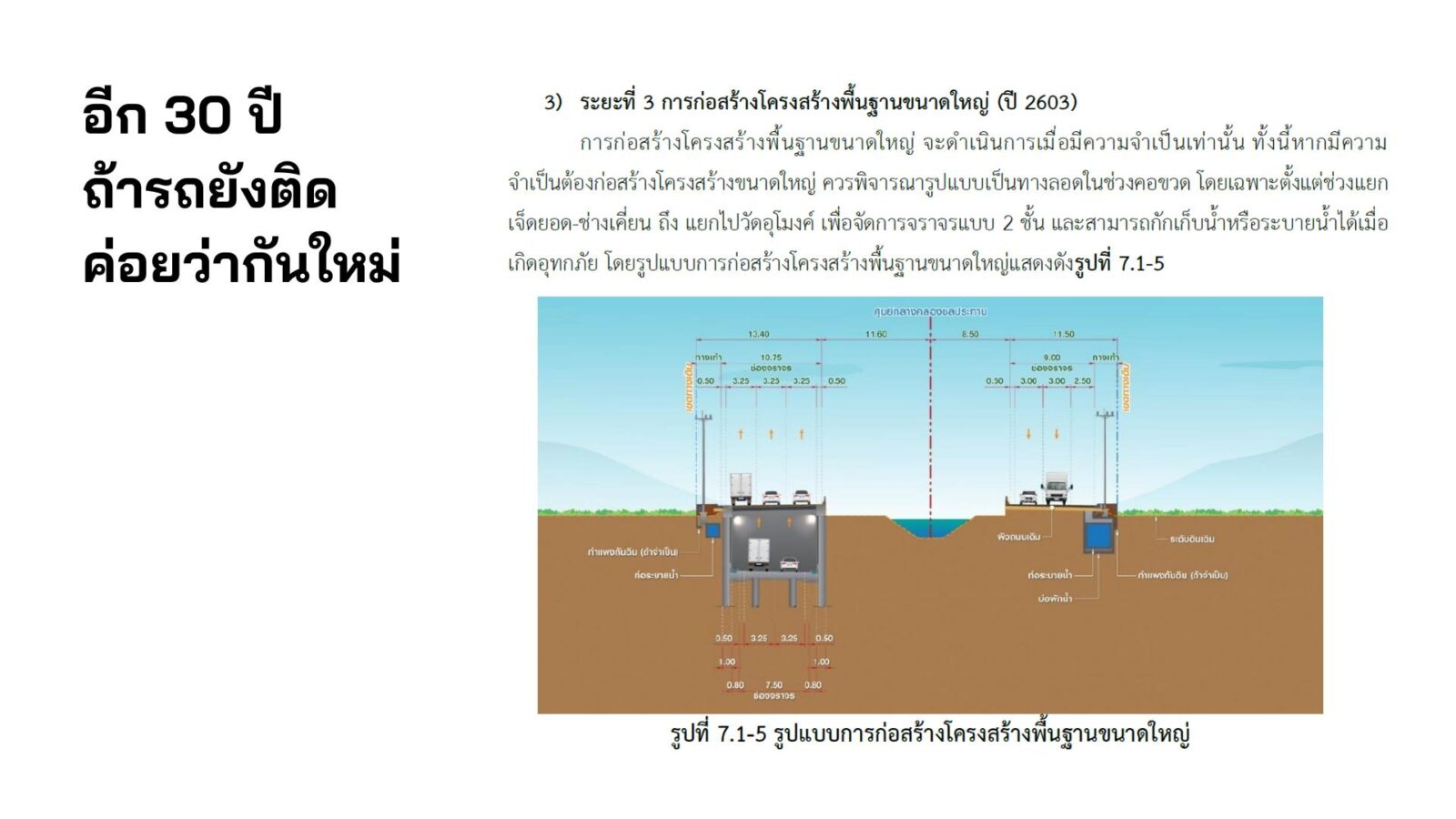
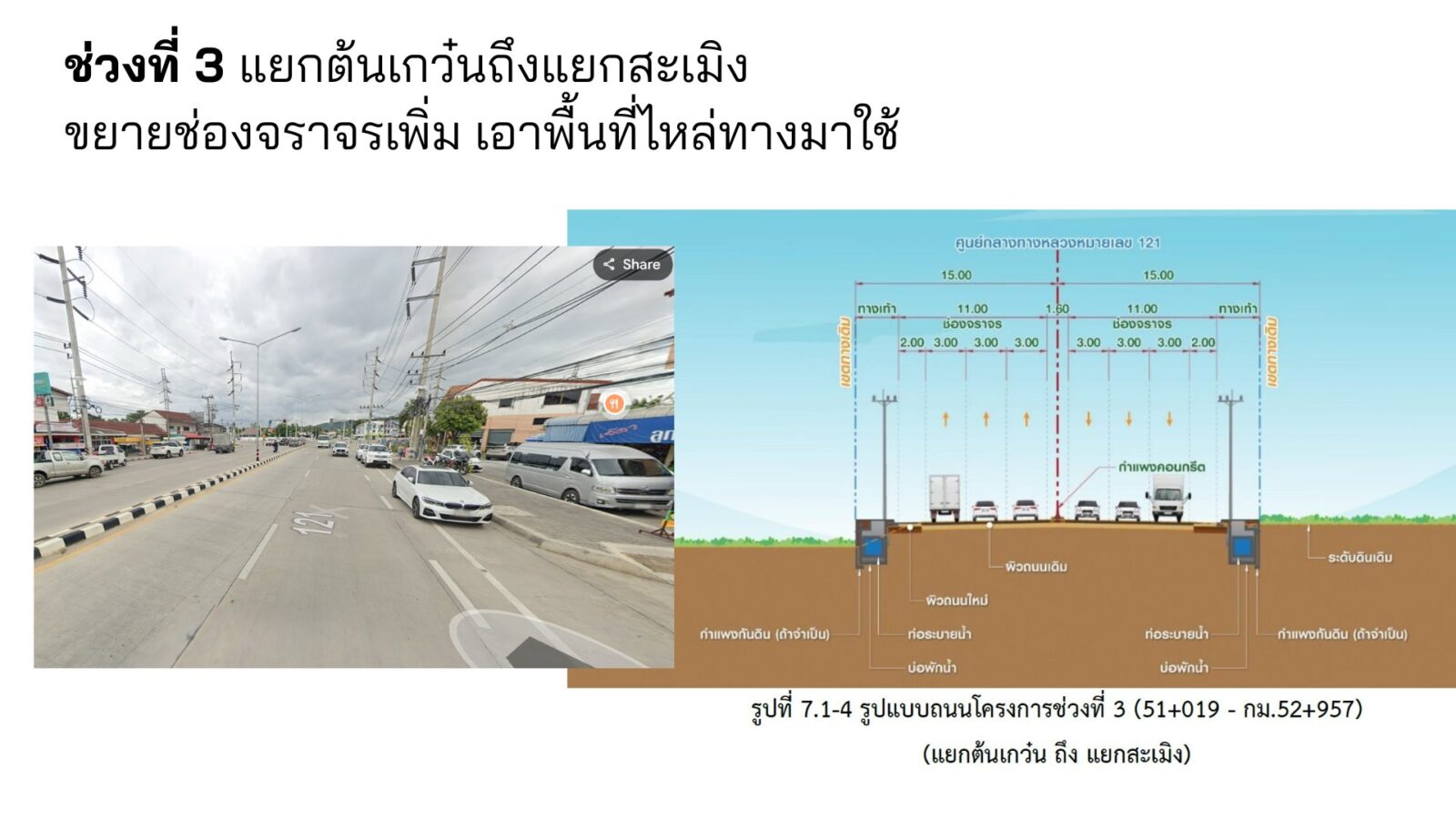
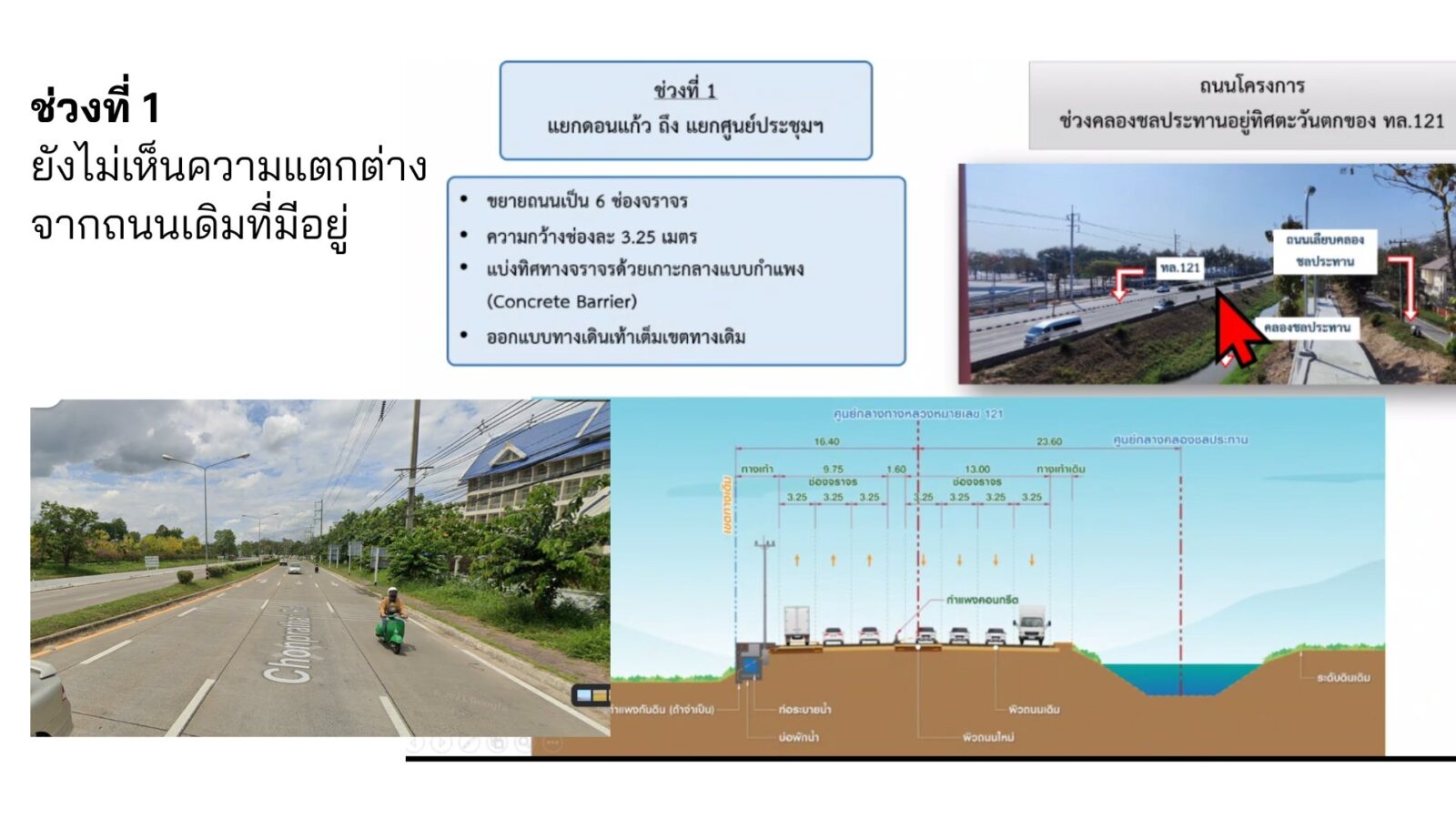
The new plan divides the project into three phases. Phase one, which the local highways office can implement immediately, involves retiming traffic signals and restricting certain turns at key intersections. Phase two, triggered only if phase one fails to meet targets, would involve physical road widening to provide at least six through lanes in both directions, excluding turn lanes. Phase three — large-scale infrastructure — is described in project documents as a last resort, not to be considered until after 2060, and would involve a two-level traffic system along the Jet Yod–Chang Khian to Wat Umong stretch with integrated flood drainage capacity.
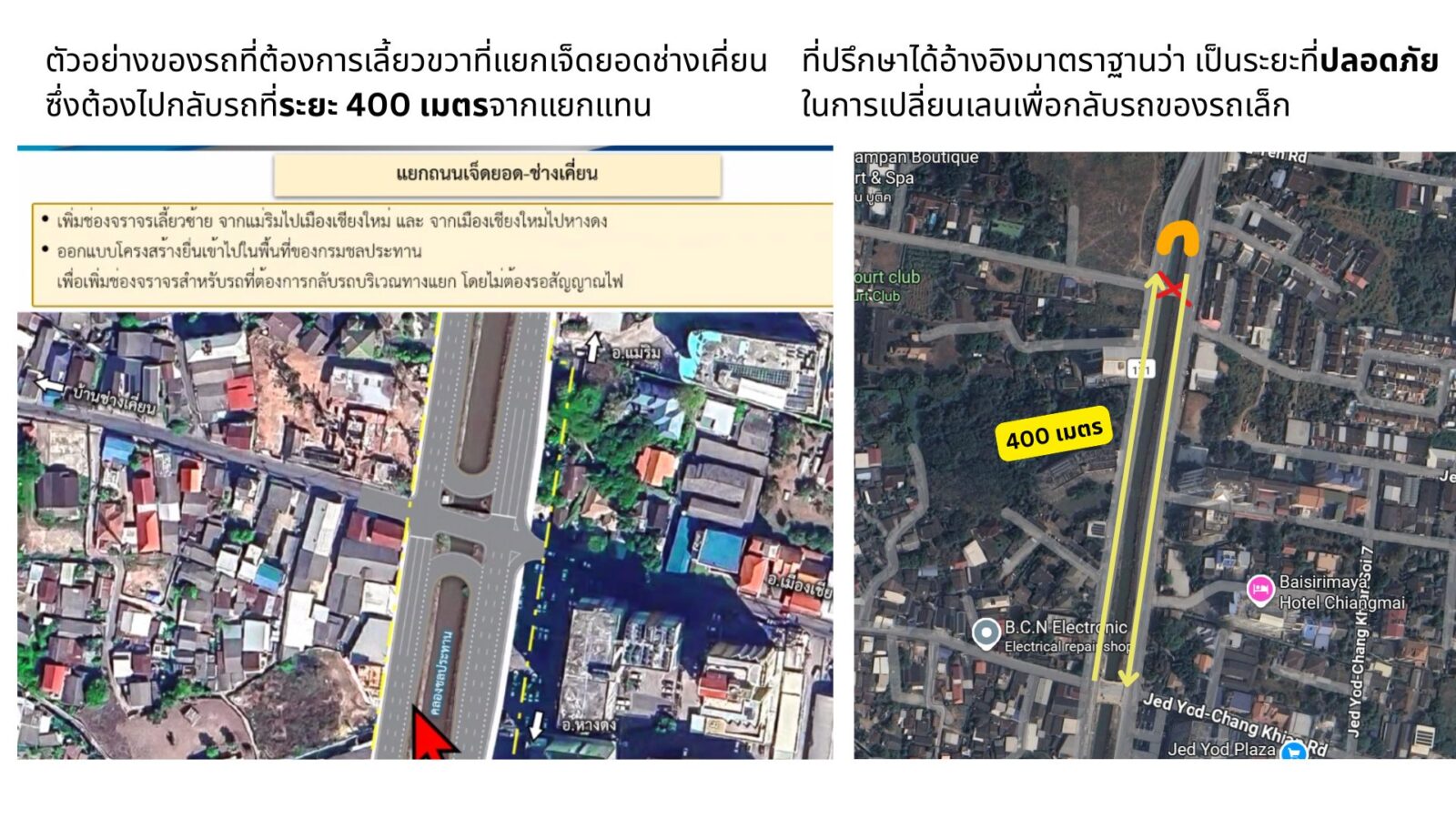
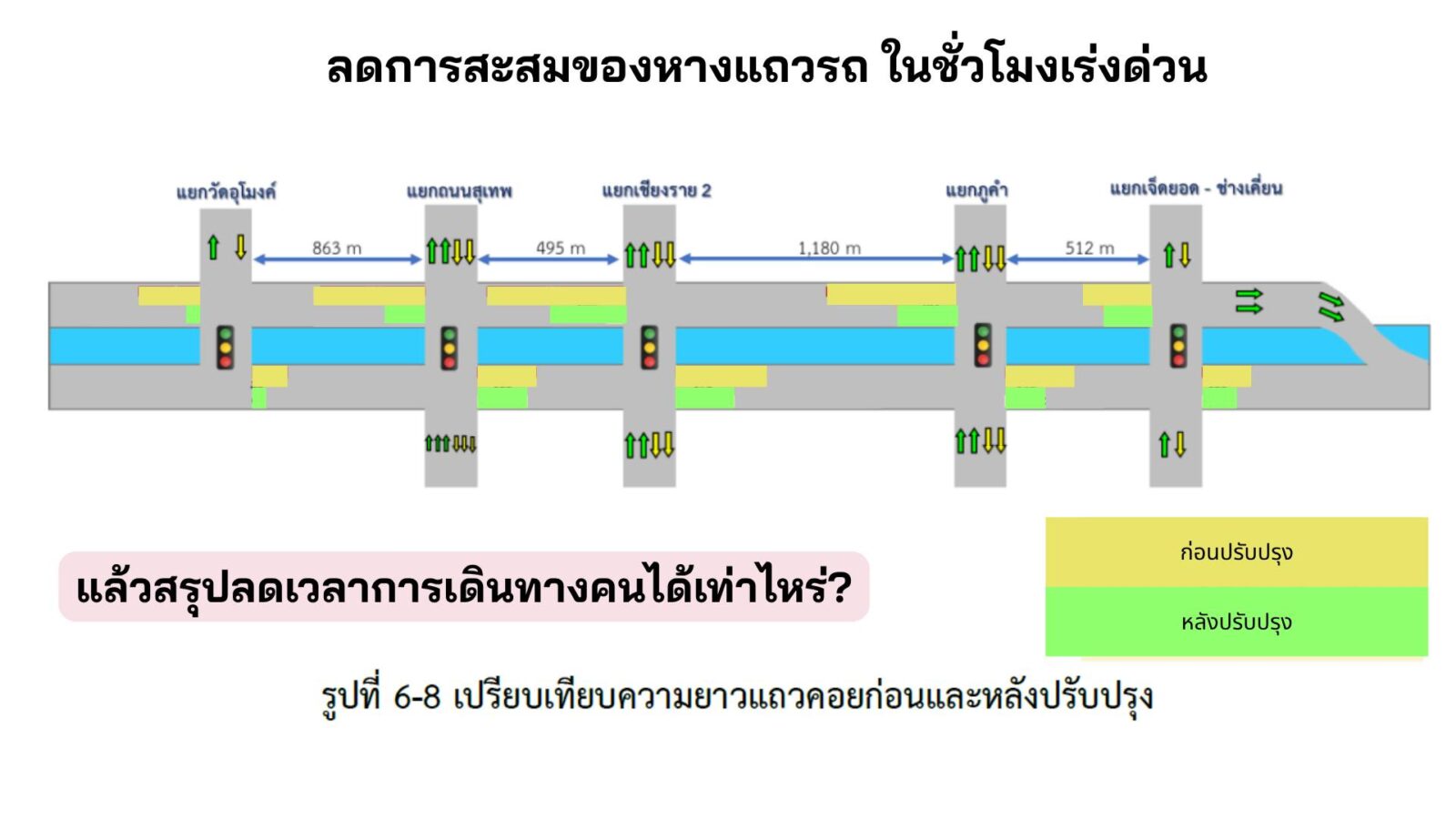
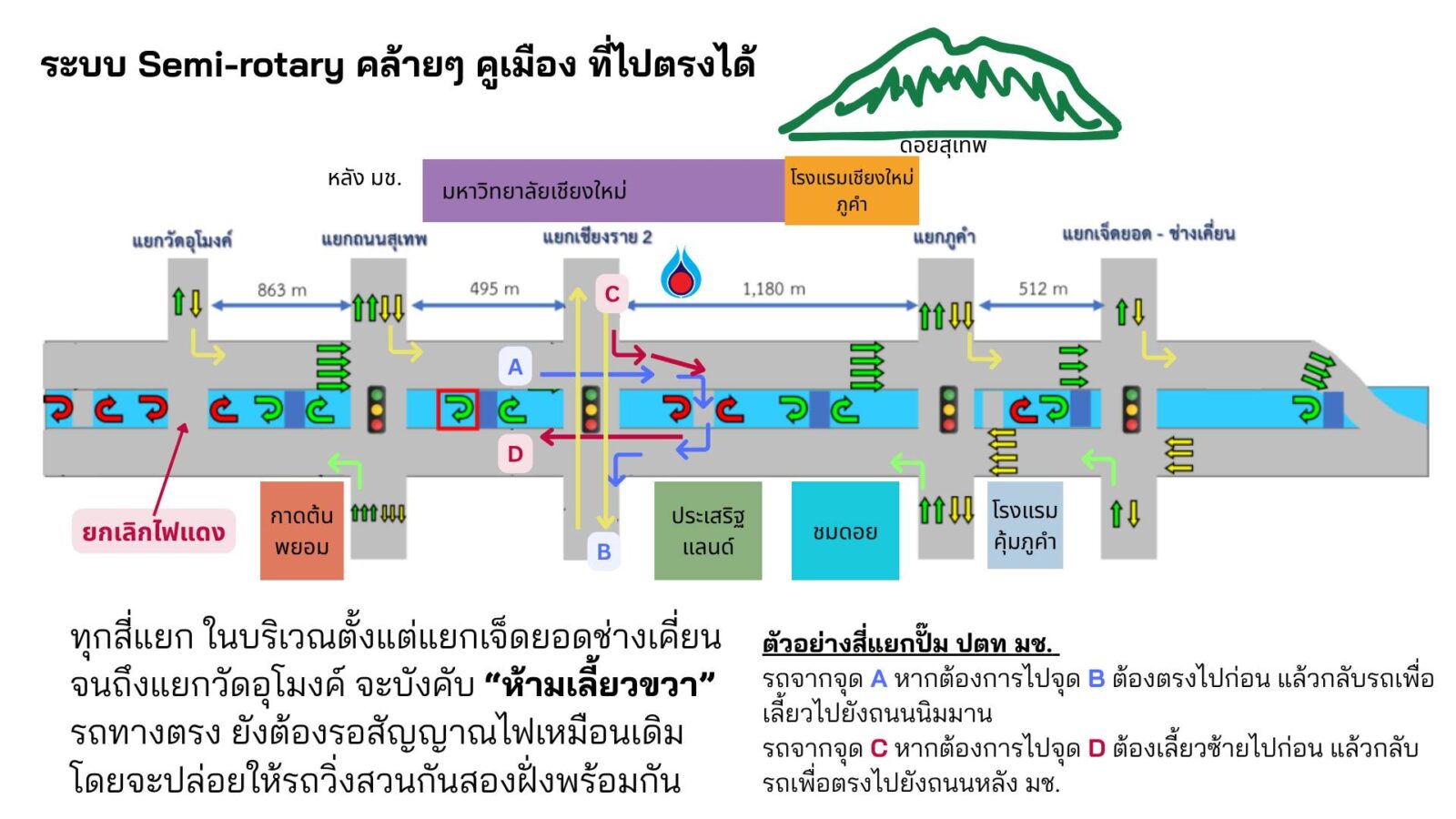
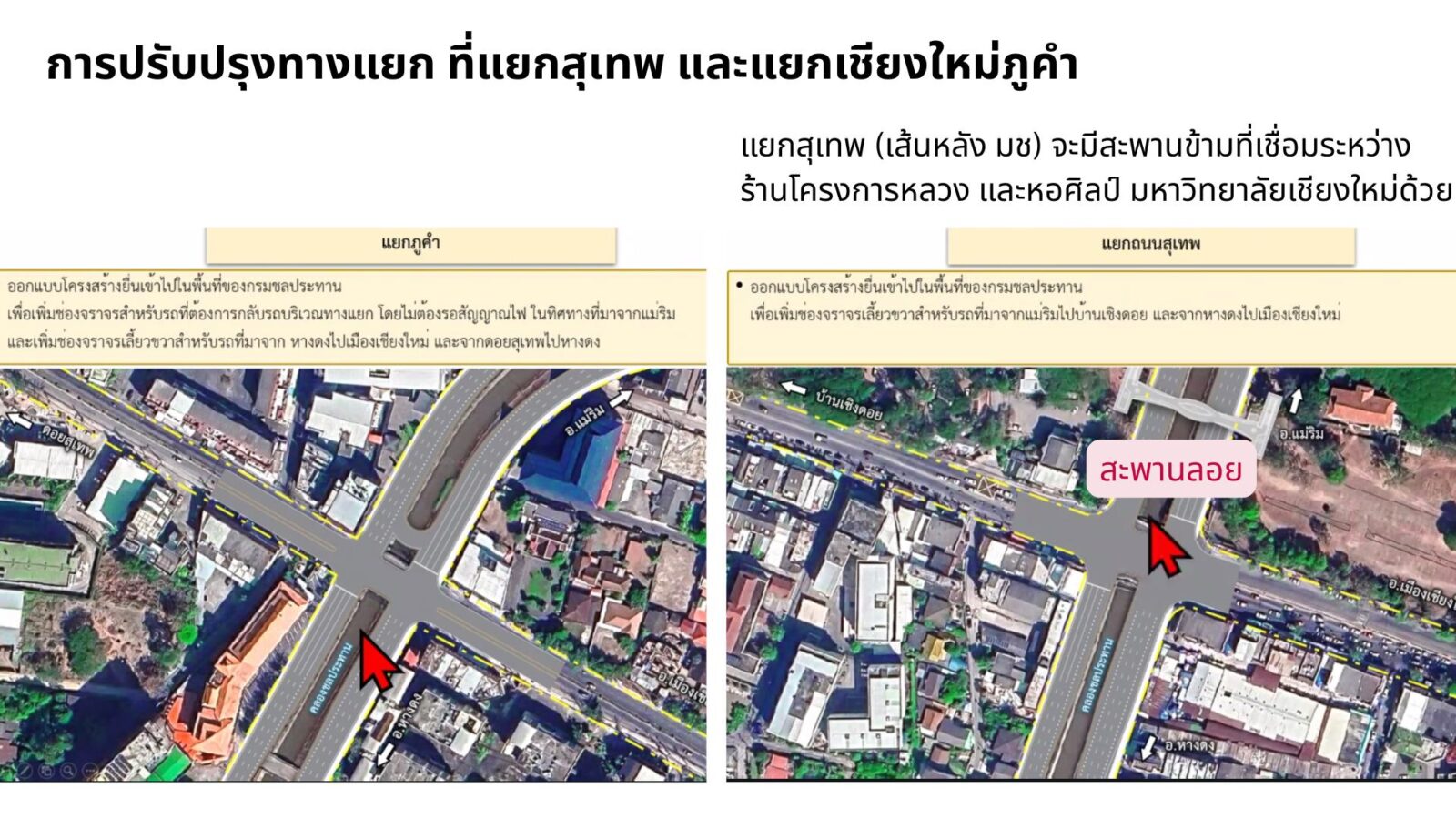
The most discussed element of the new proposal is a semi-rotary system that would ban right turns at multiple intersections along the corridor, reducing traffic light phases to two — north-south and east-west straight-through movements. Drivers needing to turn right would instead turn left and use a U-turn point. The department says this will reduce waiting times and ease congestion on the main road.
The admin of the Chiang Mai Urban Cyclist page, who attended the hearing, welcomed the smoother traffic flow the system might bring but identified three significant concerns.
The first is safety for smaller vehicles. Under the semi-rotary system, motorcyclists and small vehicles needing to turn right must cross multiple lanes of fast-moving traffic to reach a U-turn point. With the road’s speed limit at 60km/h — and most vehicles travelling faster — the risk of accidents could increase.
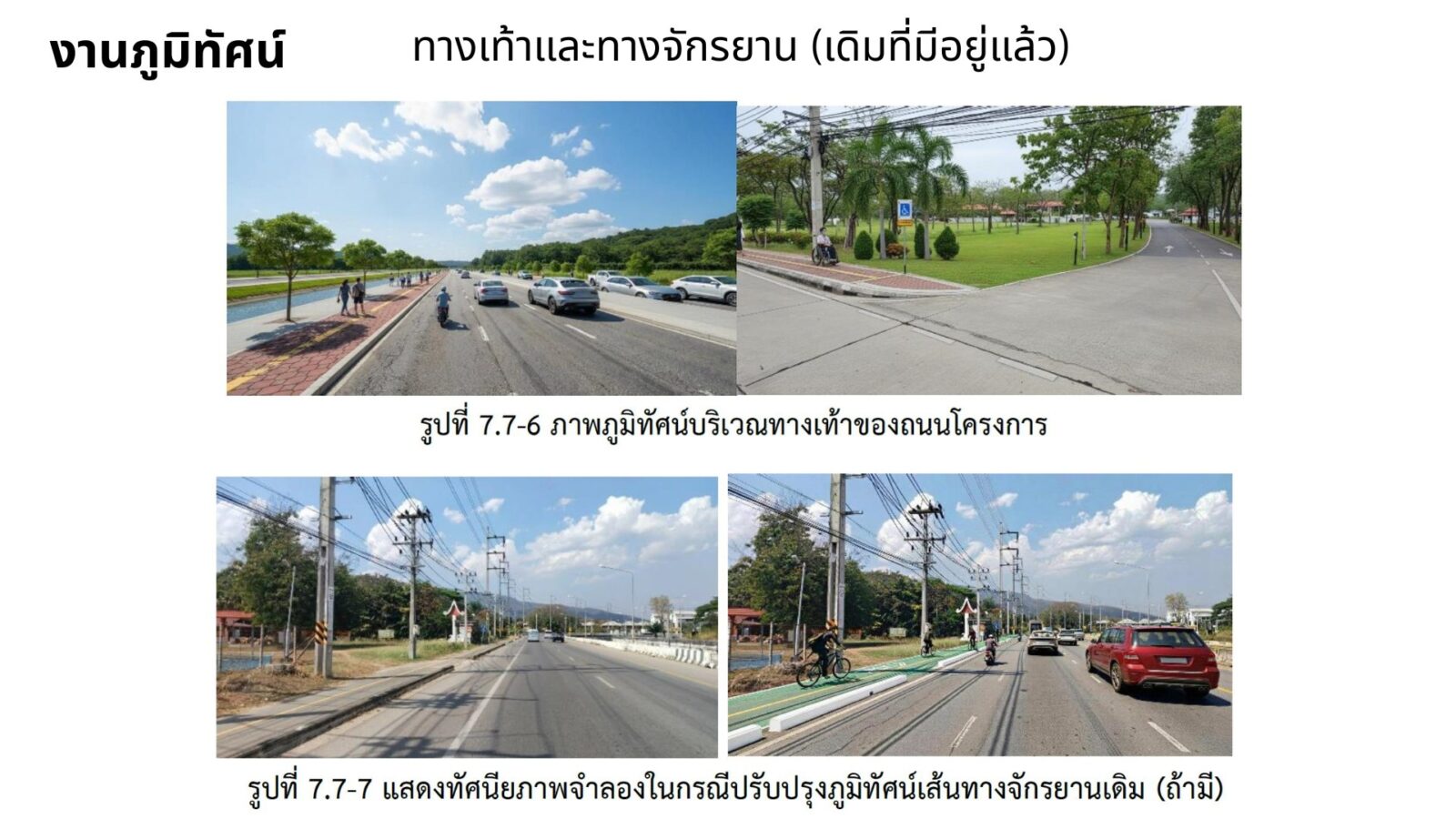
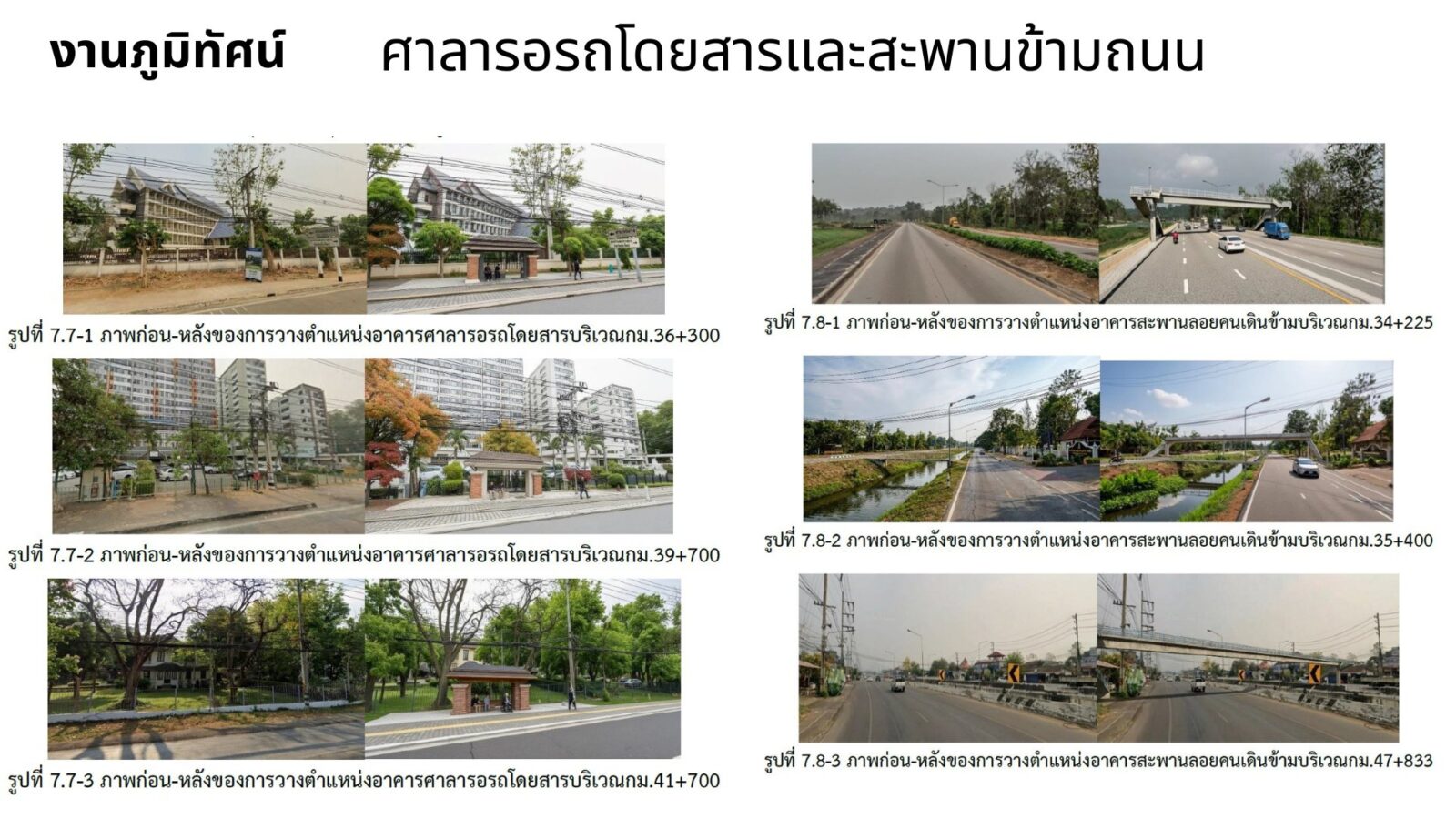
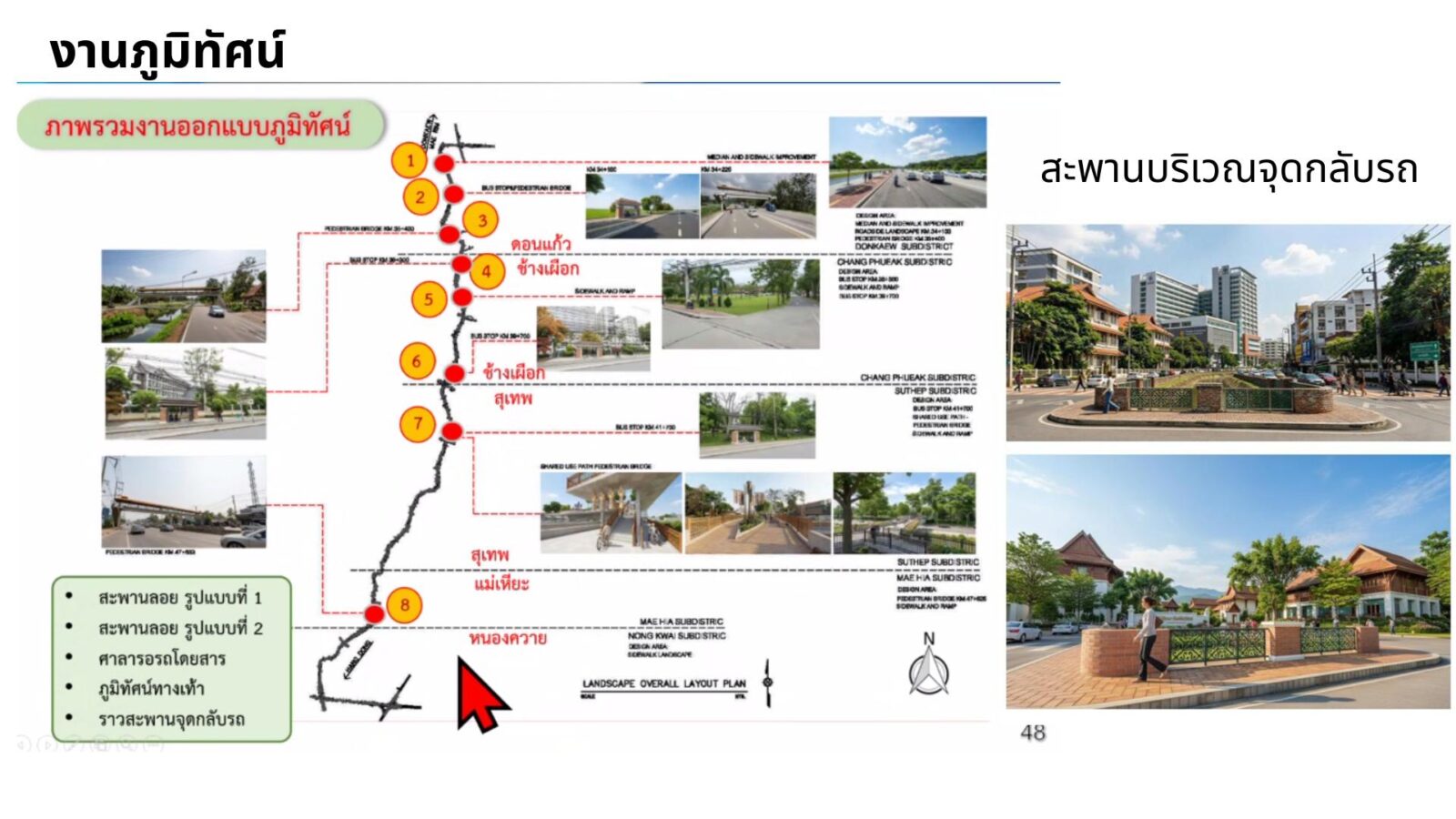
The second is the impact on pedestrian space. Near intersections, the road would be widened from two lanes per side to three, with some sections reaching four to five lanes to accommodate through traffic and turn queues. Although the project includes pavements along the full length, the cyclist page questioned how much usable space would remain — particularly around Chiang Mai University, where functional footpaths are already almost nonexistent.
The third concern is cyclists themselves. The existing road shoulder is currently the primary route for cyclists avoiding main traffic. If that shoulder narrows or disappears under the widening plan, cycling safety along the corridor would diminish accordingly.
The concerns point to a broader question the new plan has yet to answer: whether pedestrians, cyclists and motorcyclists will be meaningfully included in the redesign — or whether solving Chiang Mai’s traffic problem will, as before, mean prioritising the movement of cars above all else.