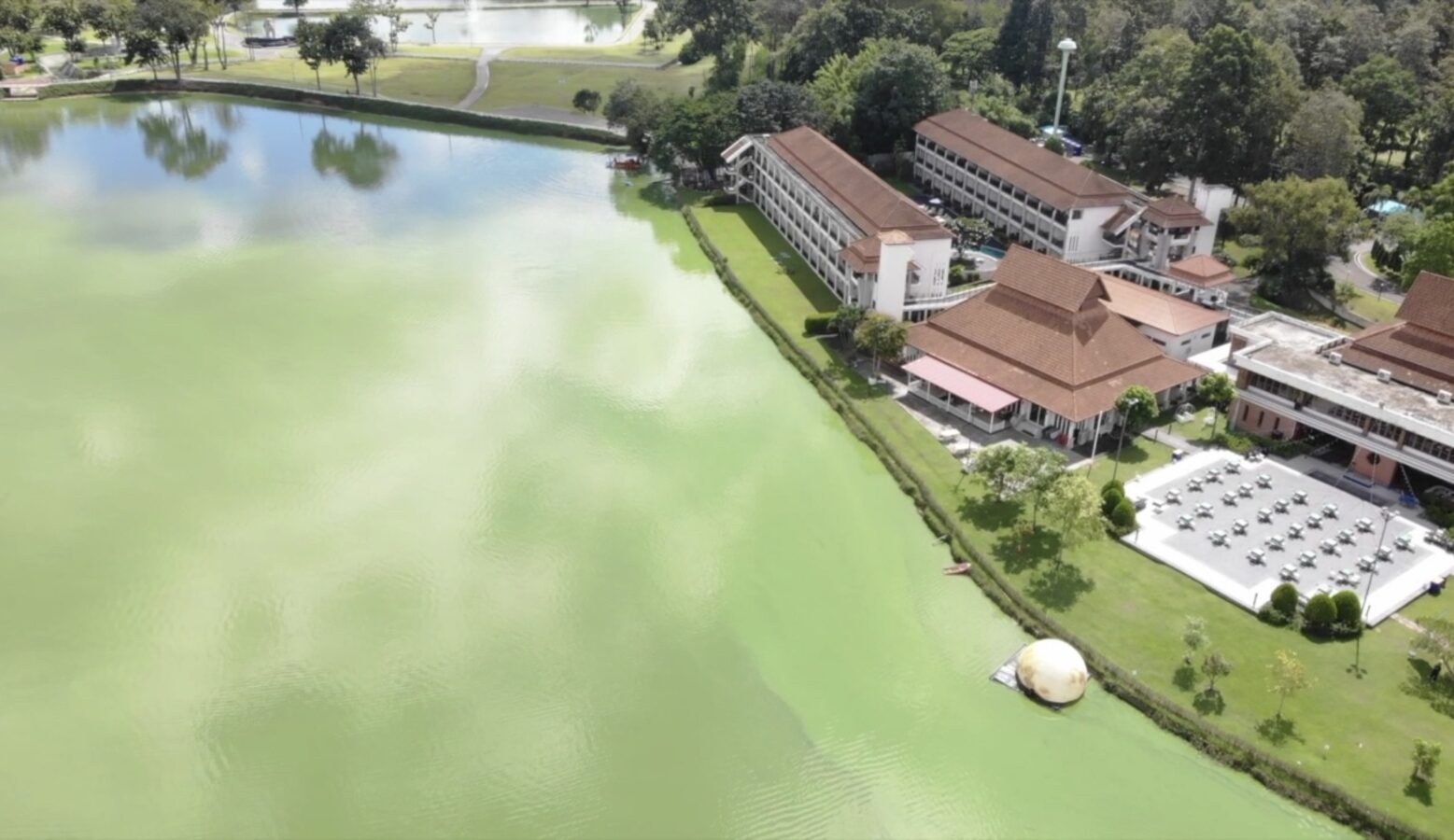
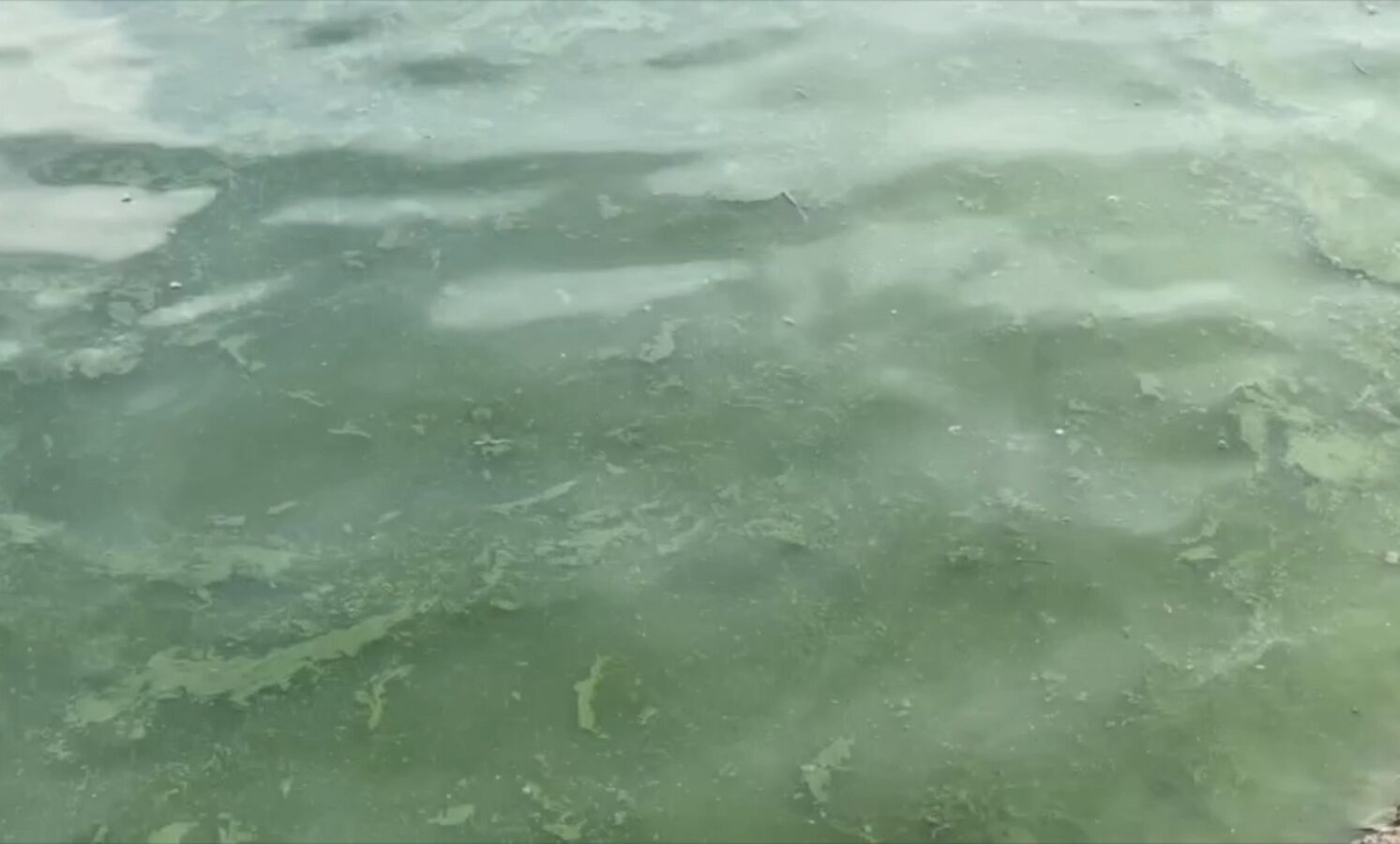
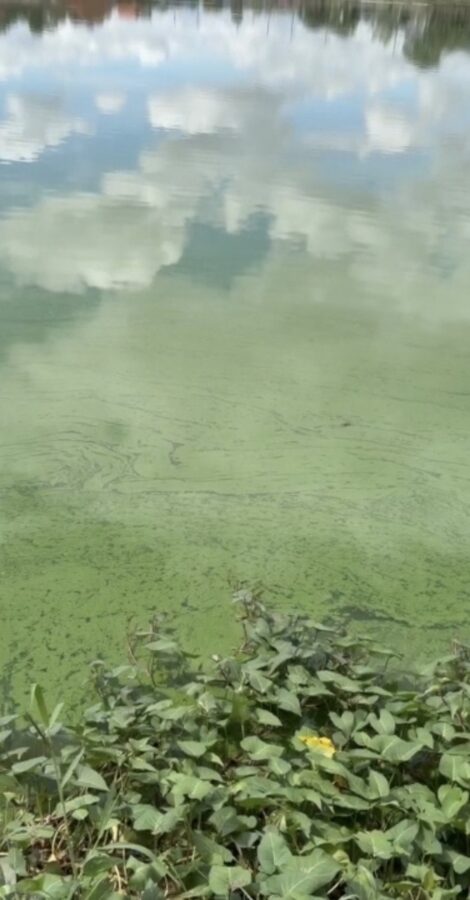
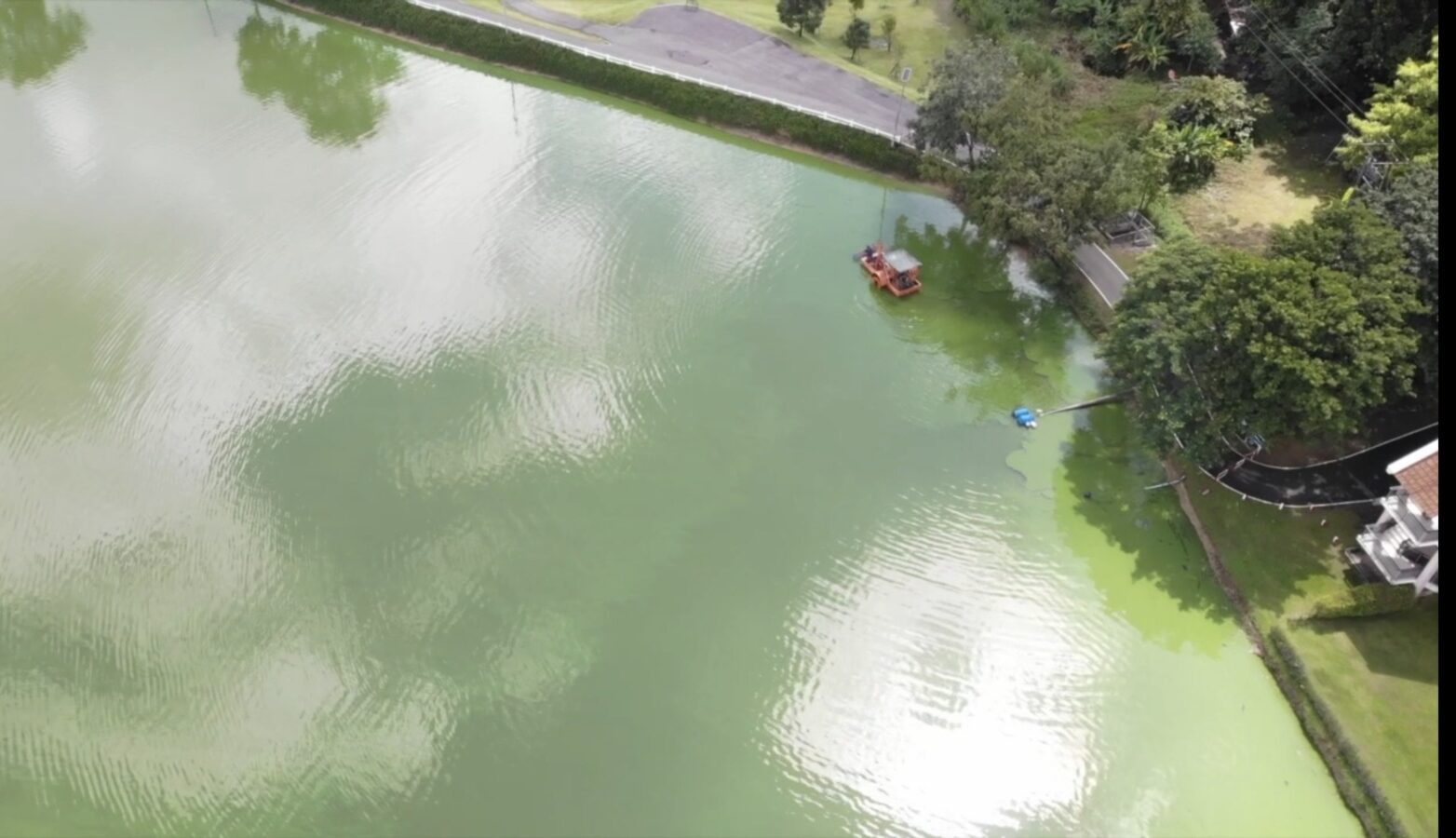
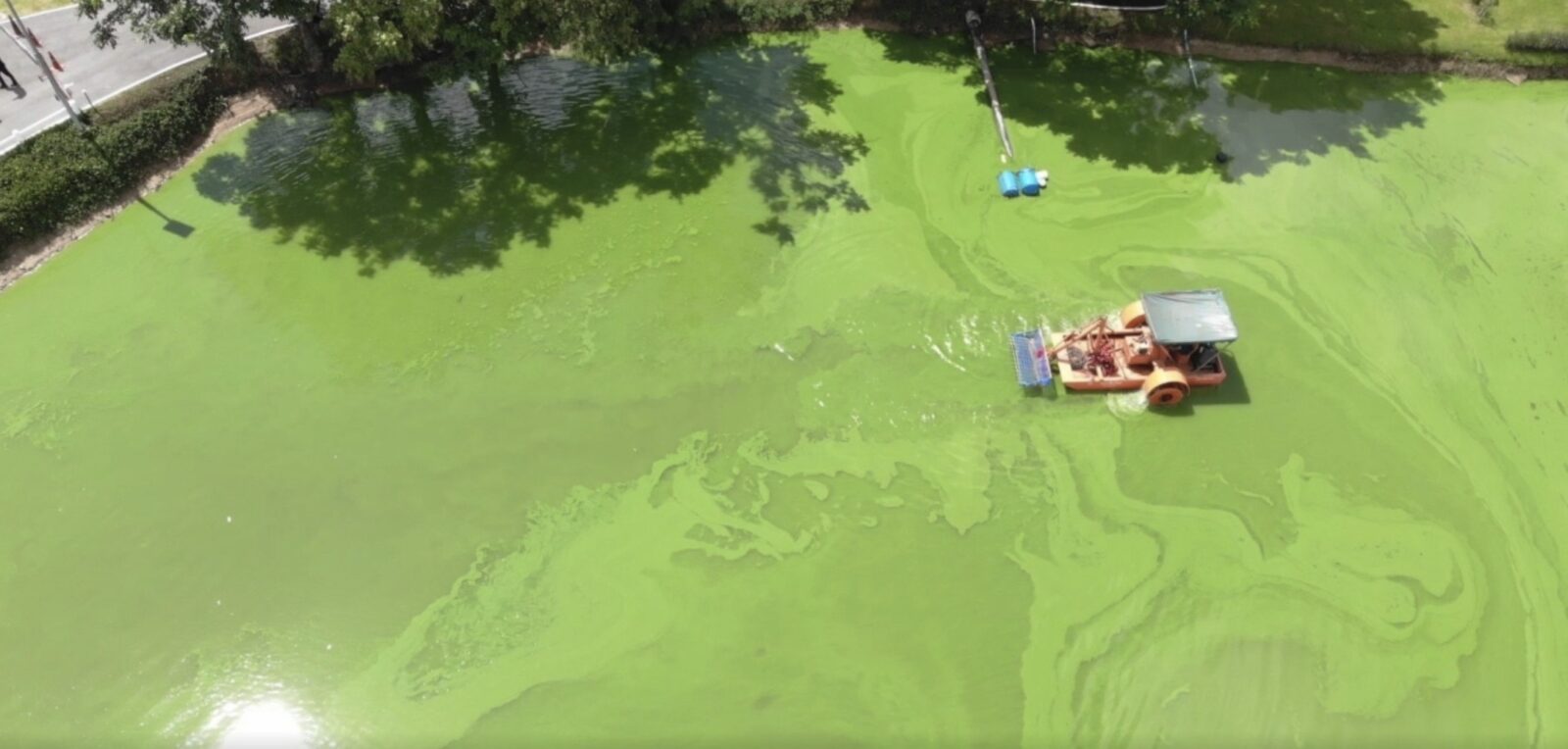
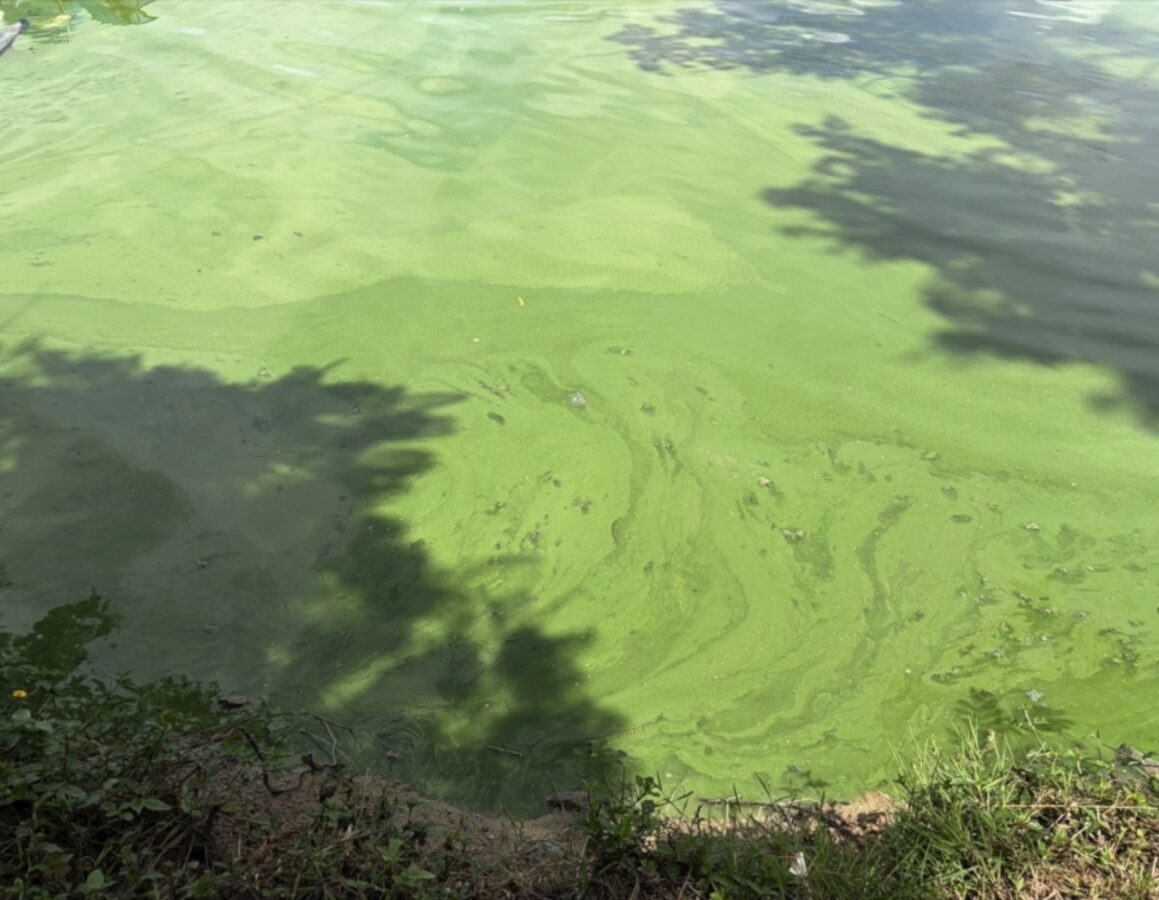
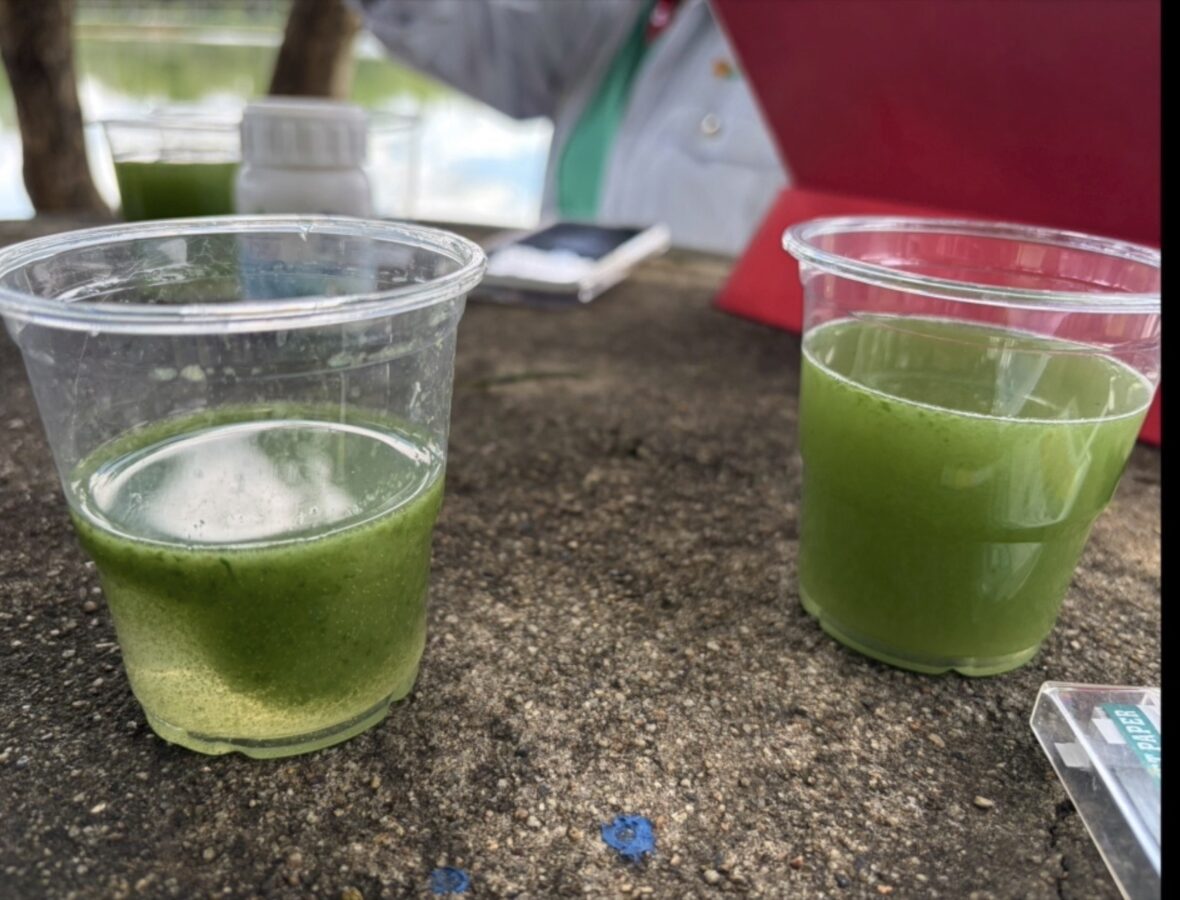
A thick layer of green algae has spread across the surface of Nong Khiao Reservoir at Chiang Mai Provincial Administrative Organisation (PAO) Park, prompting officials to urgently begin removing the decaying algae and investigate the cause.
The reservoir has recently turned visibly green as algae rapidly spread across the surface, affecting water quality and causing parts of the reservoir to begin decomposing and producing unpleasant odours. The smell has reportedly become a nuisance for both local residents and visitors who use the park for exercise and recreation.
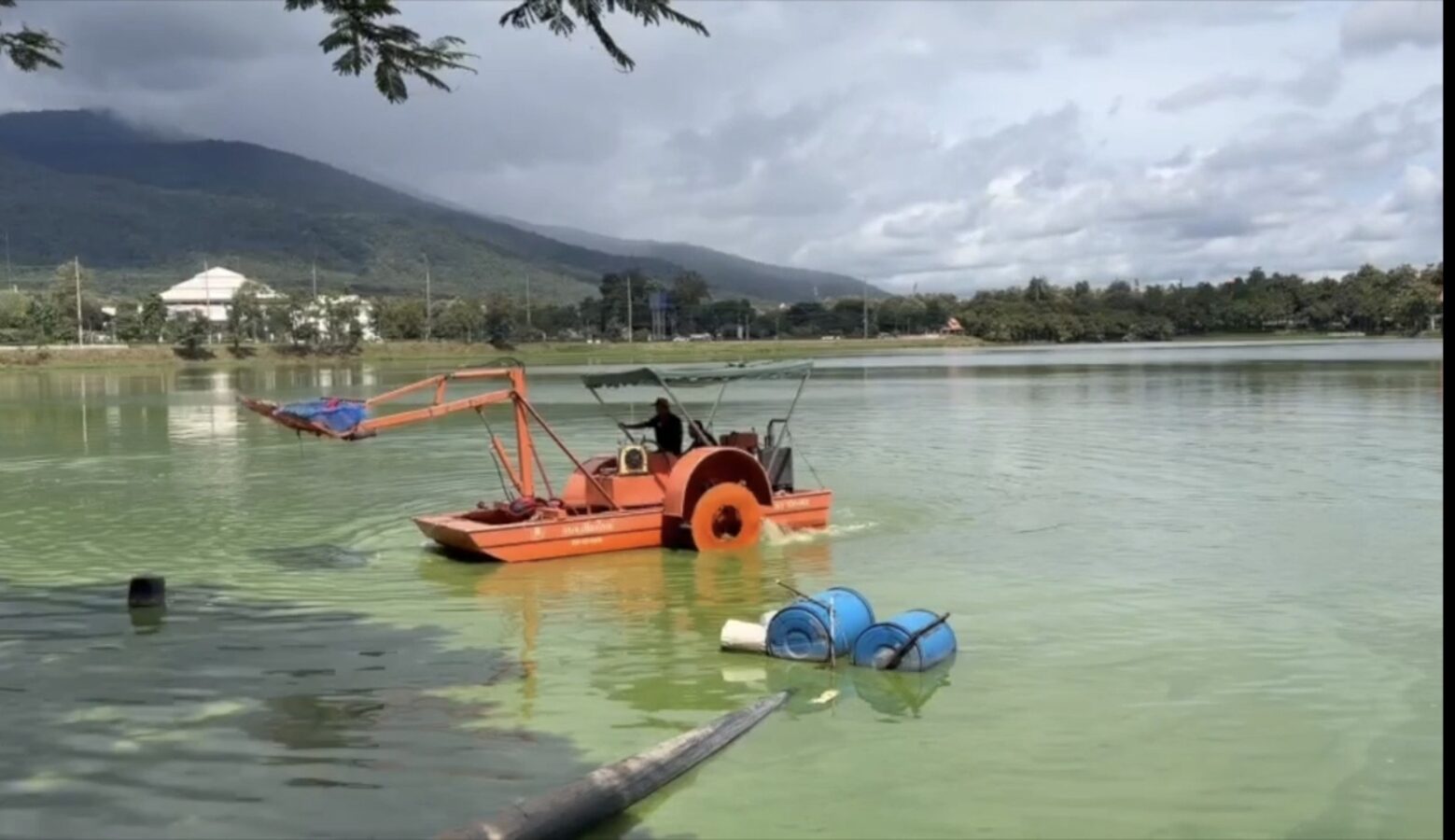
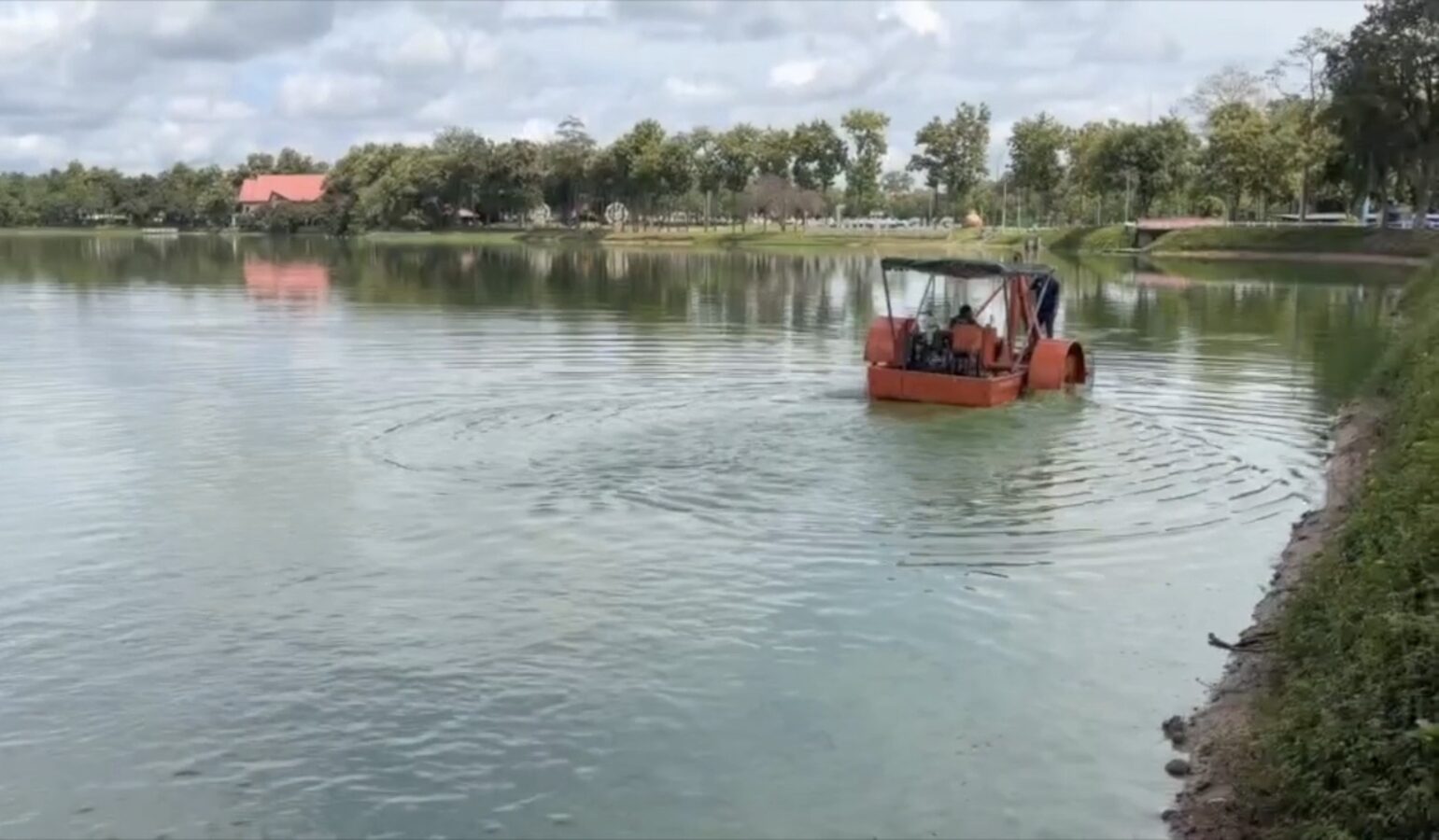
On 8th September, Chiang Mai PAO’s Engineering Bureau sent boats into the reservoir to collect the decaying algae and push it towards the banks, where it can be removed and disposed of. Water samples have also been collected for analysis by the Chiang Mai Provincial Environmental Office.
Initial tests found that dissolved oxygen (DO) levels remain within a range that does not currently pose a threat to aquatic life.
Narin Lathan, Director of the Chiang Mai PAO Engineering Bureau, said the problem appears to have originated with water flowing into the reservoir from an irrigation canal. The water is believed to contain fertiliser sediment washed from nearby rice fields.
As the nutrient-rich water enters the reservoir, the fertiliser accumulates. Combined with microorganisms and prevailing weather conditions, and areas where water circulation is poor or effectively stagnant, this has created conditions favourable for the rapid growth of blue-green algae, or cyanobacteria.
Chiang Mai PAO President Pichai Lertpongadisorn has ordered officials to accelerate efforts to address the problem. Removing the decaying algae is considered an immediate, short-term measure.
Environmental engineers will now conduct a more detailed analysis of the water quality before developing a longer-term treatment plan, which may include increasing oxygen levels and introducing appropriate microorganisms to help restore the reservoir’s water quality as quickly as possible.