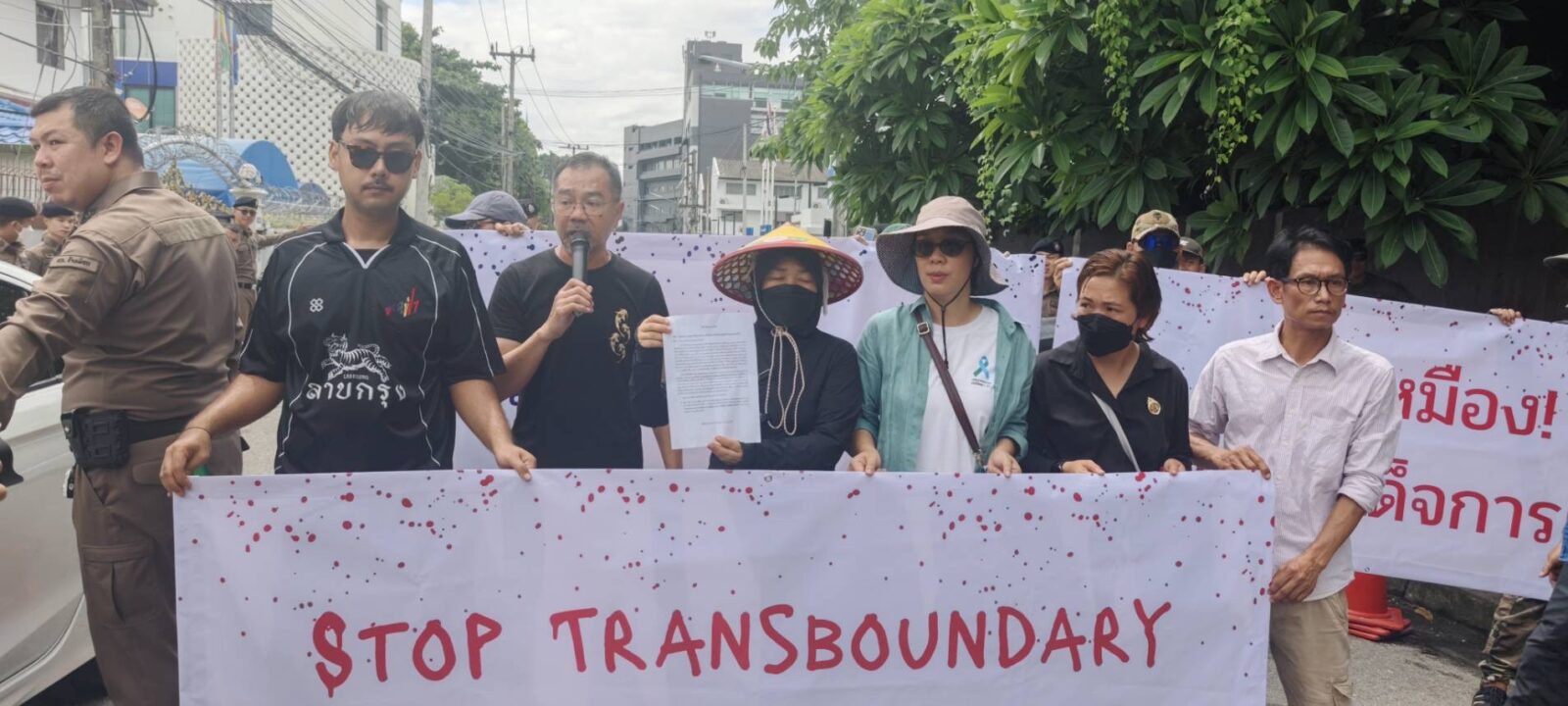
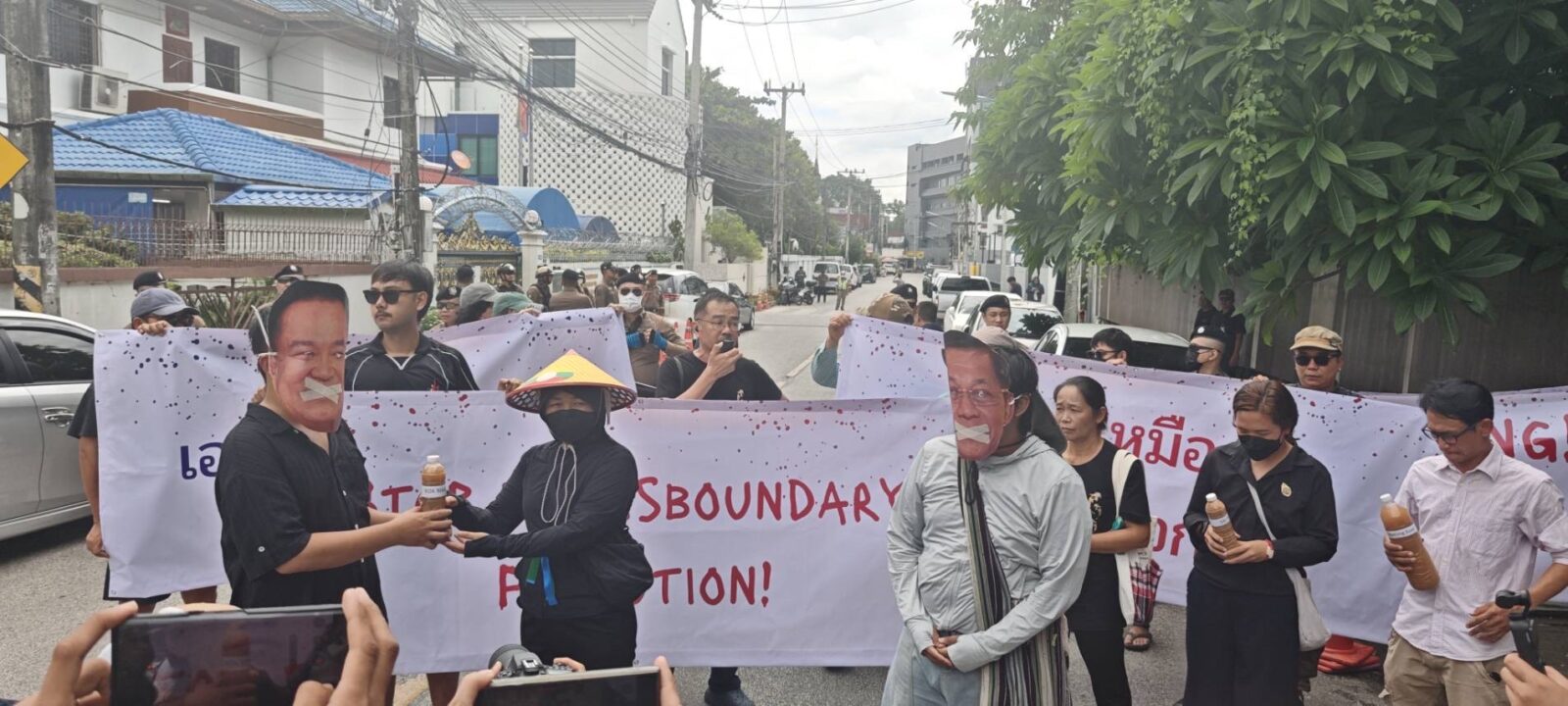
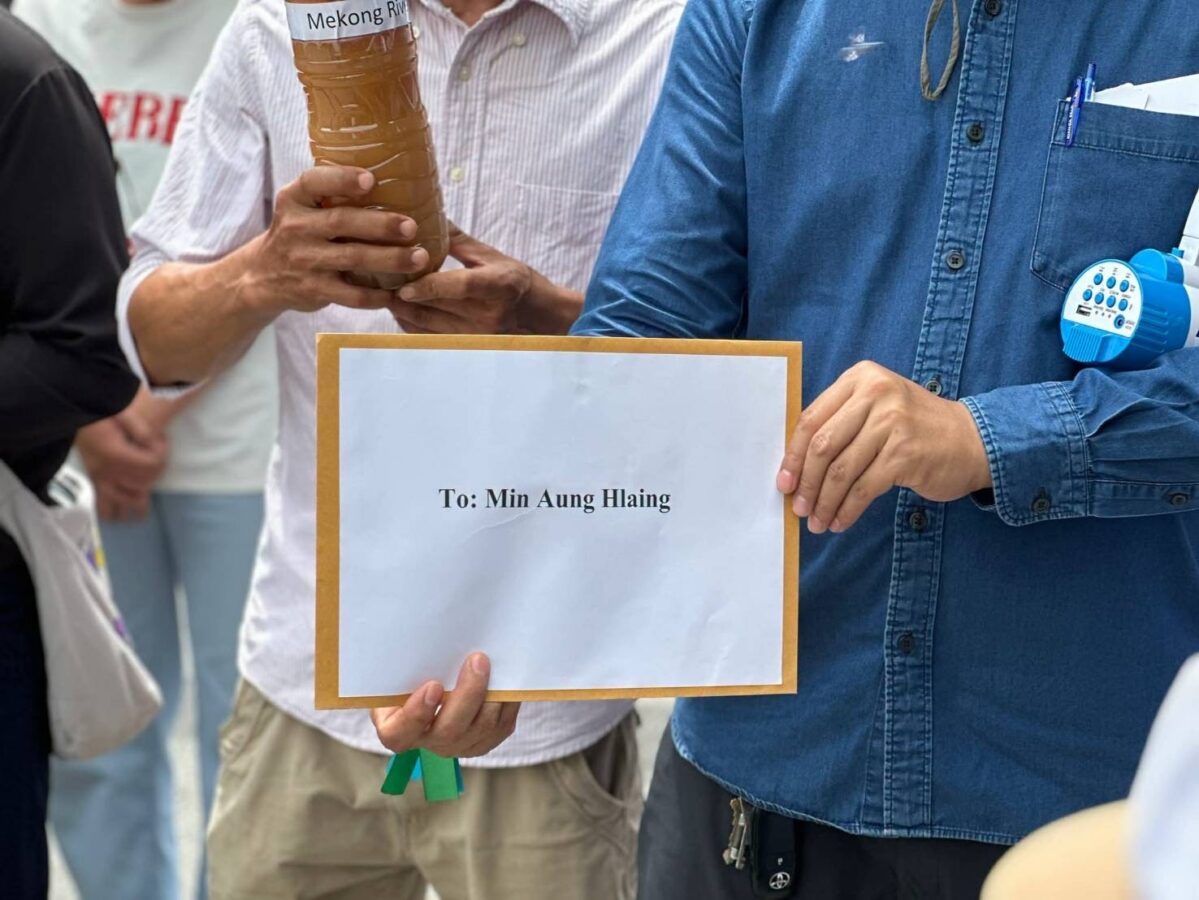
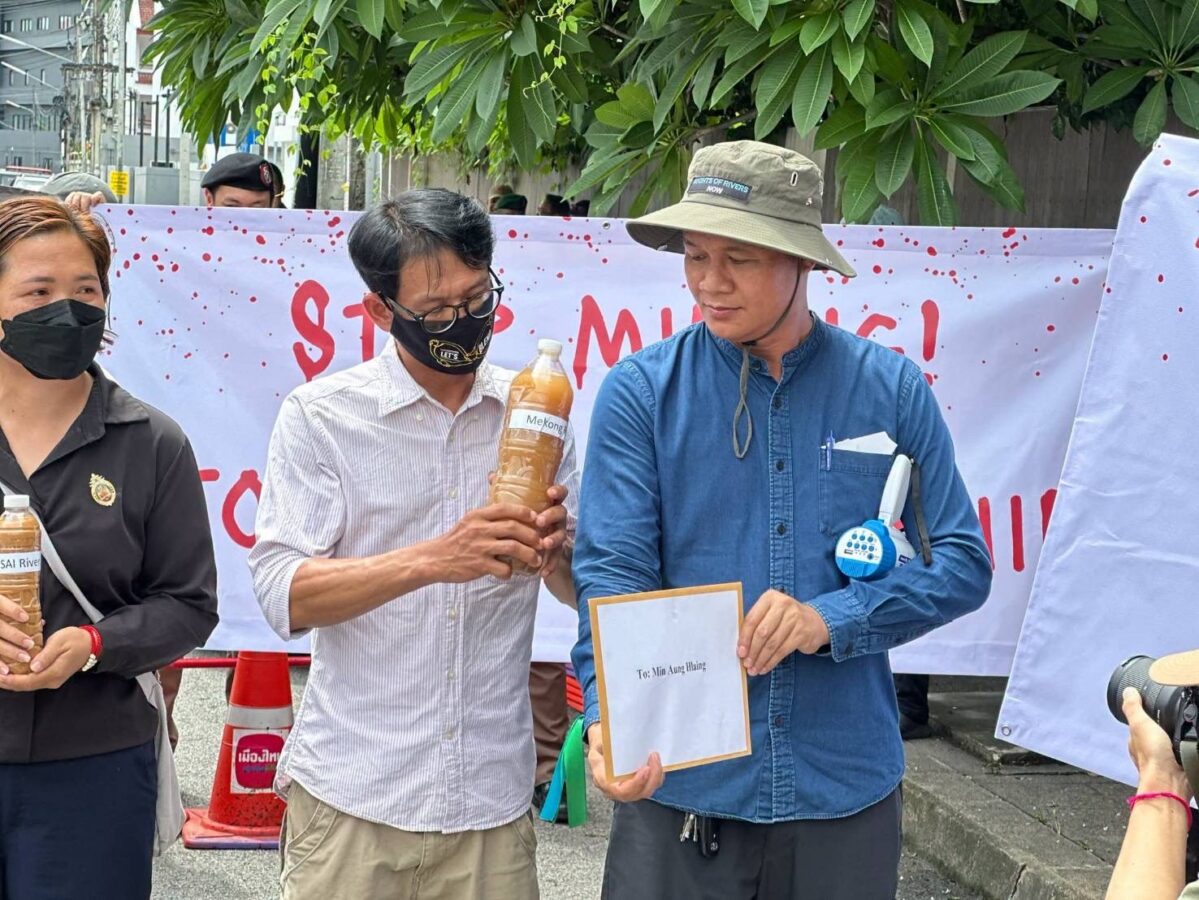
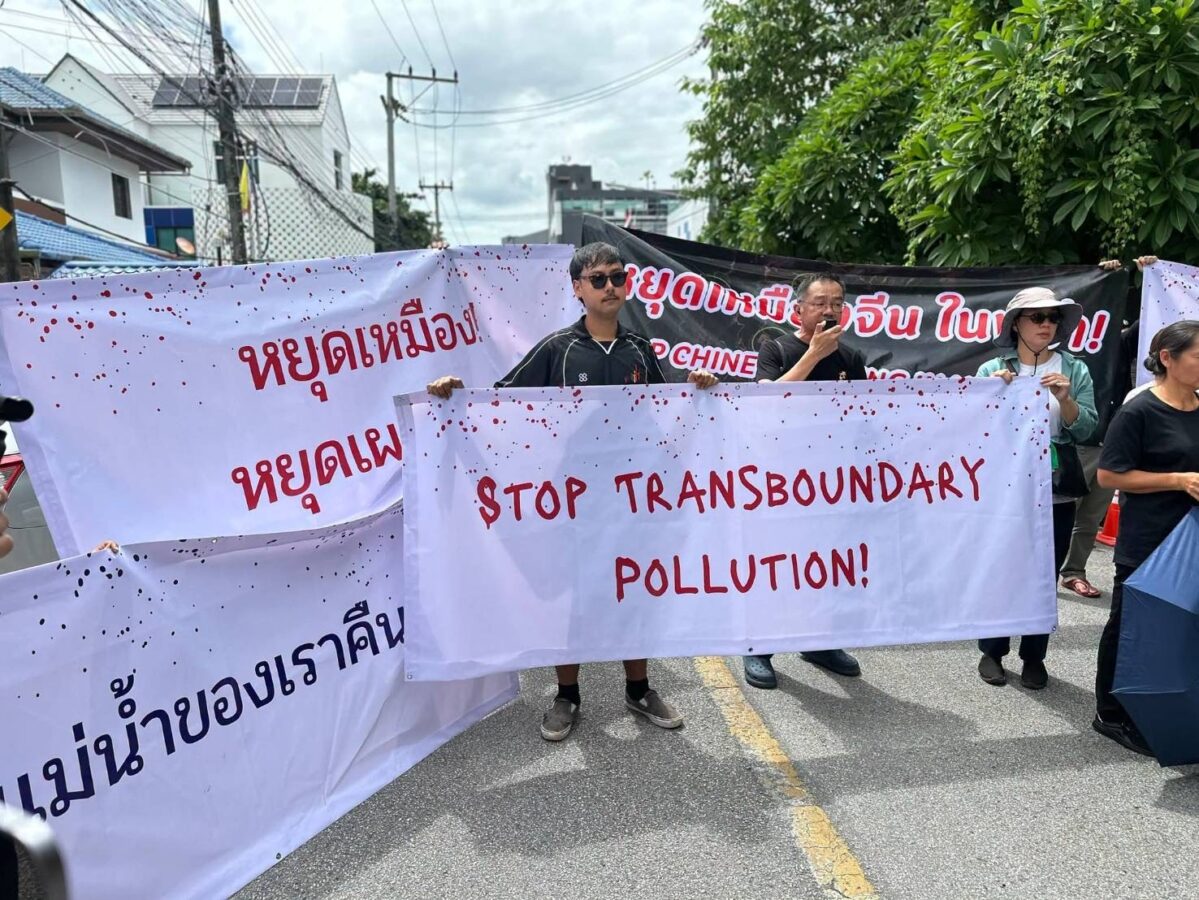
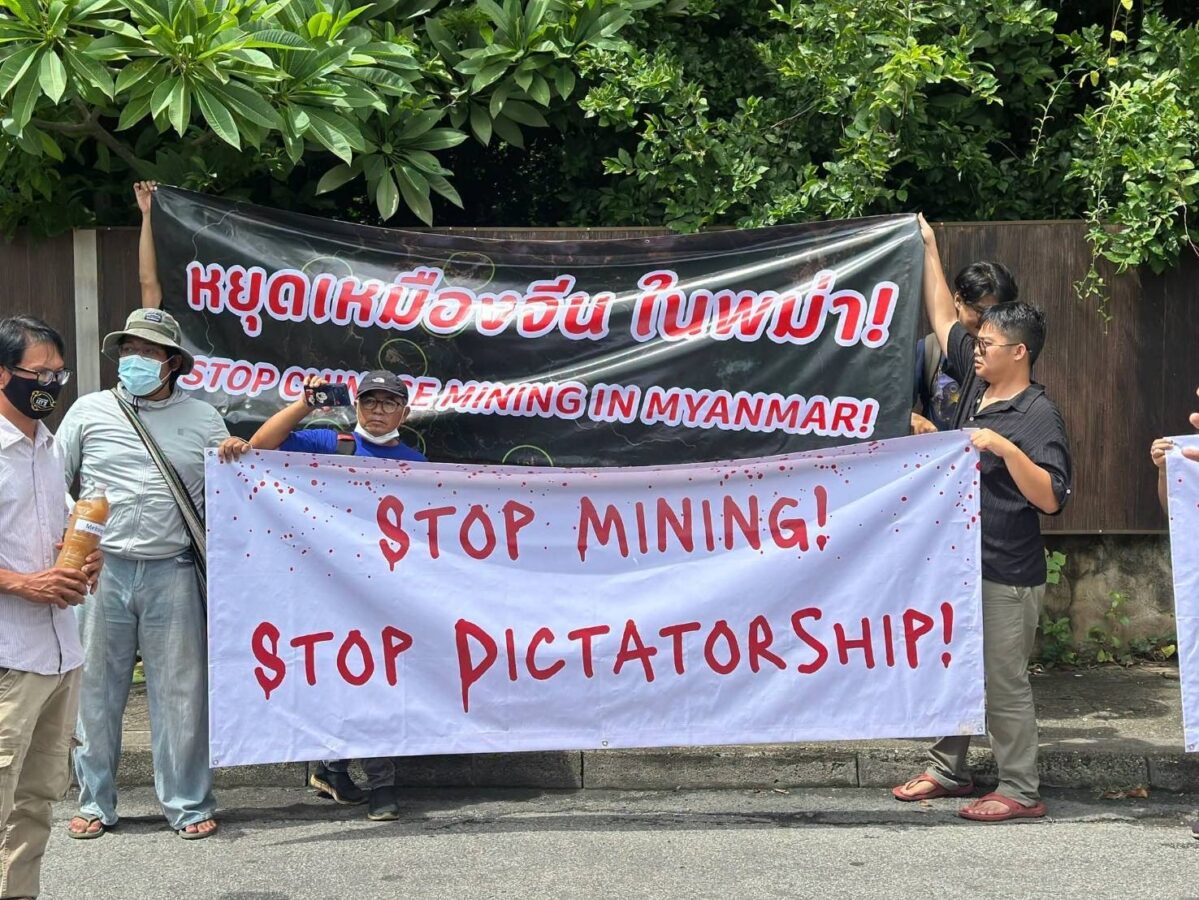
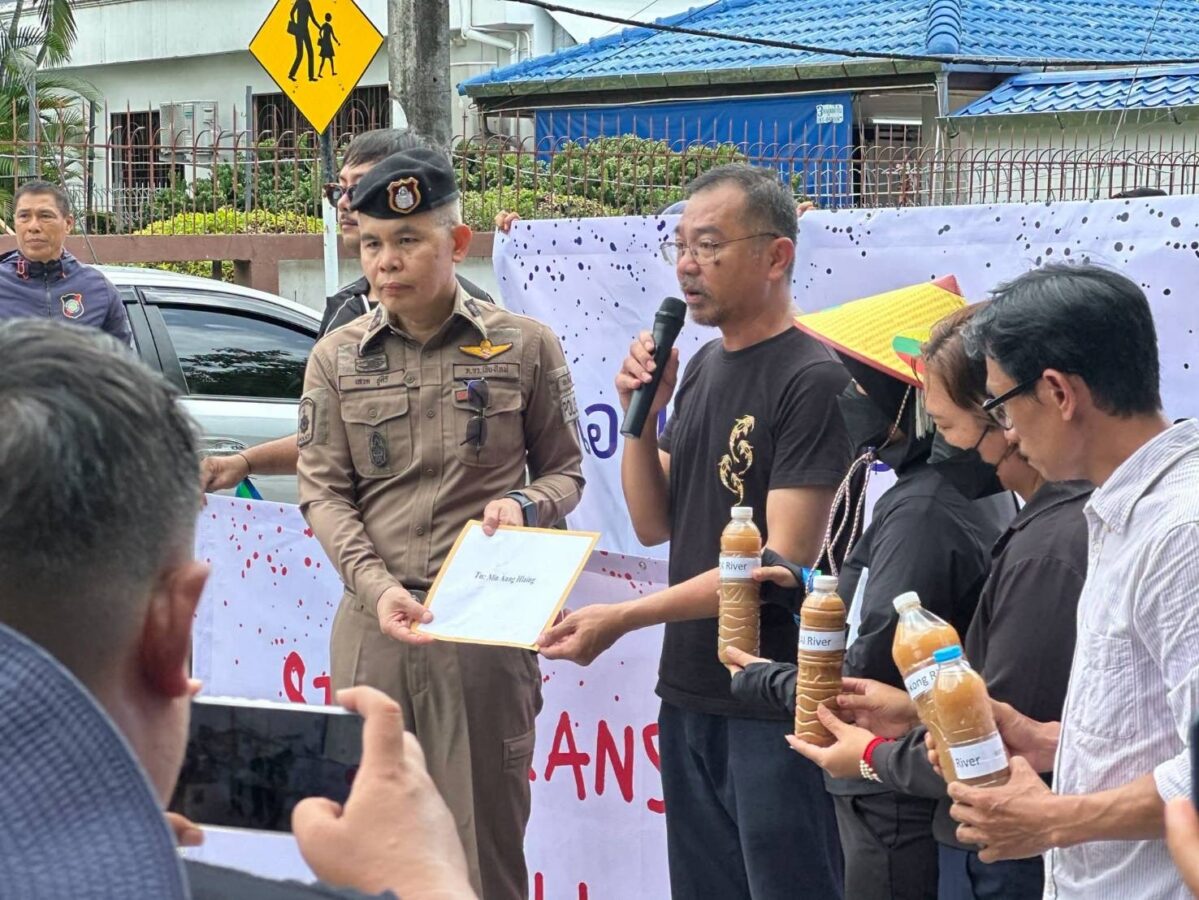
Protesters marched from Wat Santitham to the consulate carrying signs reading messages including “Stop cross-border pollution! Stop mining! Stop the dictatorship! Give us back the Kok River!”, along with bottles of contaminated river water used as a symbol of the campaign. The demonstration was led by Dr Sueb Sakul Kitnukorn of the river protection network, alongside Woravan Sukkarerk of Earthrights International’s Mekong campaign, social development worker Bupamas Santirat, and Saengrawee Sureerakarn of the Rak Nam Kok network.
The letter states that millions of Thai people living along the Kok, Sai, Ruak and Mekong rivers are suffering the effects of contamination entering the food chain from mining activity in Myanmar. It says farmers across at least 110,000 rai (40,000 acres) are forced to irrigate rice crops with contaminated water, which is then sold to consumers nationwide, while fishing communities across 60 villages have lost their livelihoods as consumers avoid fish contaminated with lead, cadmium and mercury. The Ministry of Public Health has advised against eating shrimp, shellfish and crab from affected rivers, and against consuming fish organs due to high heavy metal content. The letter adds that tourism operators along the Kok River are losing their livelihoods, and that at least 40,000 households, or 120,000 people, in Chiang Rai city are drinking tap water contaminated with heavy metals.
The letter also references a UN Joint Communication issued on 21st April 2026 regarding ongoing cross-border environmental and human rights violations linked to mining and contamination in the Mekong subregion. It states that Myanmar’s government responded on 17th June 2026 denying allegations of rare earth and other mining activity along the Kok River, a claim the network says is contradicted by satellite imagery, calling it a denial that disrespects both the UN and the Thai public.
The network’s letter calls on Myanmar’s military government to acknowledge the ongoing contamination originating from mining along the Kok, Sai, Ruak and other Mekong tributaries, and to immediately halt all mining operations along the riverbanks until the contamination issue is resolved.