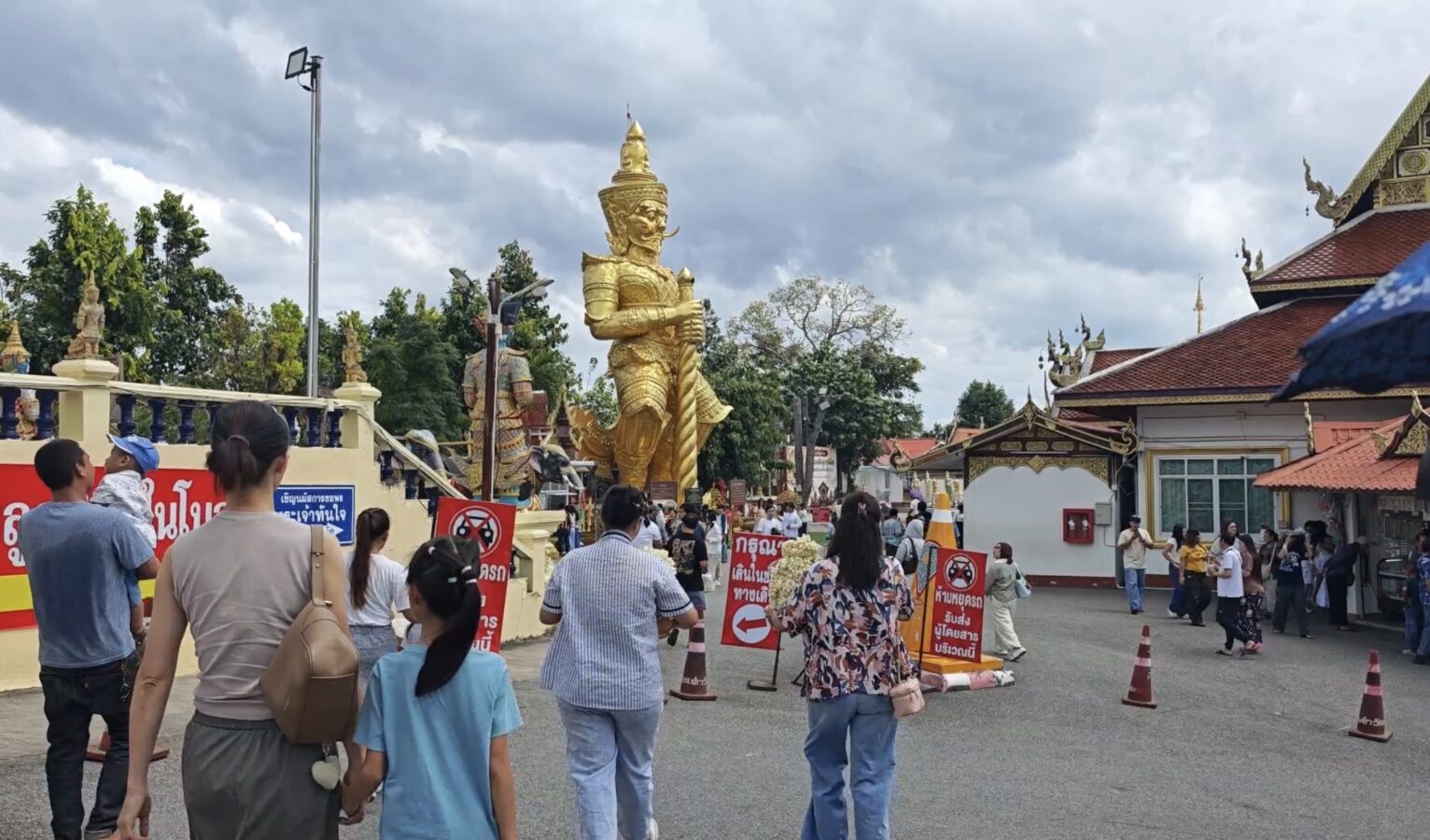
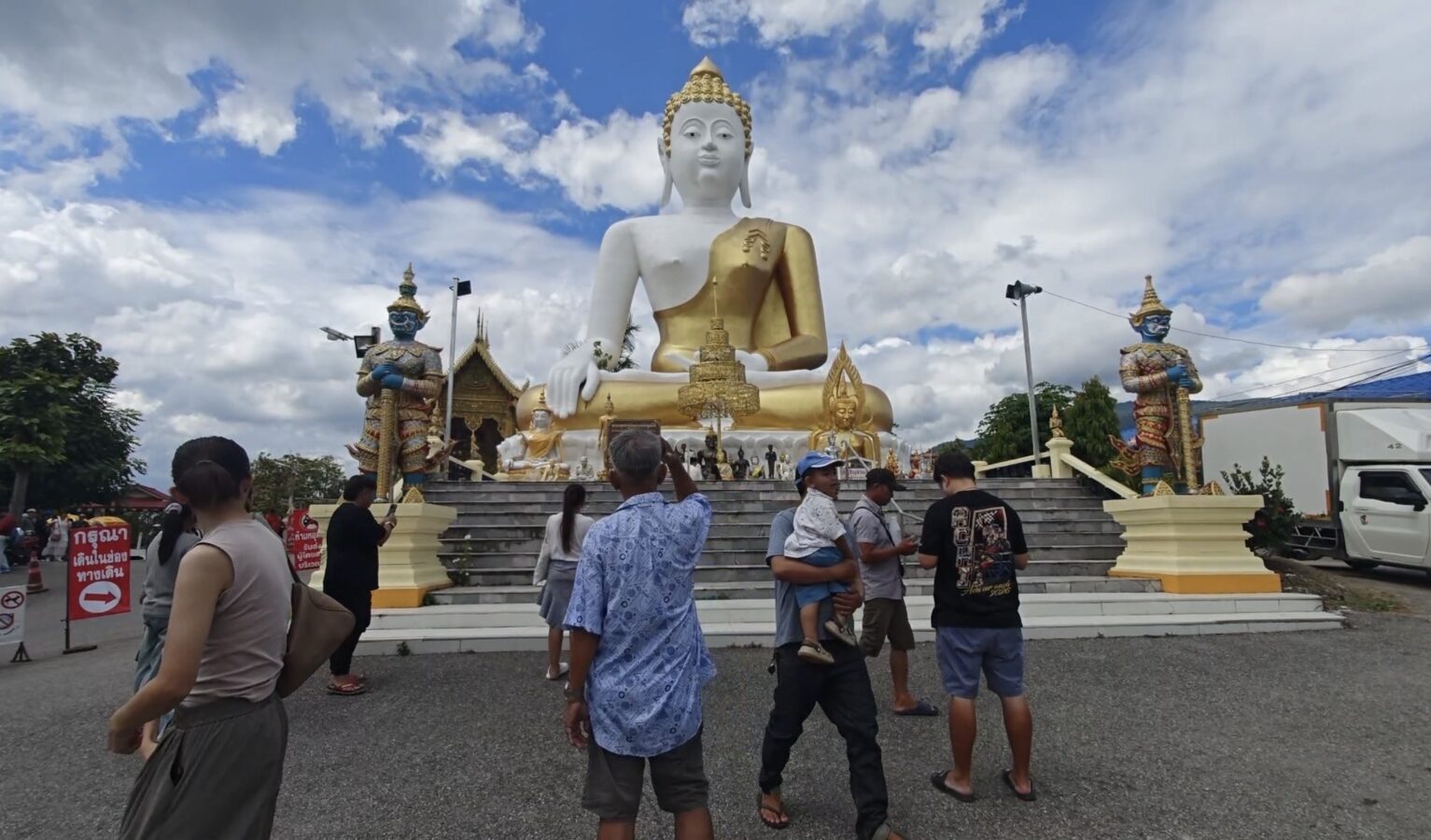
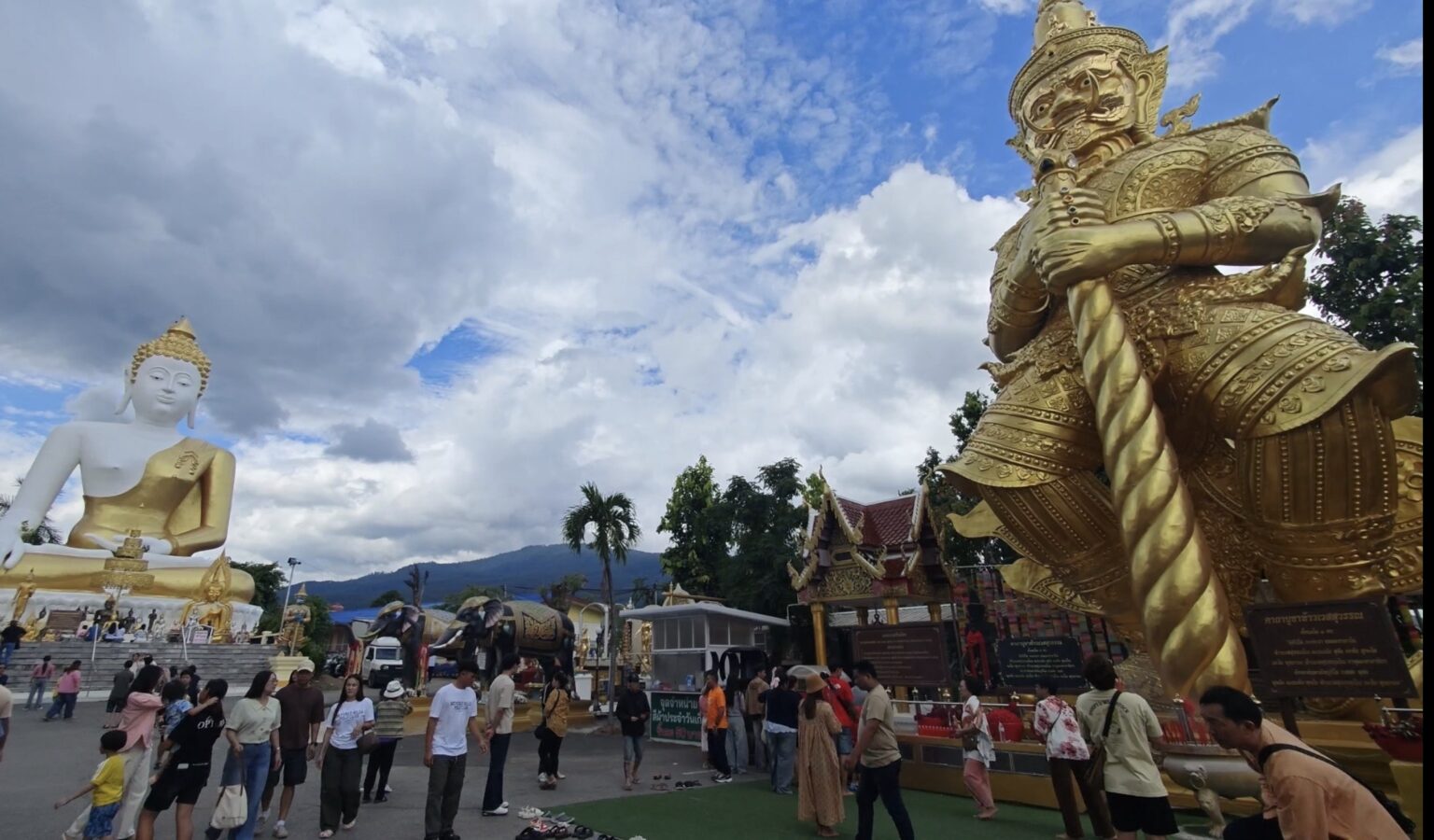
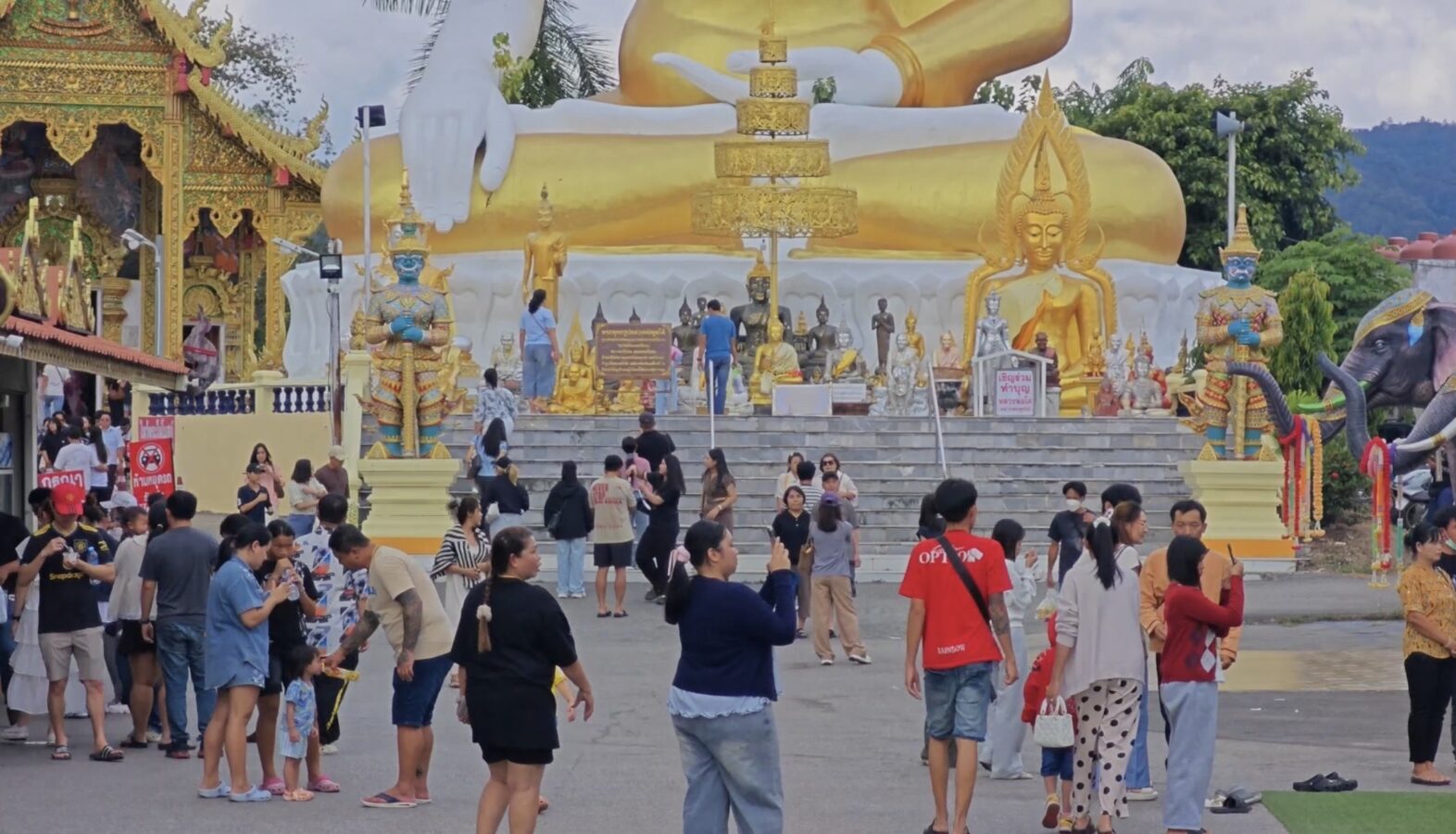
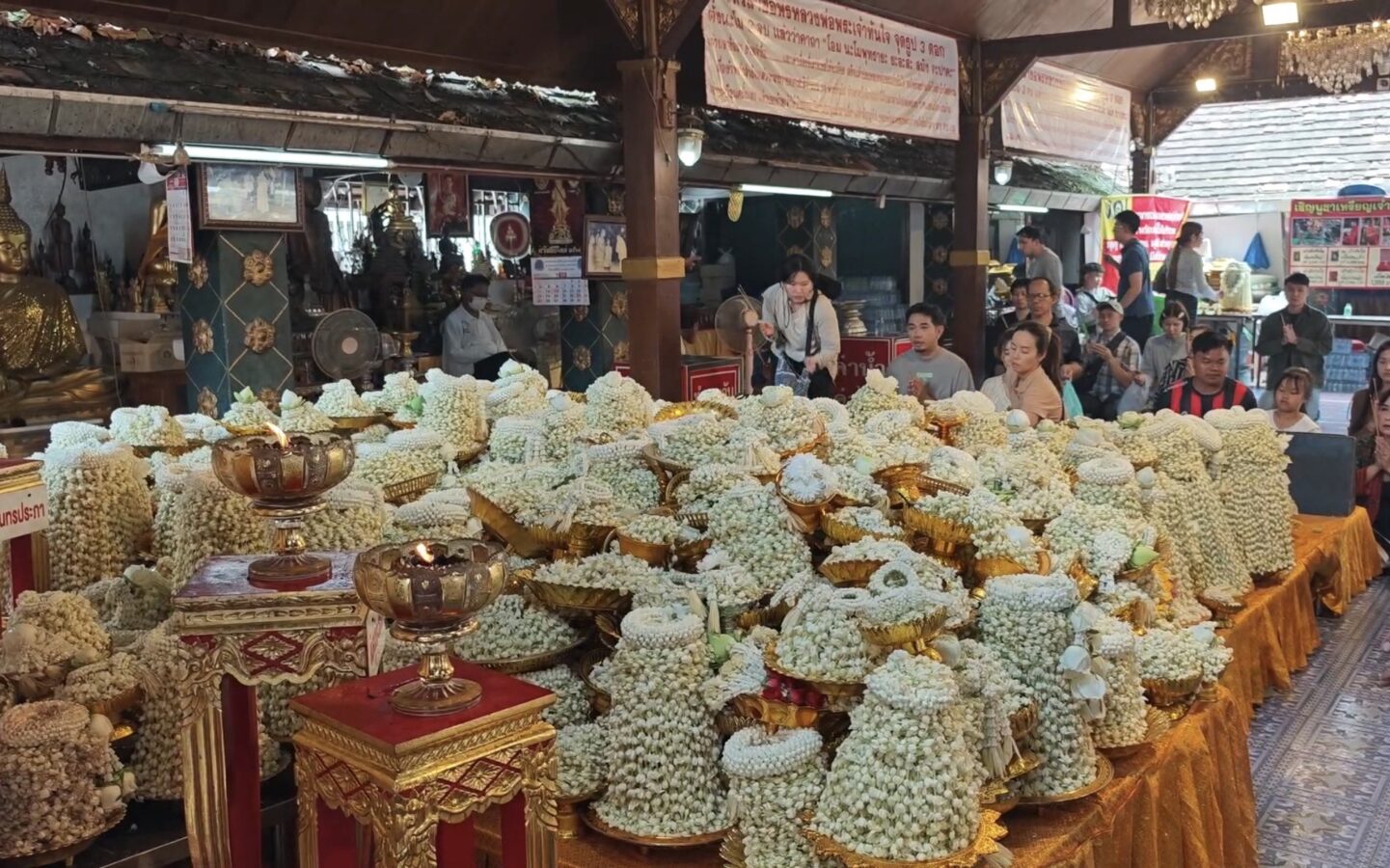
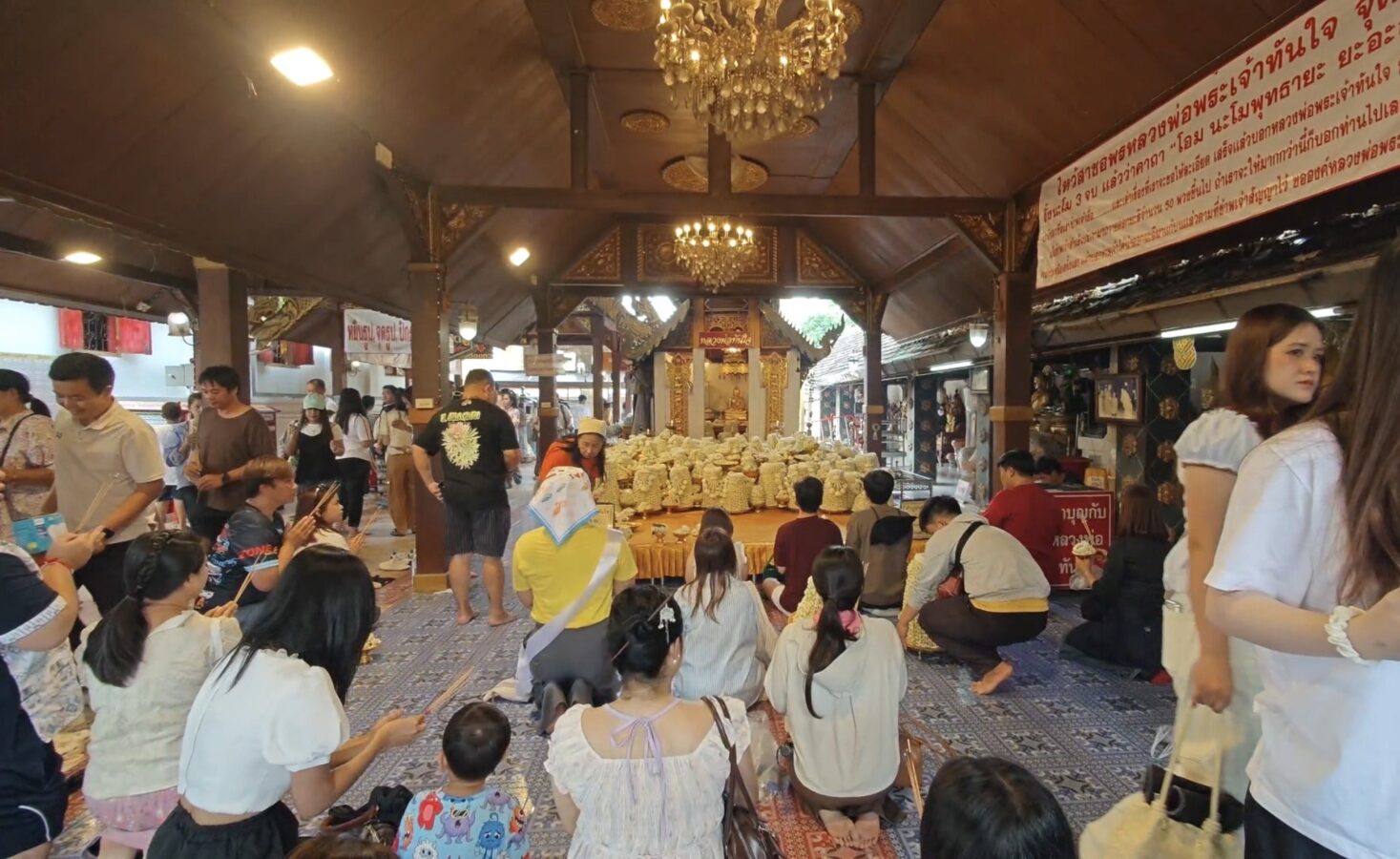
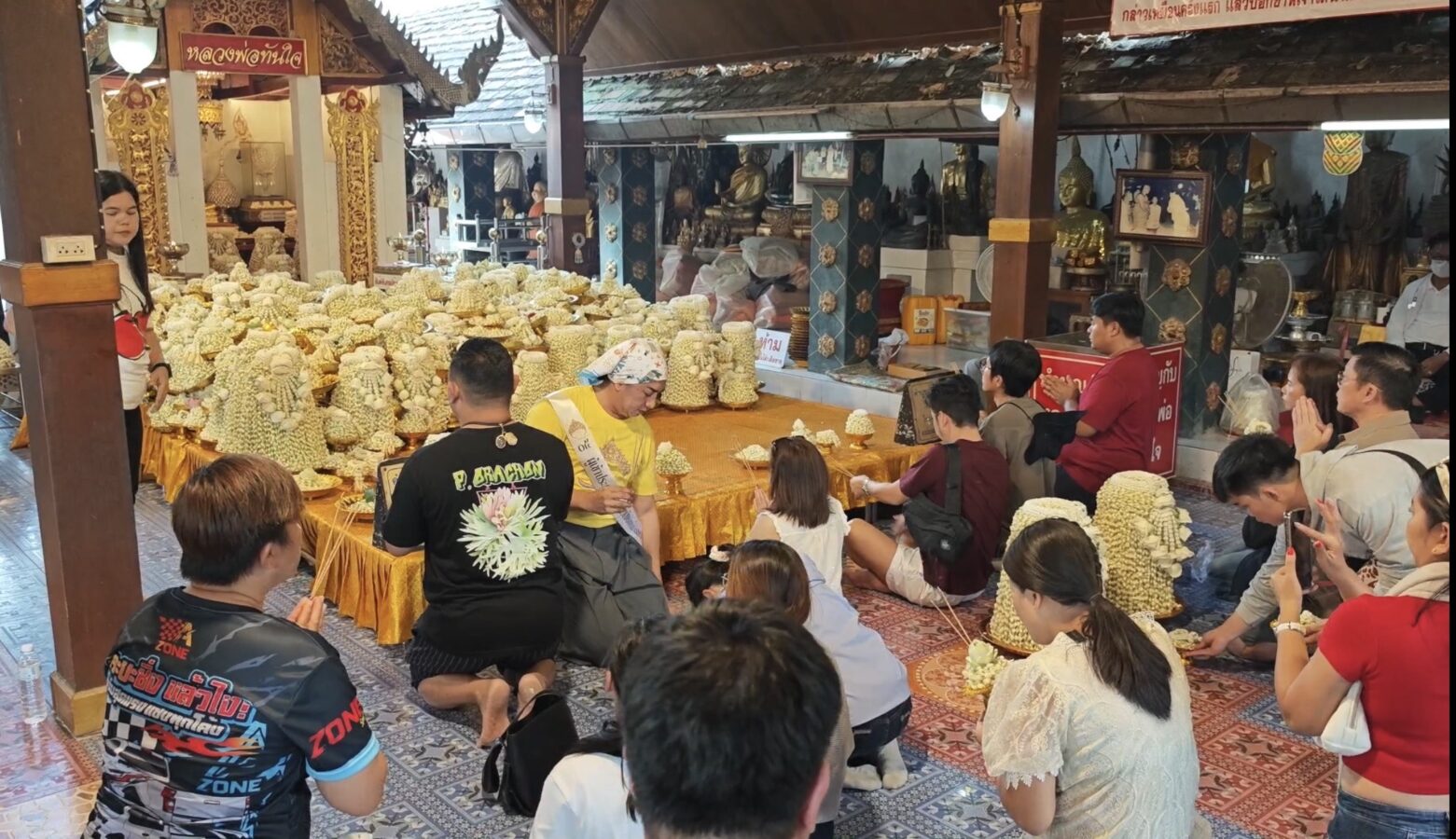
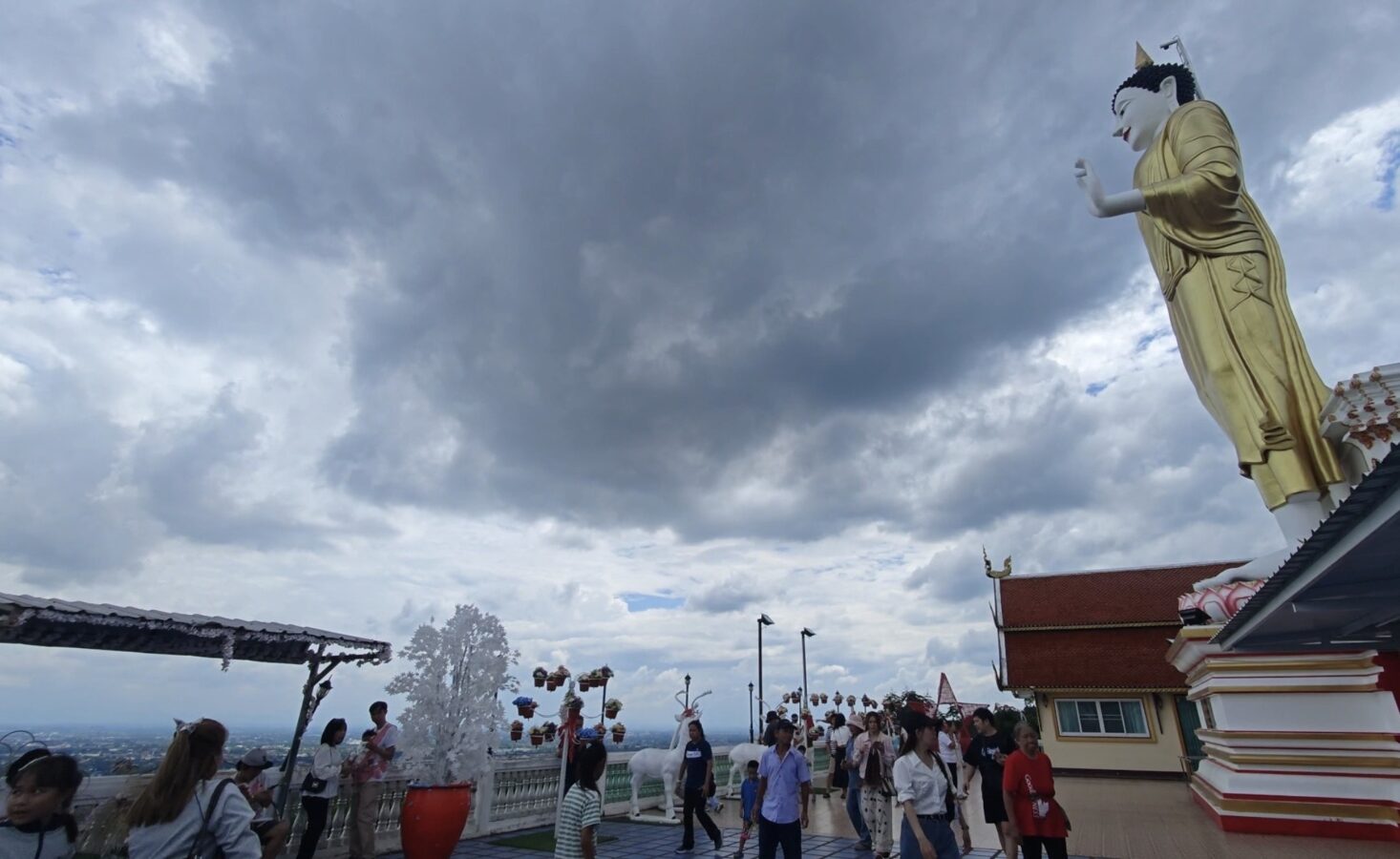
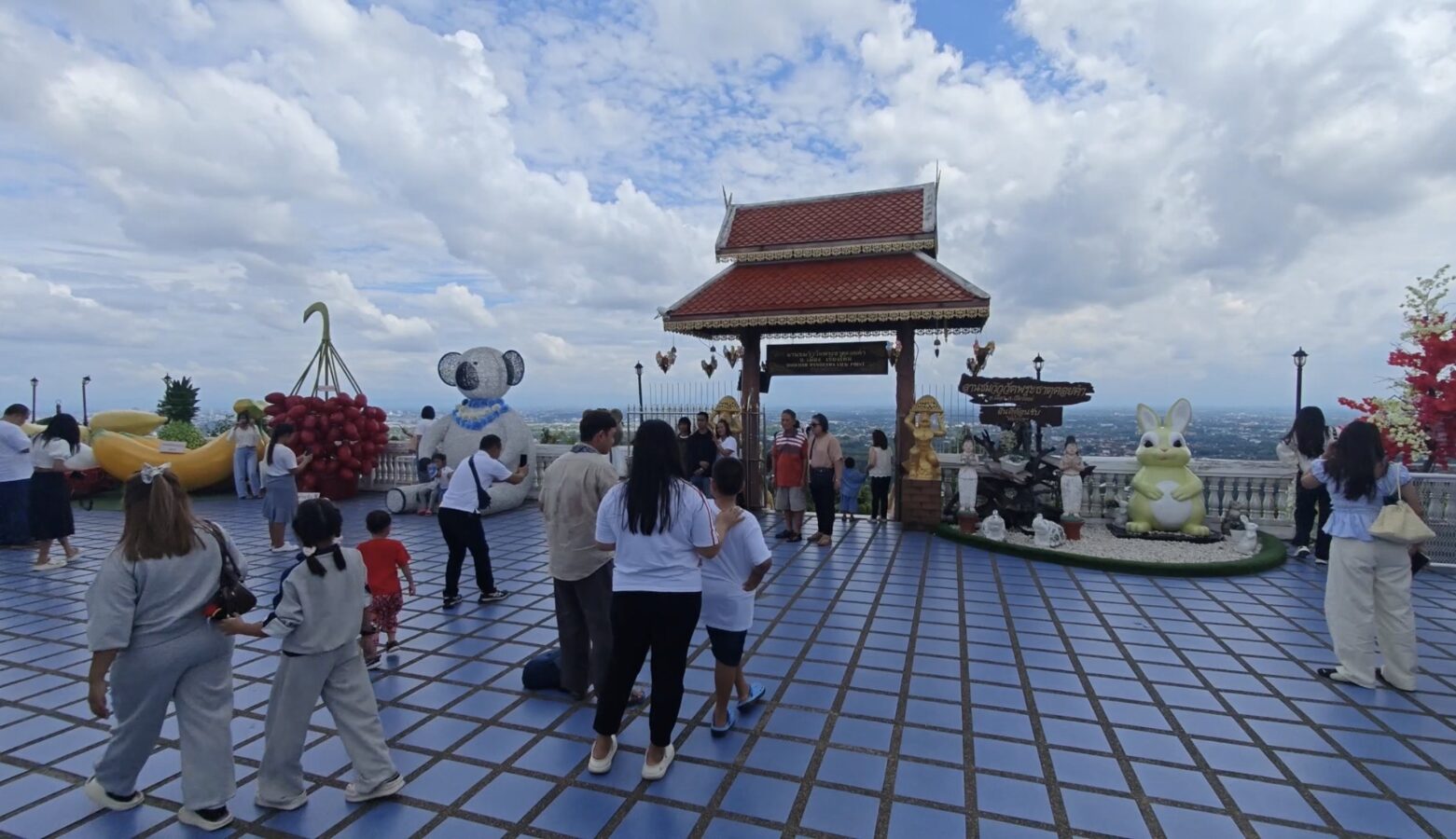
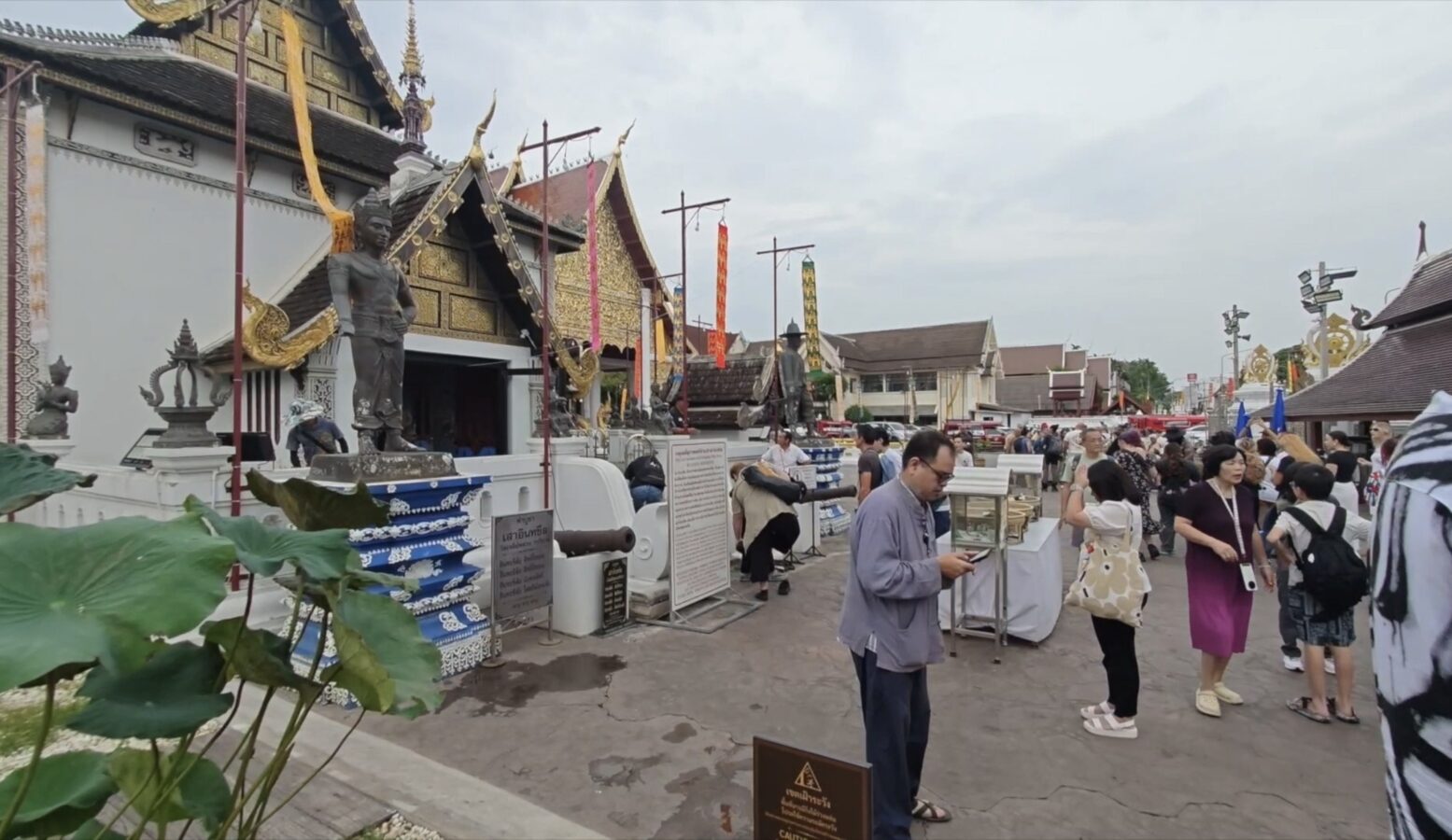
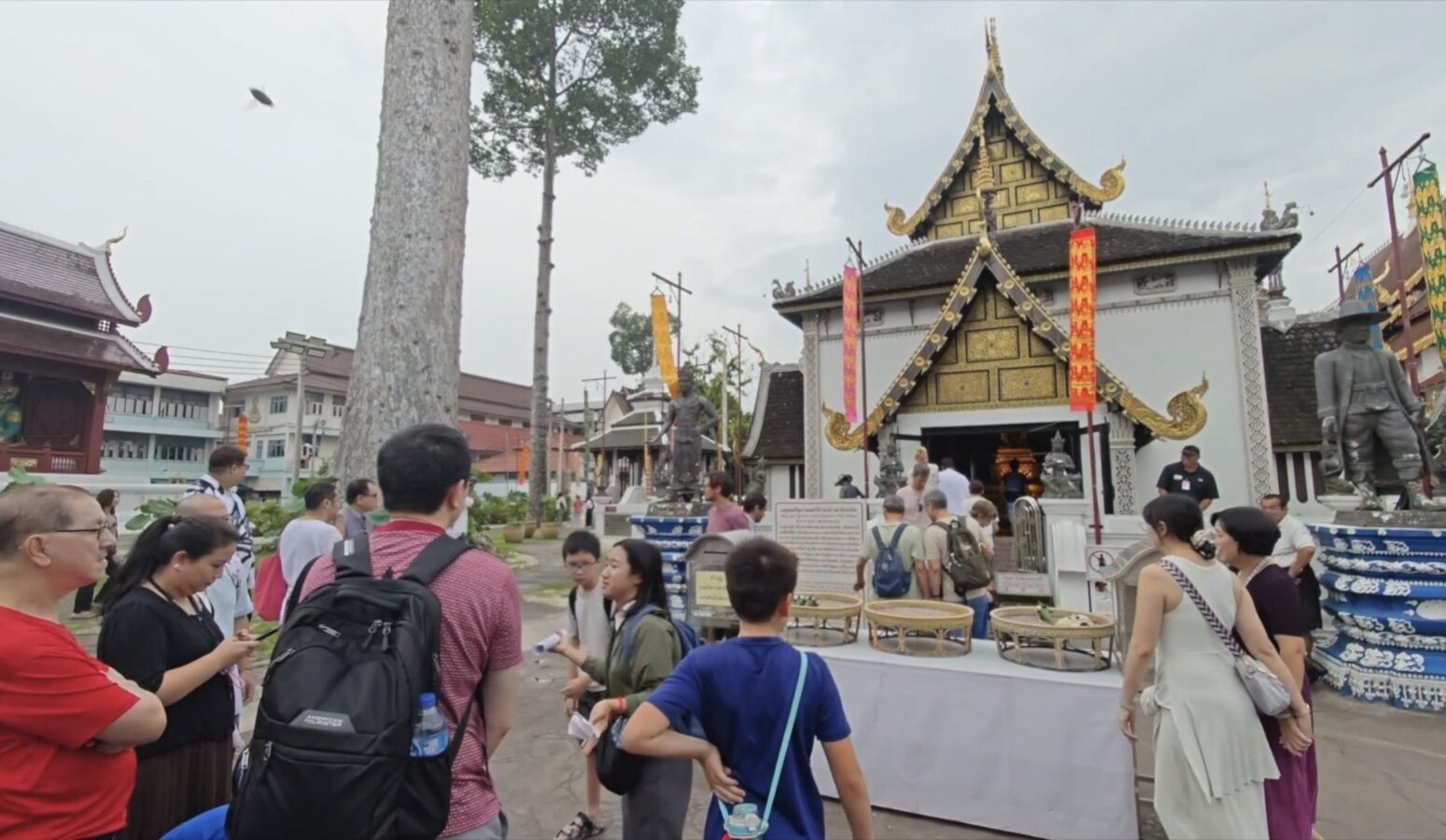
On weekends the road up to Wat Phra That Doi Kham in Mae Hia, Mueang district, fills with people carrying jasmine garlands. They have come from all over the country to ask a favour of Phra Chao Thanchai, the Buddha statue whose name roughly translates as “the instant one,” and a good many have come back to say thank you.
Those returning are there to settle up. They made a wish, it came true, and they promised a garland in return. The result is a temple compound crowded from morning to evening, with garlands piled up by the thousand. Temple staff have been posted to direct traffic and point people the right way inside.
The Buddha statue is said to be more than 1,300 years old, made in the time of Queen Chamthewi of the Hariphunchai kingdom. Its reputation rests on speed. Believers say requests, whether about work, business, luck or exams, are granted quickly. Word of mouth has done the rest.
The crowds suit the province well. Chiang Mai is pushing faith tourism, known as “mu” (short for mutelu), as a way to bring in visitors and spread money around communities. The Tourism Authority of Thailand and the Chiang Mai Tourism Business Association are running “MU Month” for the third year, pairing temple visits with local history, culture and everyday life.
The centrepiece is a circuit of 25 sacred pagodas across the province’s 25 districts. Visitors collect a stamp at each one in a “Mu Passport” and receive a “lucky” coin for each pagoda they visit. The stamp collecting runs from September 1 to December 31, 2026.