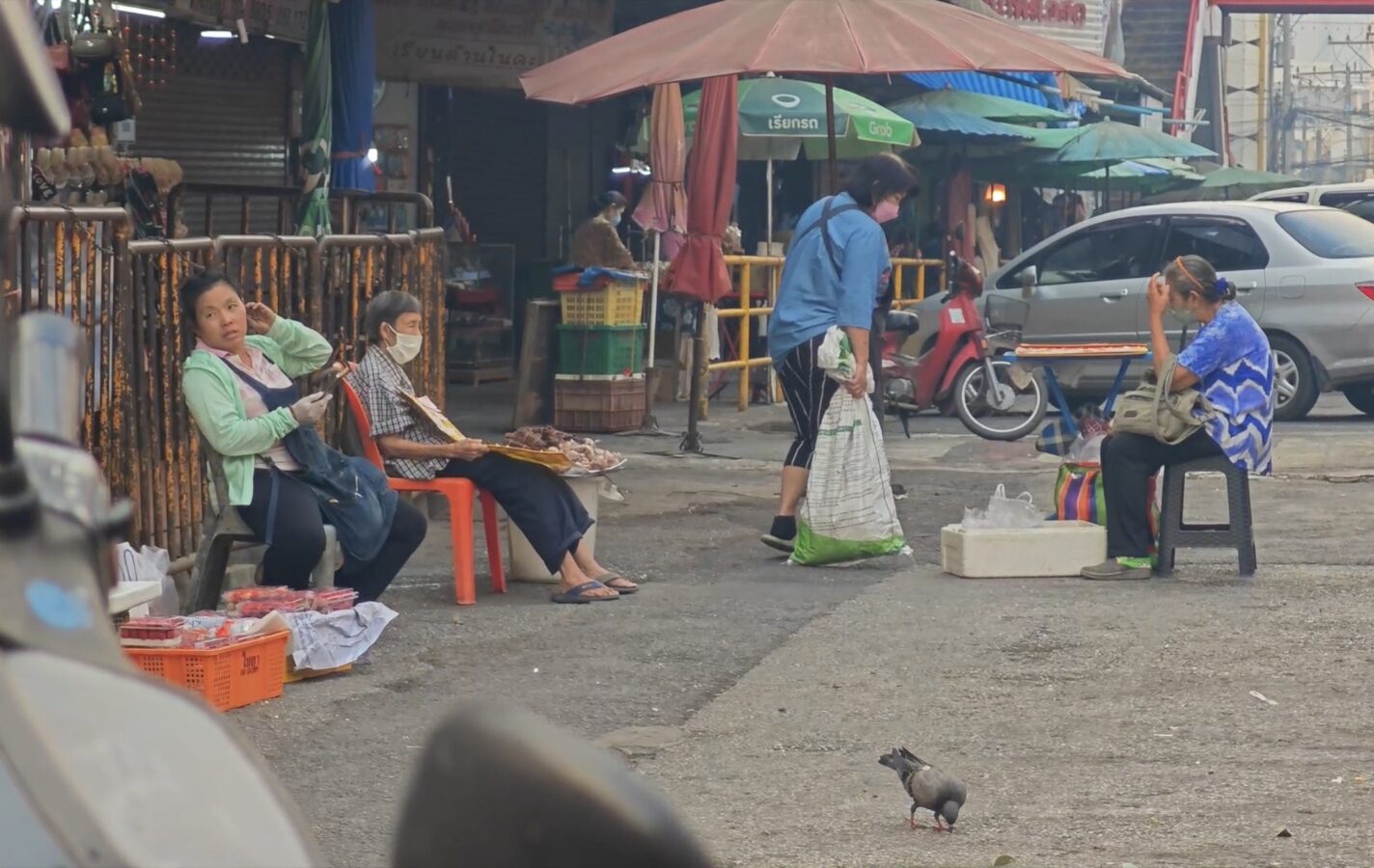
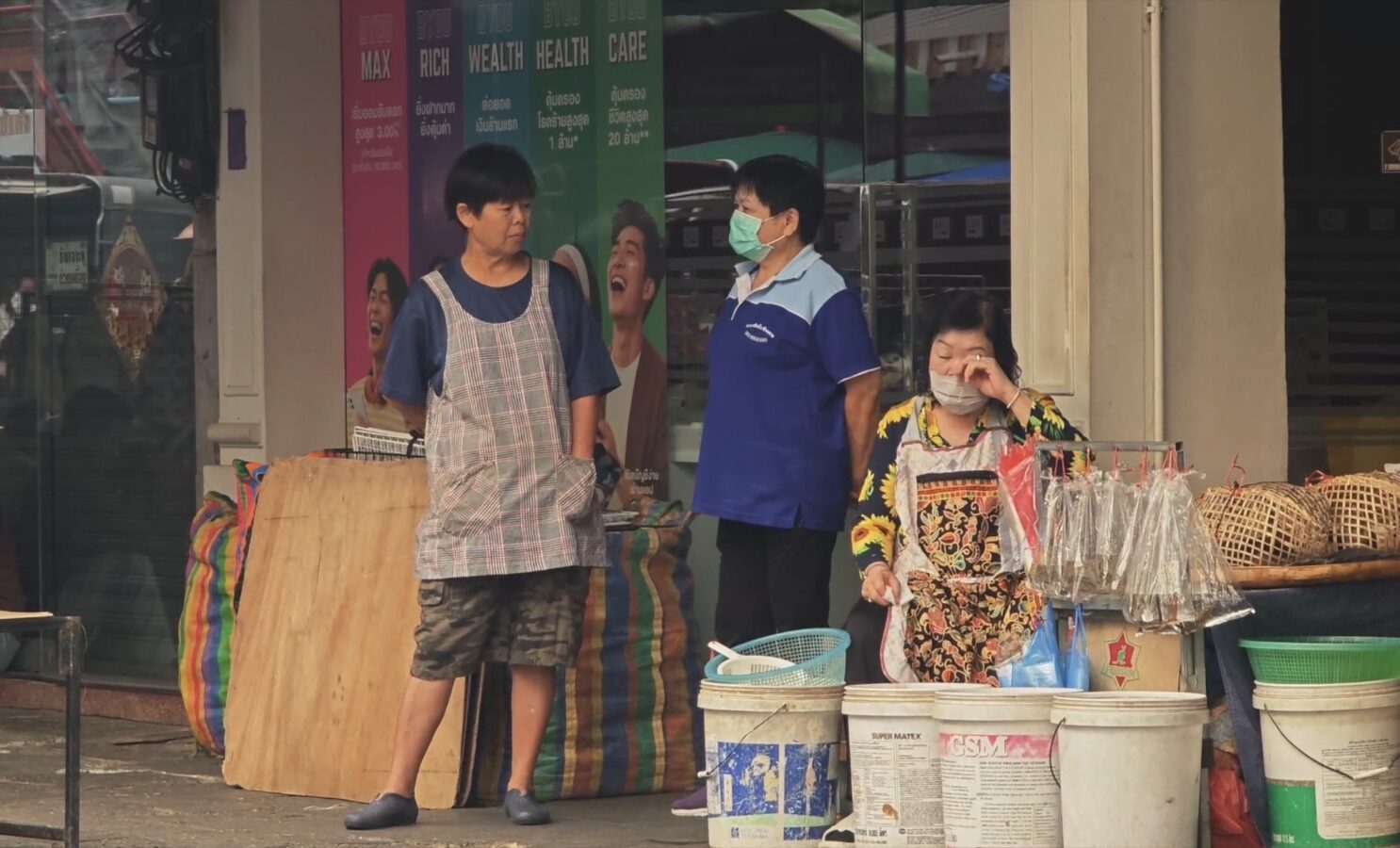
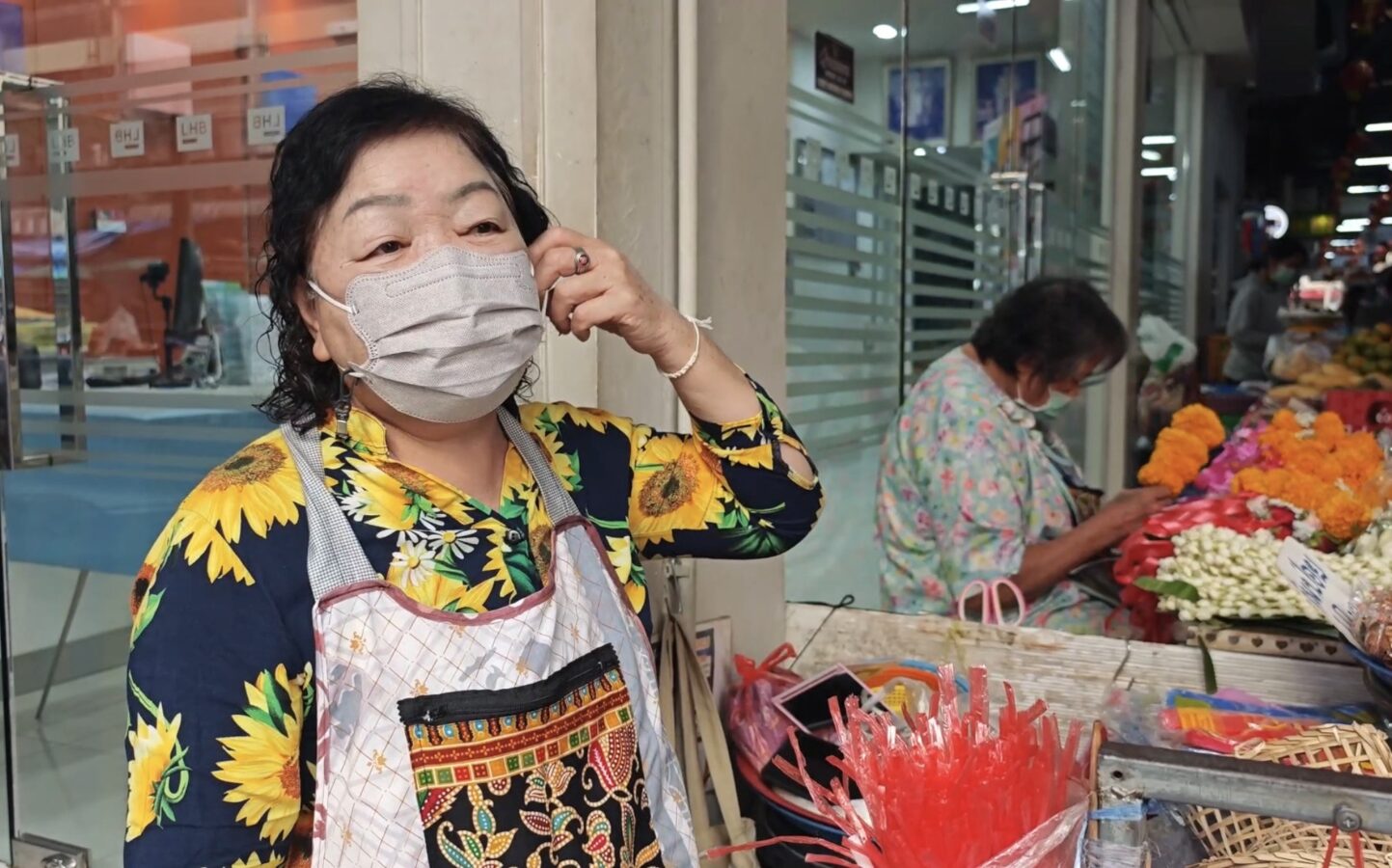
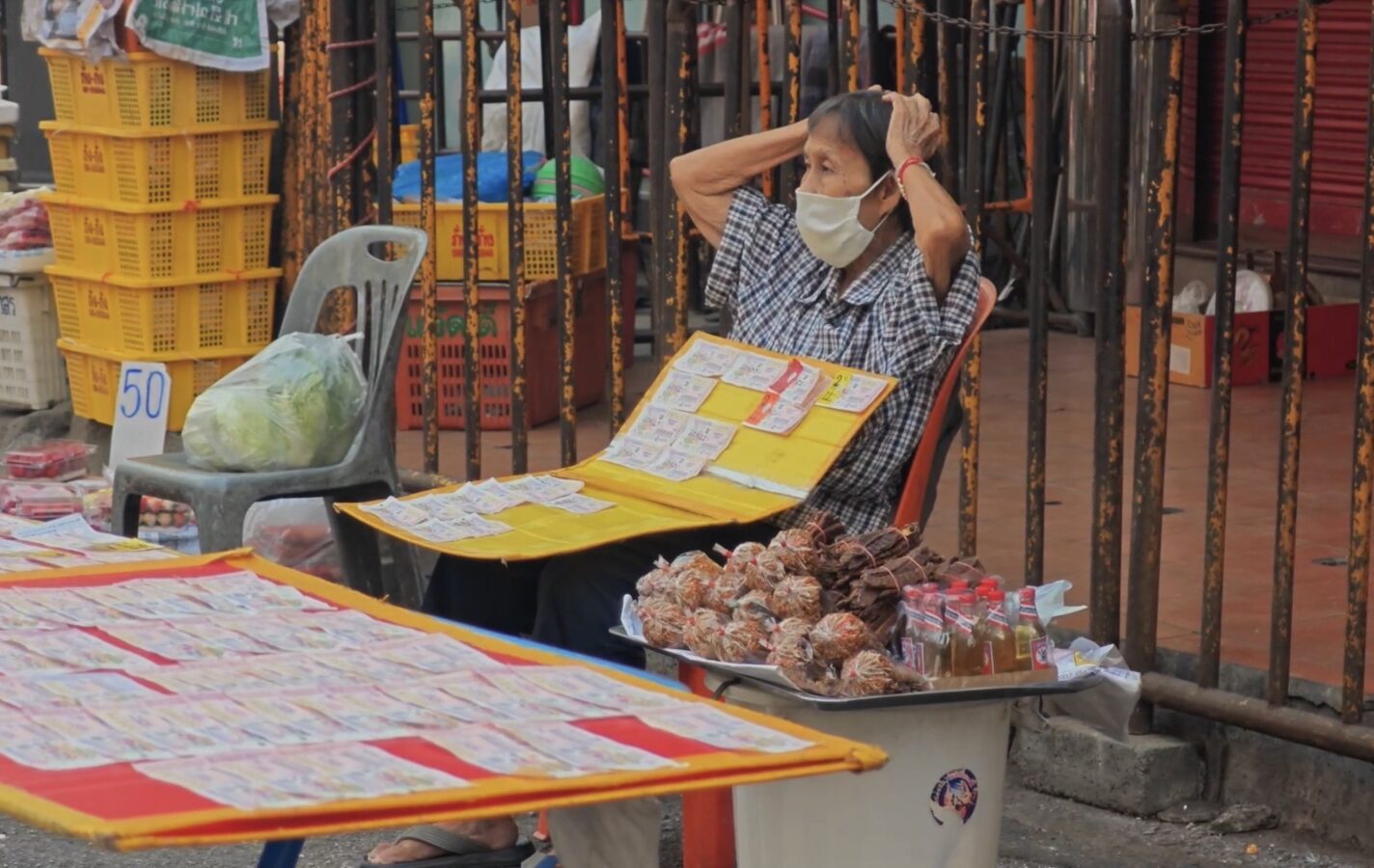
Vendor Saengduan Sanittha said she cannot afford to stop working despite the health risks — her stall rent is fixed regardless of whether she sells. She manages by wearing a mask and drinking water frequently, though she admitted her eyes have already begun to sting. Some fellow vendors have been hit harder, suffering nosebleeds and persistent coughing. On the broader problem of forest burning, she said she doubted it could be easily solved, but expressed solidarity with firefighters working in difficult terrain, and hoped the burning season would end soon.
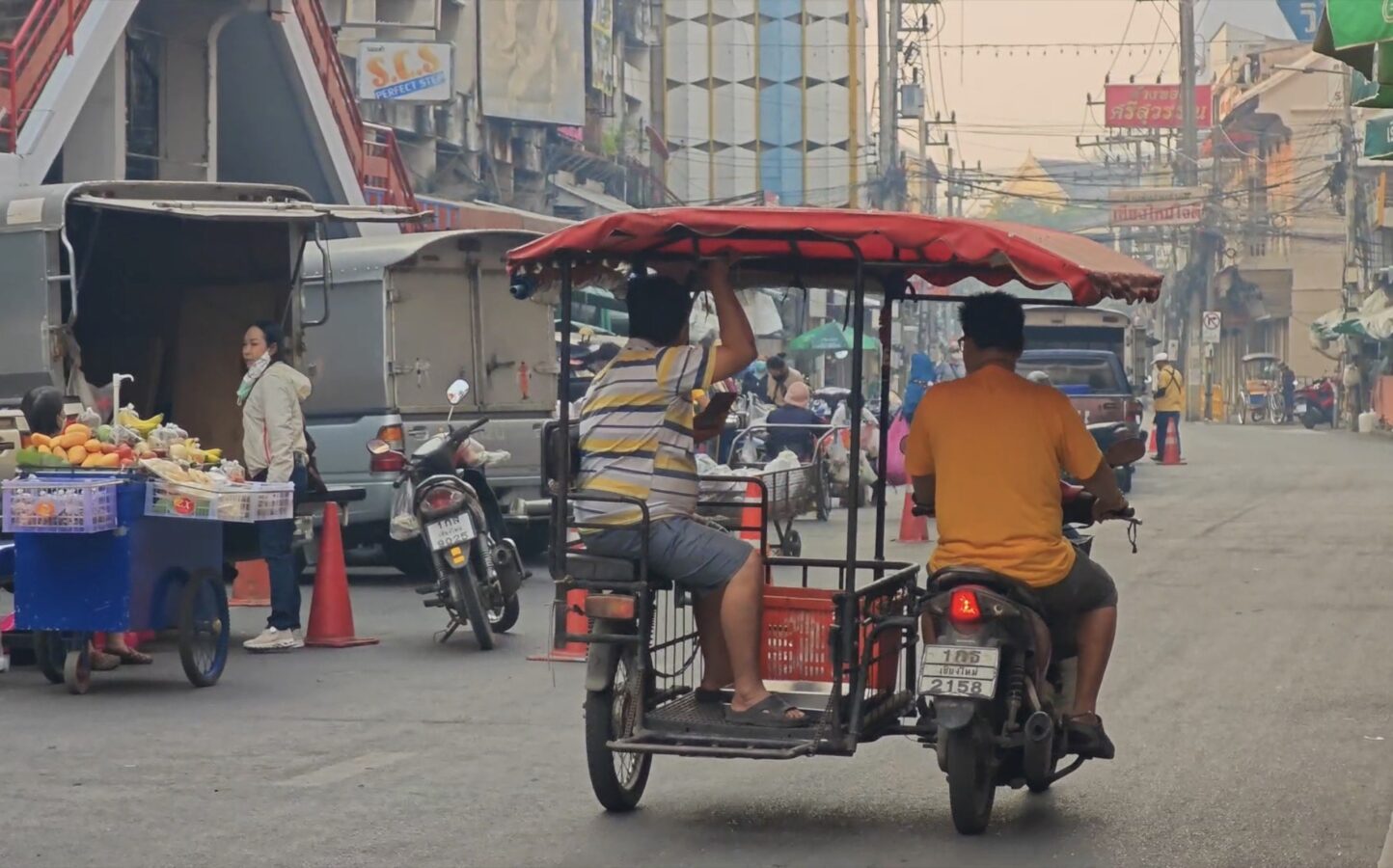
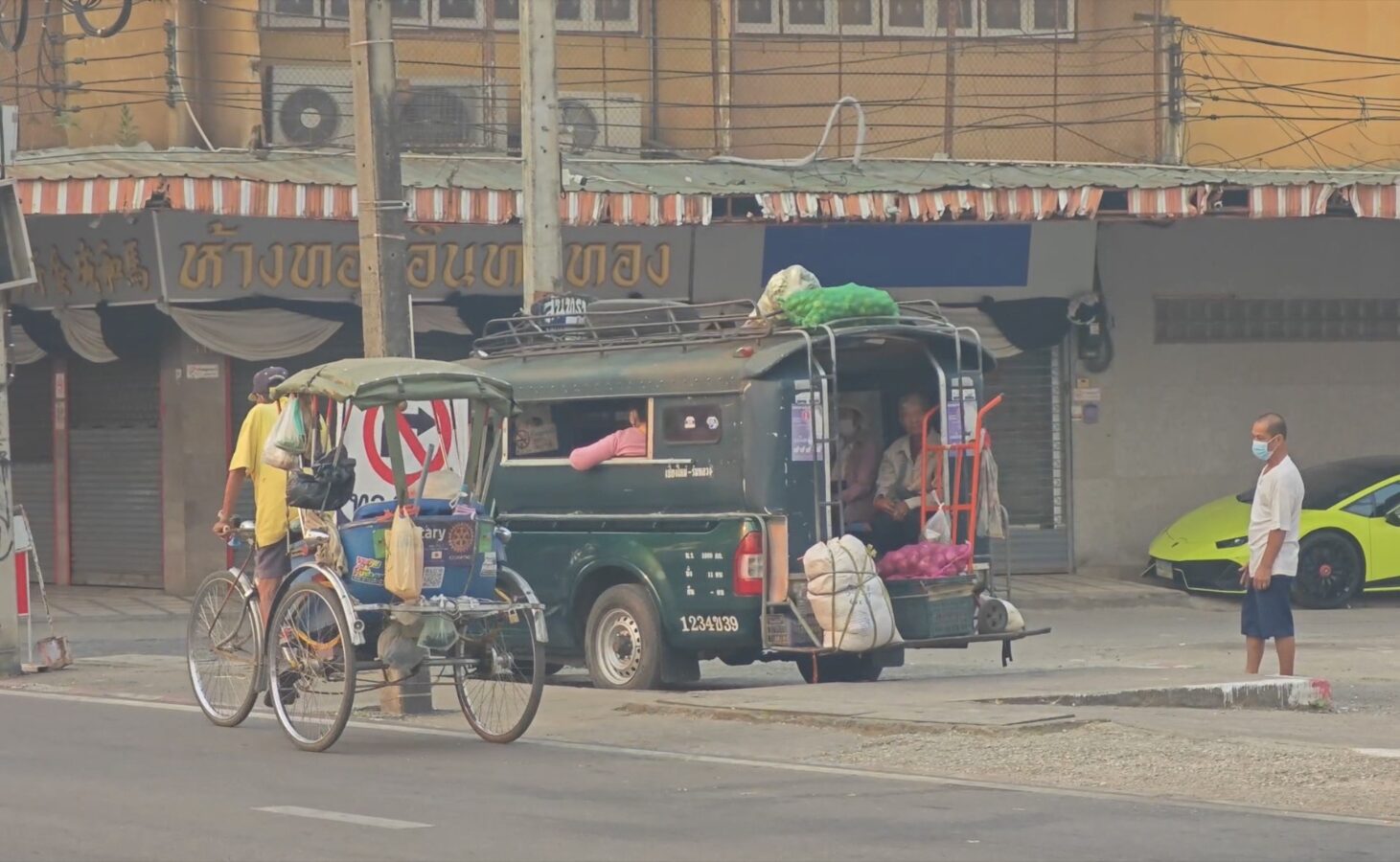
Public transport drivers in the area are similarly exposed, and said wearing a mask was the only protection available to them.
The crisis shows no sign of easing. This morning, 787 hot spots were recorded across the province — with Chiang Dao district alone accounting for 149, nearly double yesterday’s count of 99. Samoeng followed with 100 hot spots and Phrao with 96.
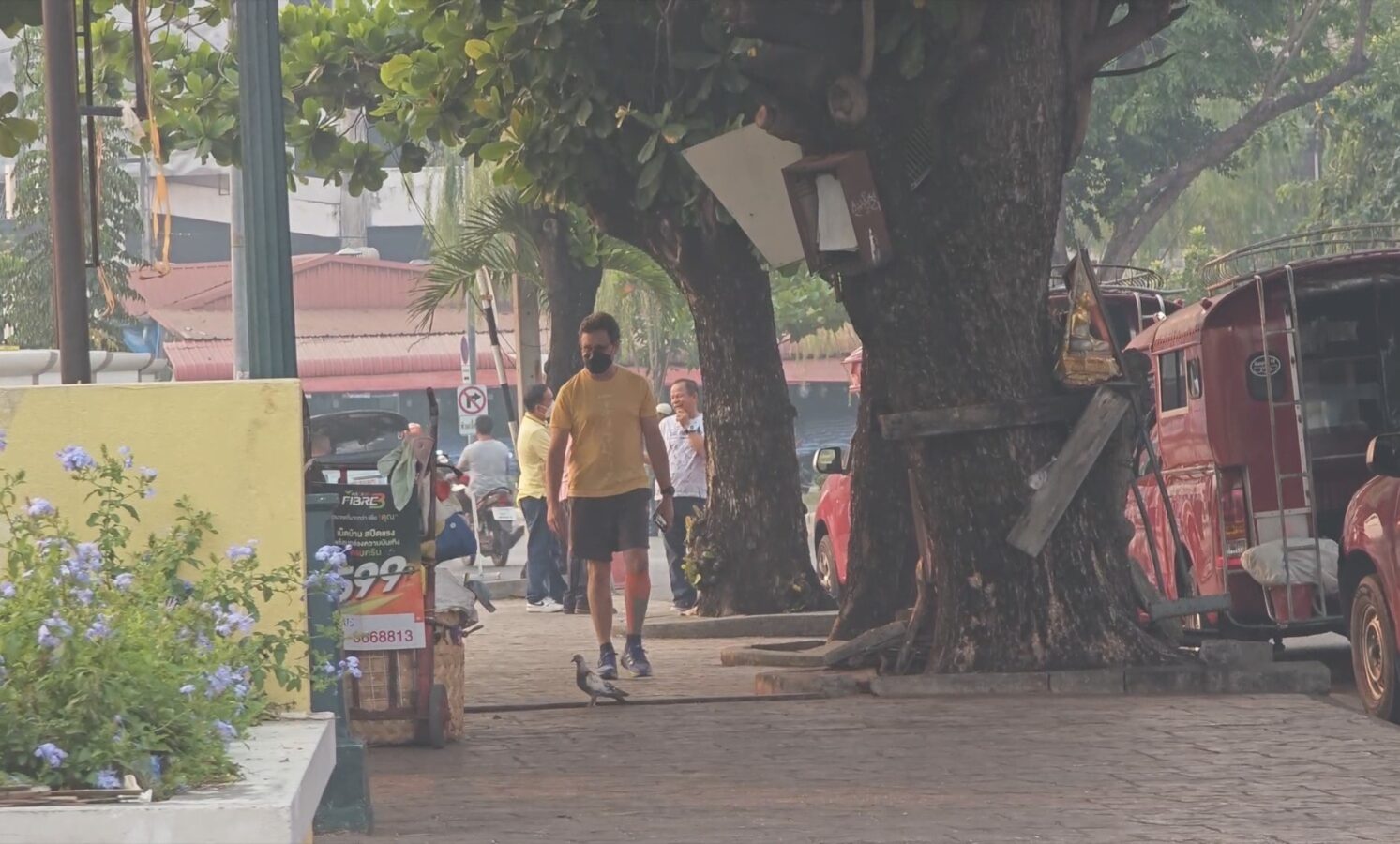
PM2.5 readings continue to spike. Thung Khao Phuang subdistrict in Chiang Dao recorded 712 micrograms per cubic metre on an hourly basis. In the city, the area around Chiang Mai University measured 218 micrograms per cubic metre — many times above safe limits and at a level classified as severely hazardous to health.
For the third day running, Chiang Mai has ranked first among major cities for worst air quality in the world, according to IQAir.