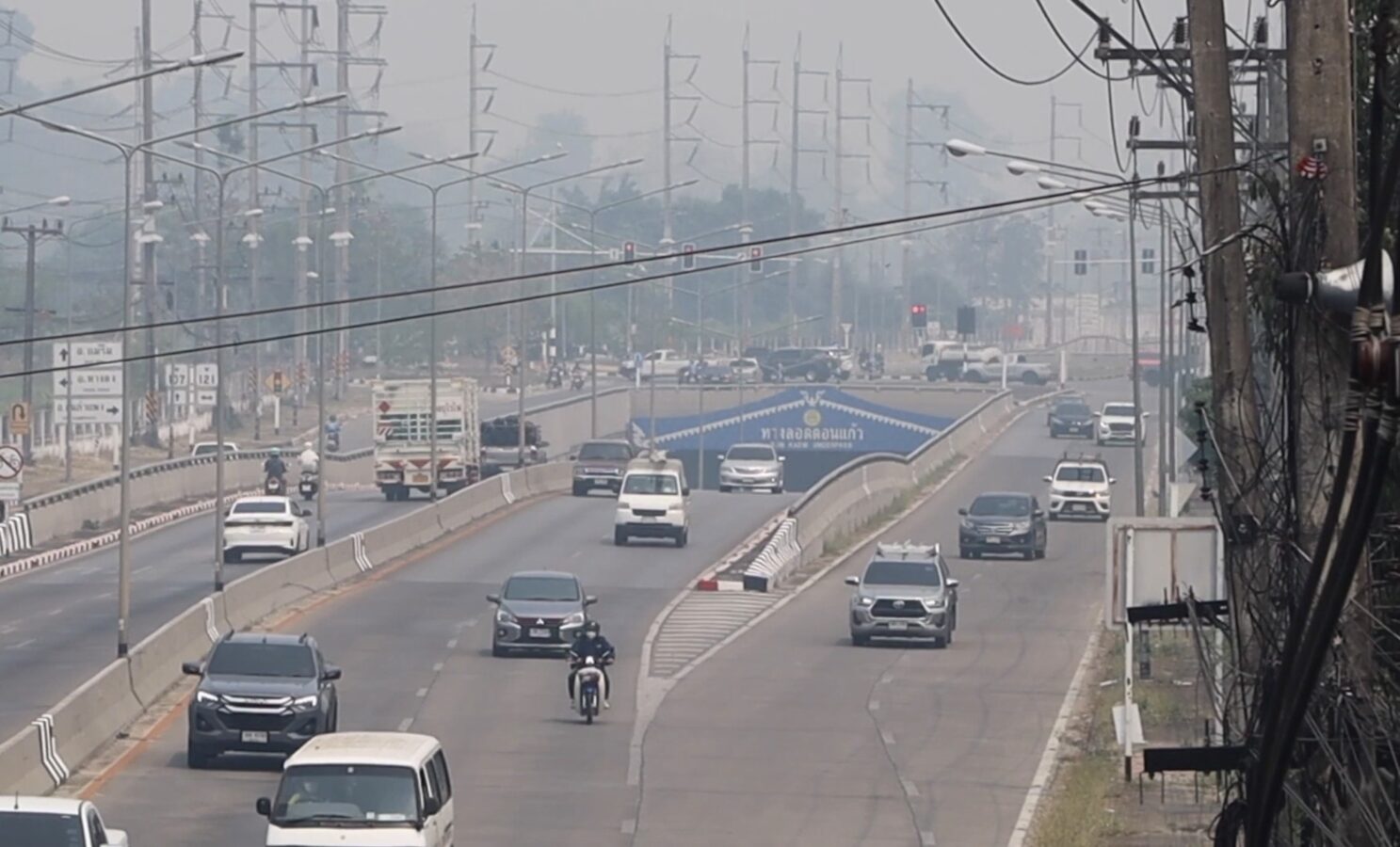
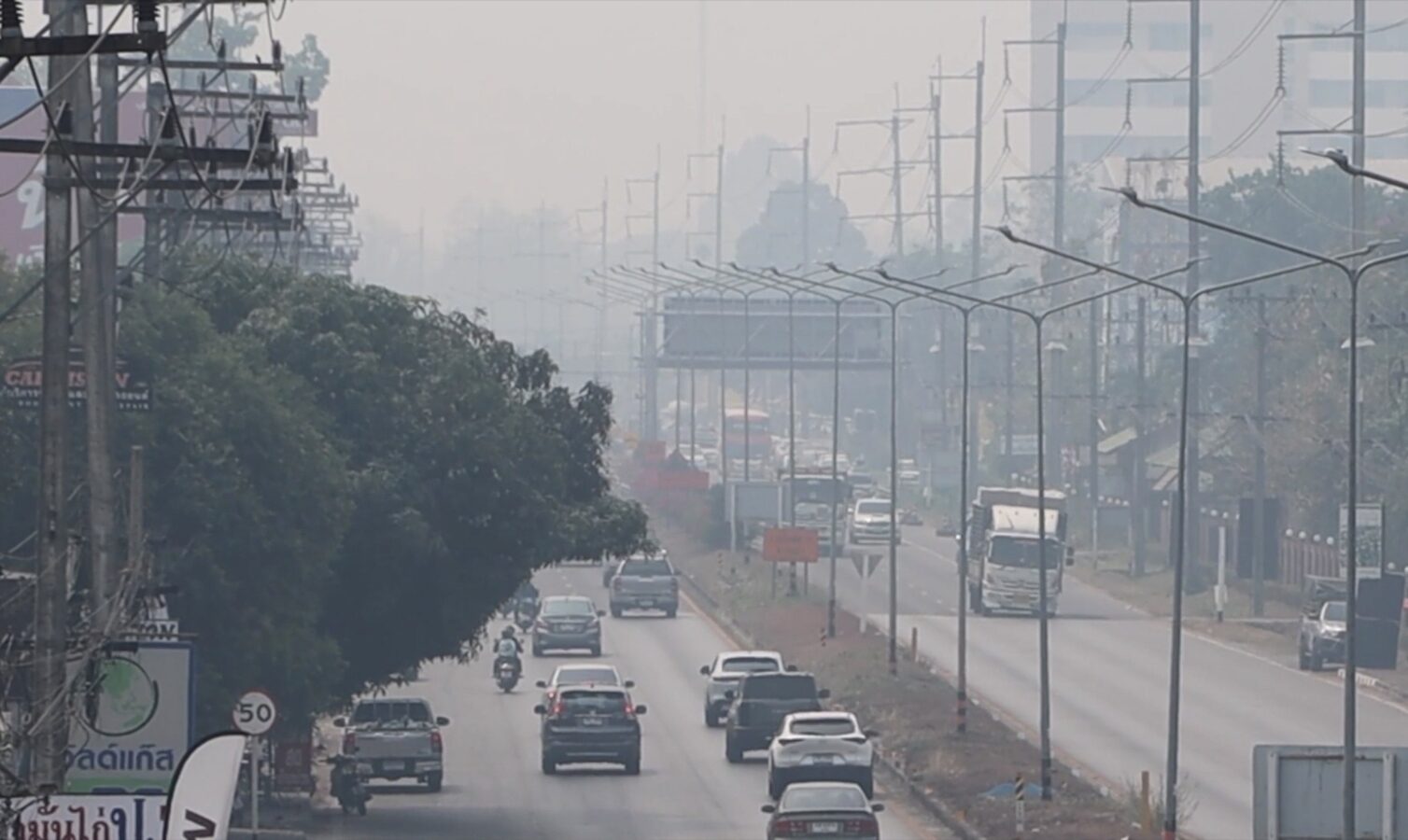
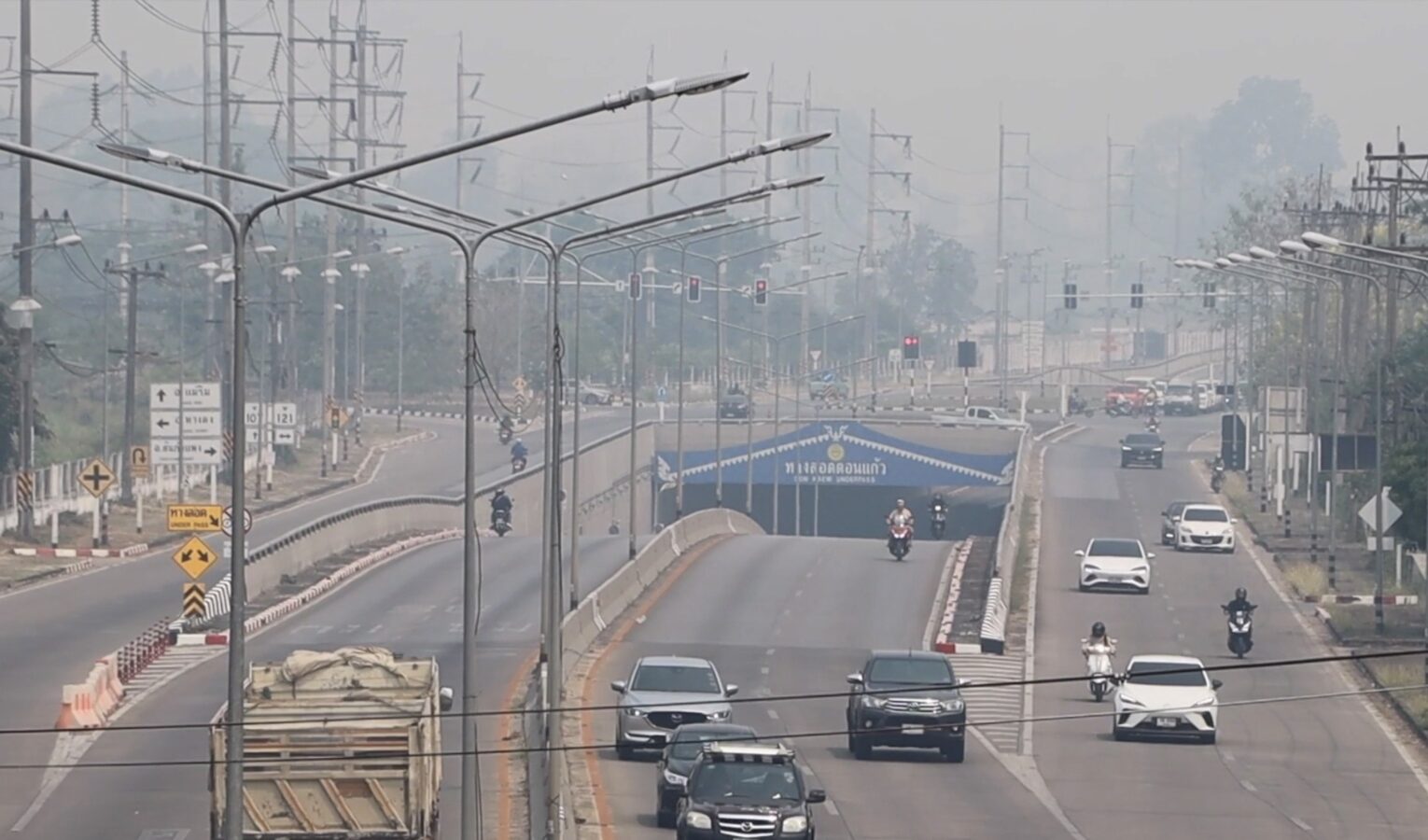
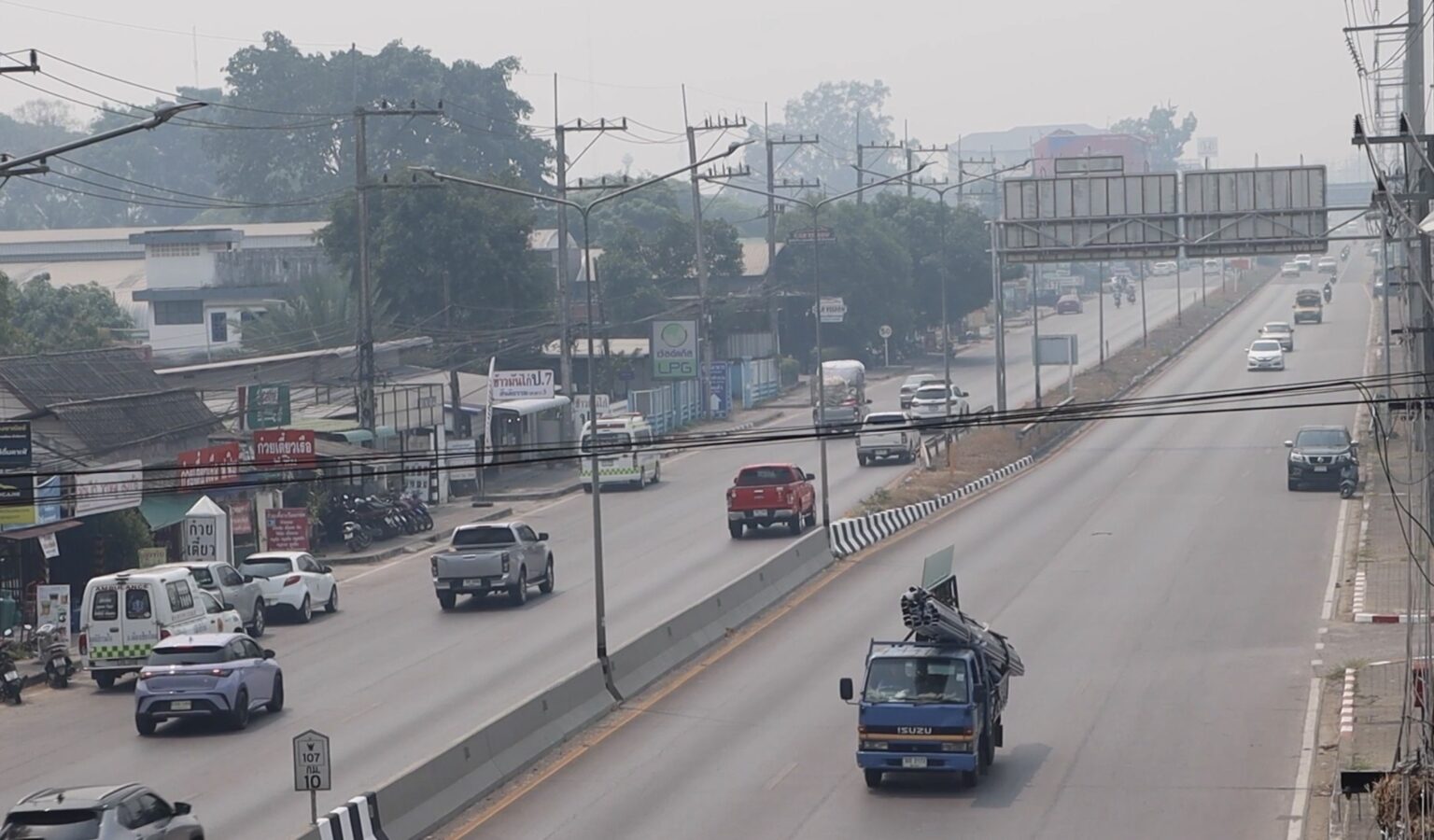
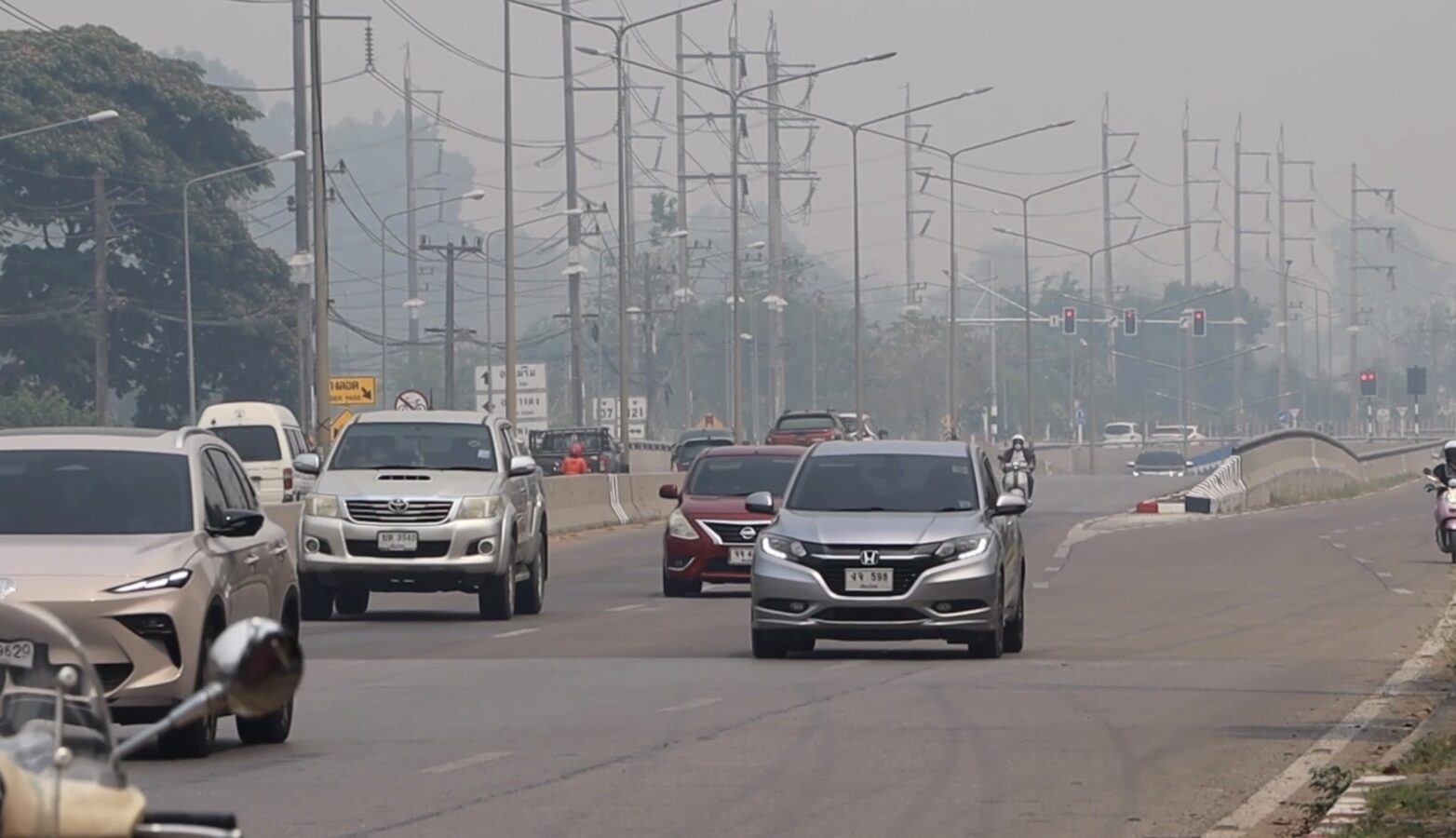
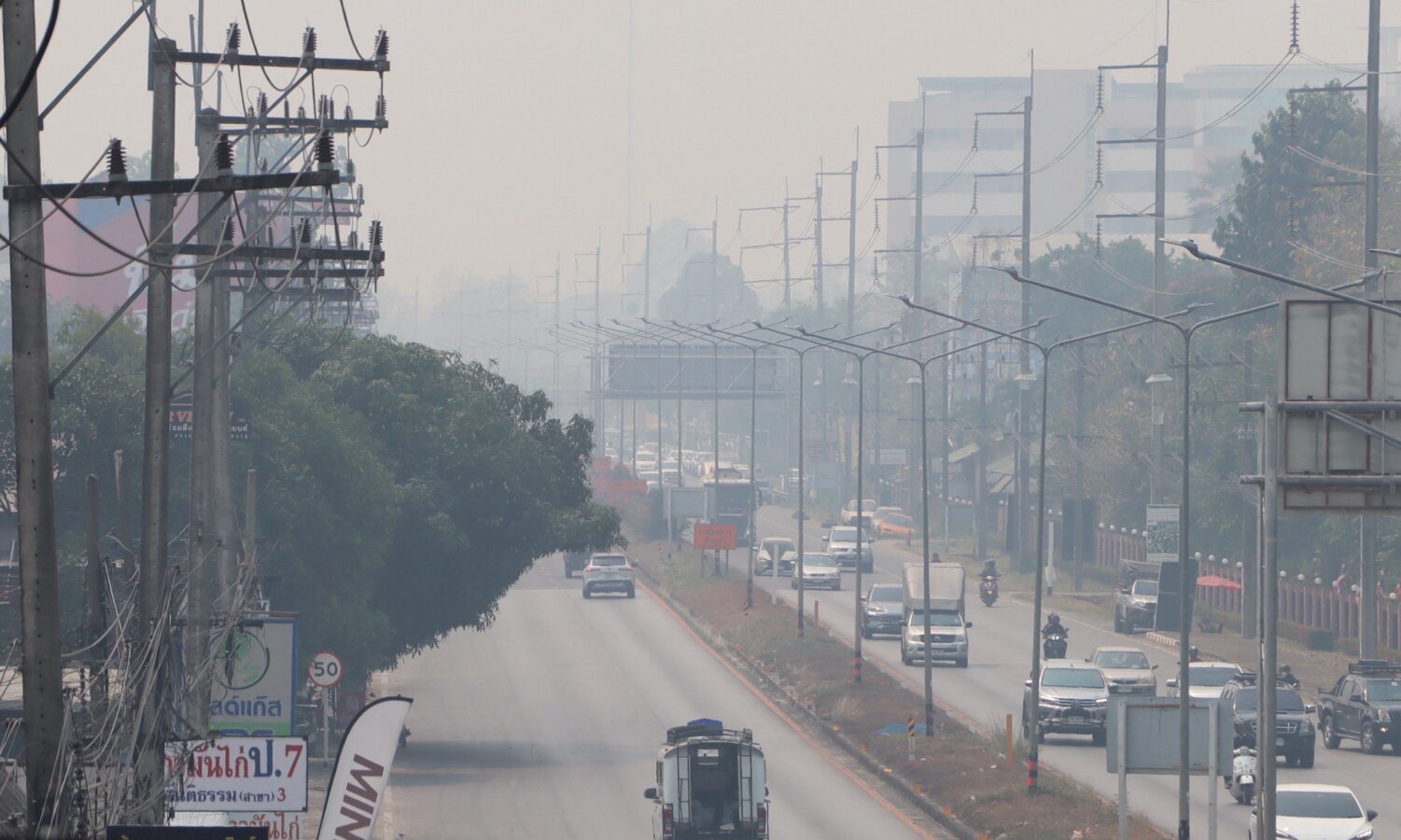
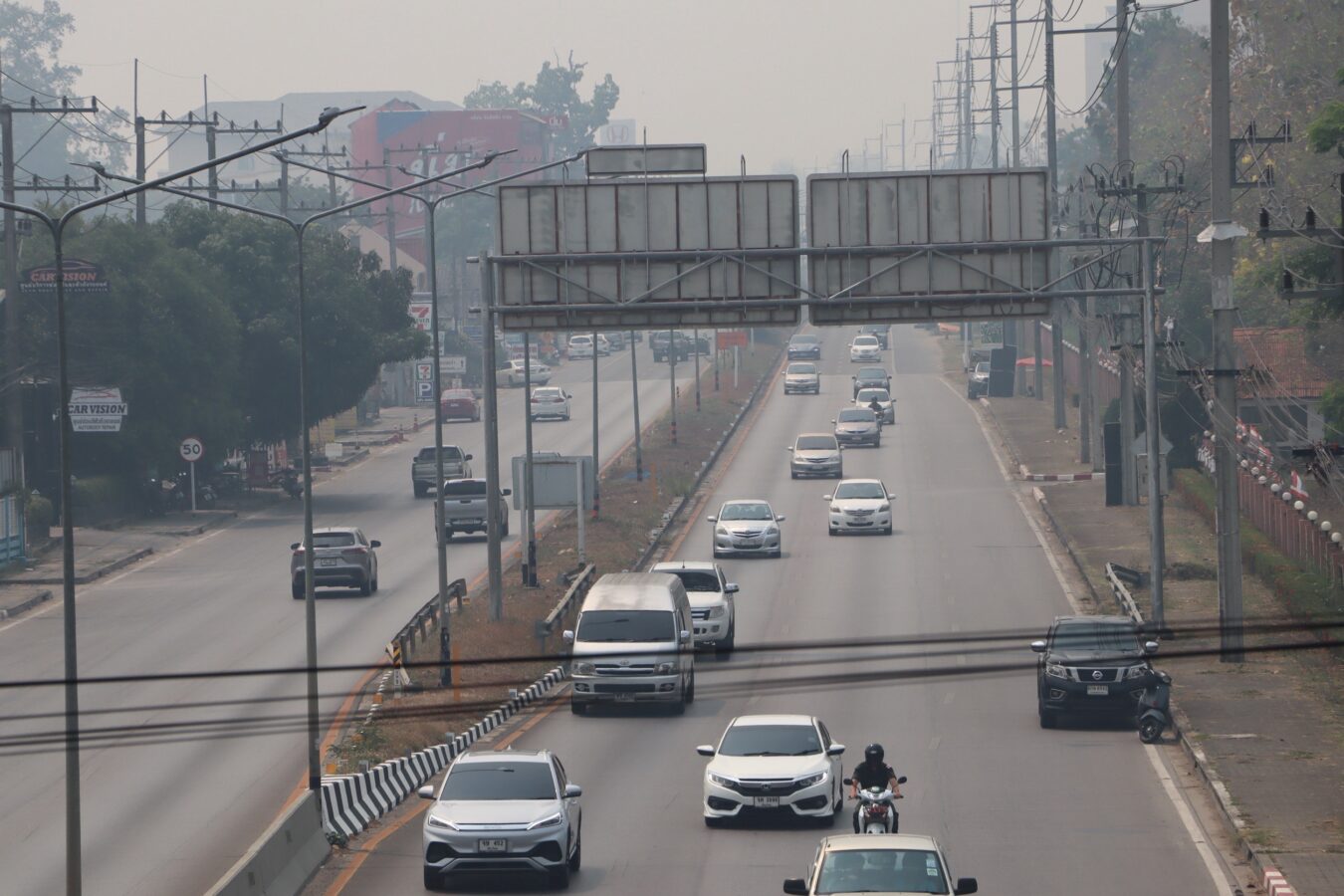
The Climate Change Data Centre at Chiang Mai University recorded an hourly peak reading of 742 micrograms per cubic metre at the Thung Khao Phuang subdistrict health post in Chiang Dao district today, while levels across the city itself exceeded 200 micrograms per cubic metre — many times the national safety standard.
Although several agencies have distributed dust masks to vulnerable groups, most residents say they have little choice but to make do with basic surgical masks, as N95 respirators — the only type capable of filtering fine particulate matter — are far more expensive and increasingly out of reach at a time when fuel, food and everyday essentials have all risen in price. “We don’t know what else to do,” said one resident. “We can’t wait around for authorities to help us — we don’t know when that help will come.”
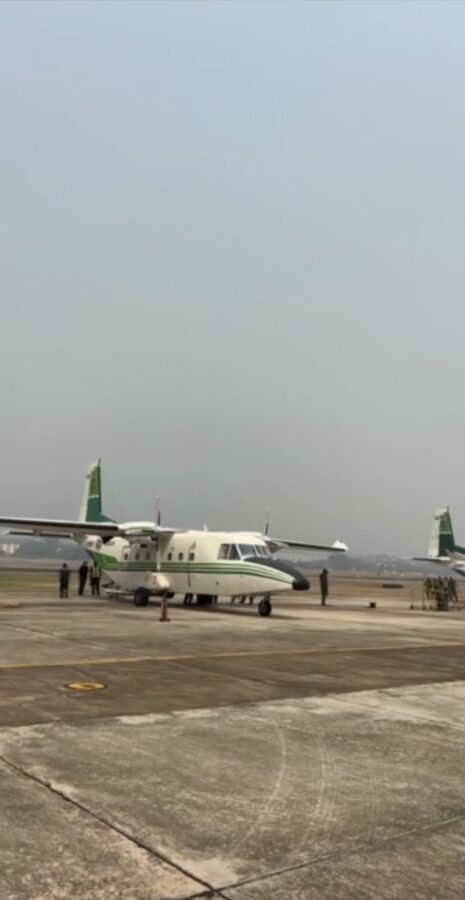
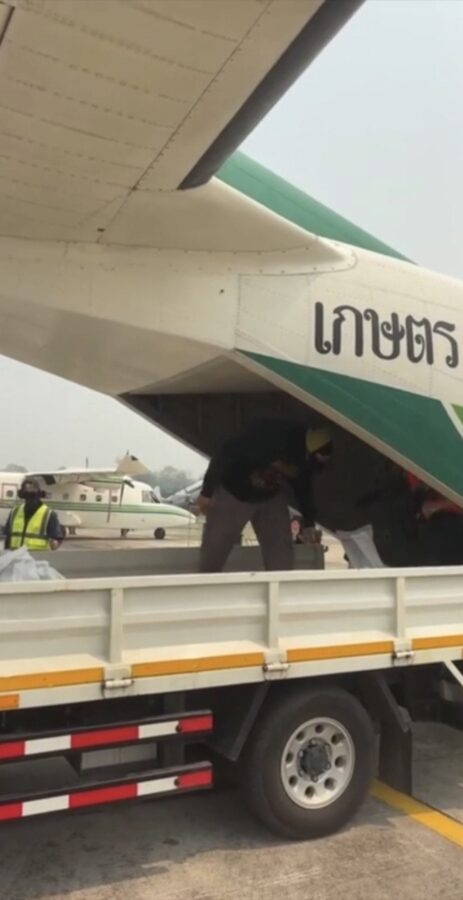
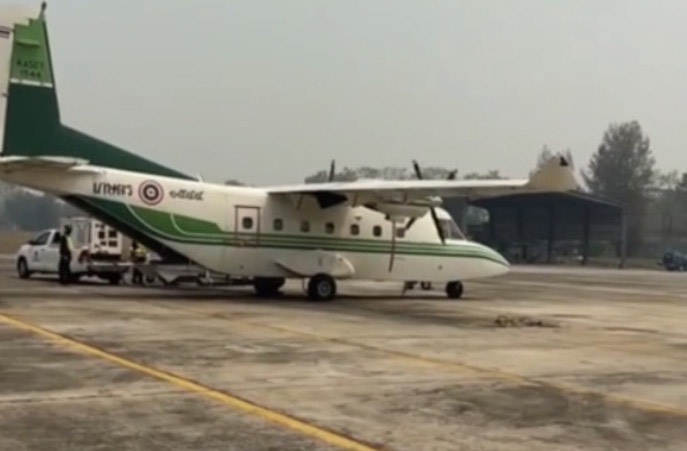
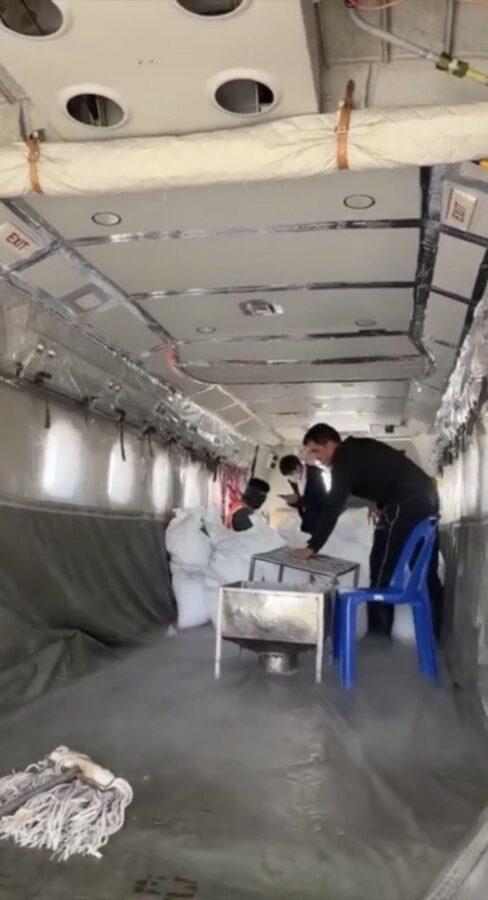
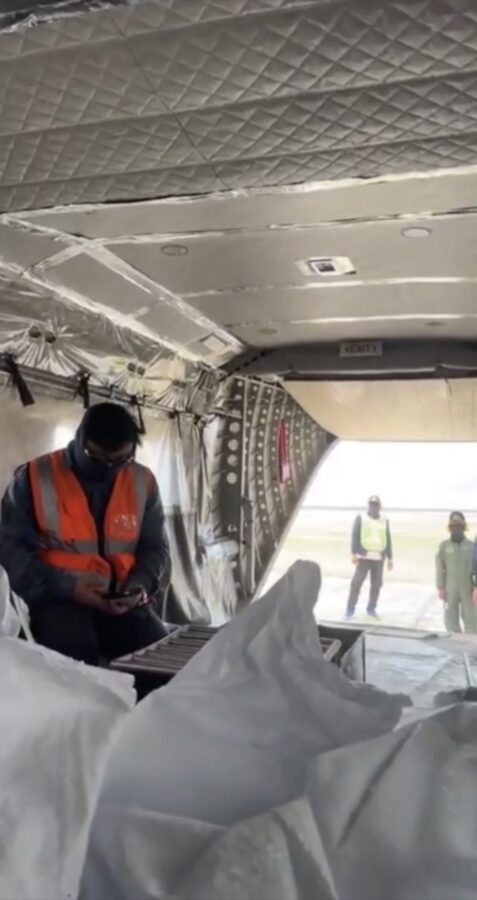
The Northern Royal Rainmaking Operations Centre today deployed six aircraft over Hang Dong and Hod districts in Chiang Mai and Li district in Lamphun, seeding clouds with dry ice and cold water spray to disperse the dense smog layer. Operations on 1st and 2nd April are reported to have produced some positive results, with improved dust dispersal in affected areas.
On 5th April, the centre plans to add two further aircraft plus a King Air weather reconnaissance plane, bringing the total fleet to seven, to improve planning precision and operational effectiveness. Conditions between 2pm-3pm that day are expected to be suitable for pushing artificial rainfall from Mae Hong Son through to Chiang Mai.