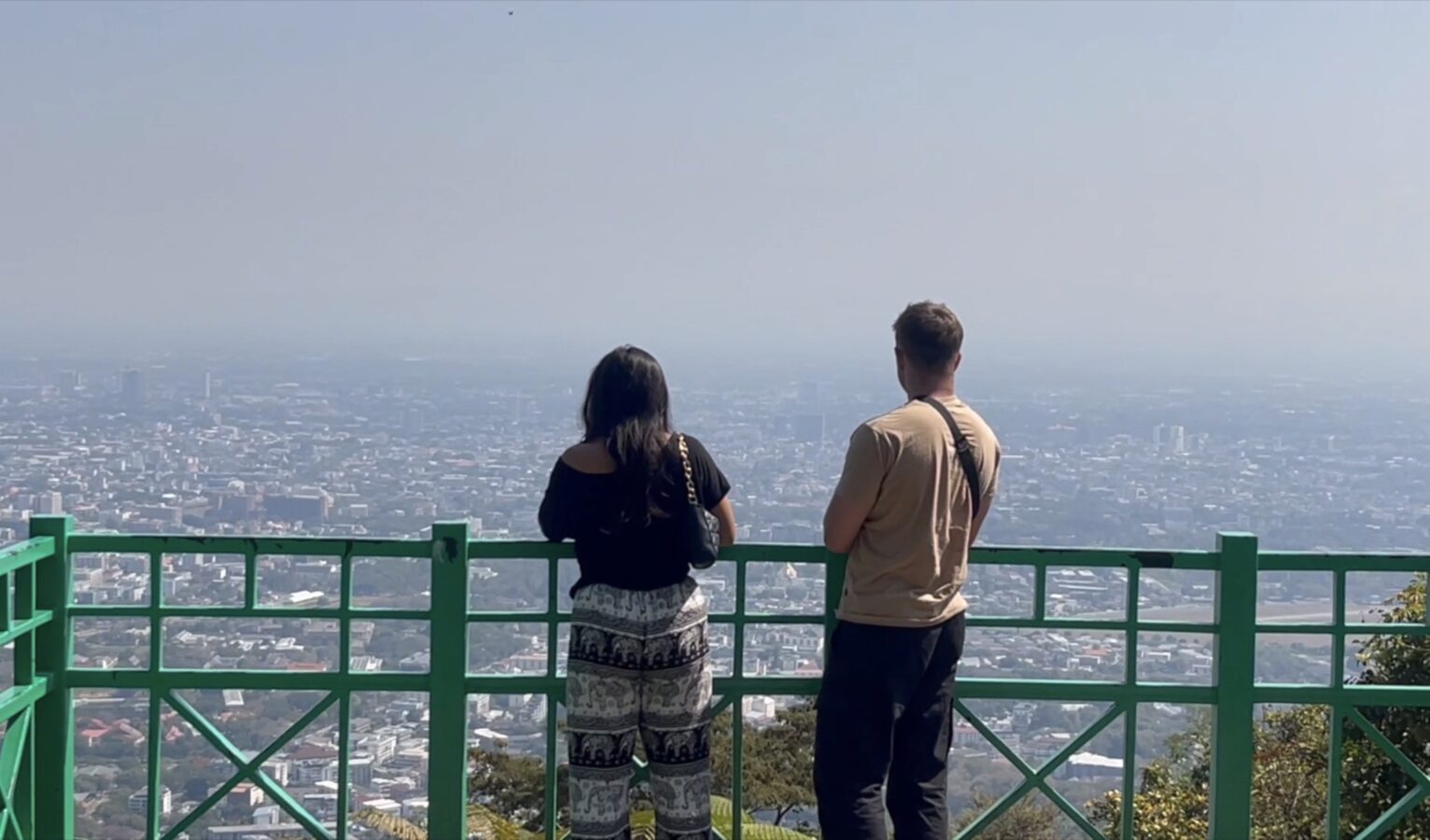
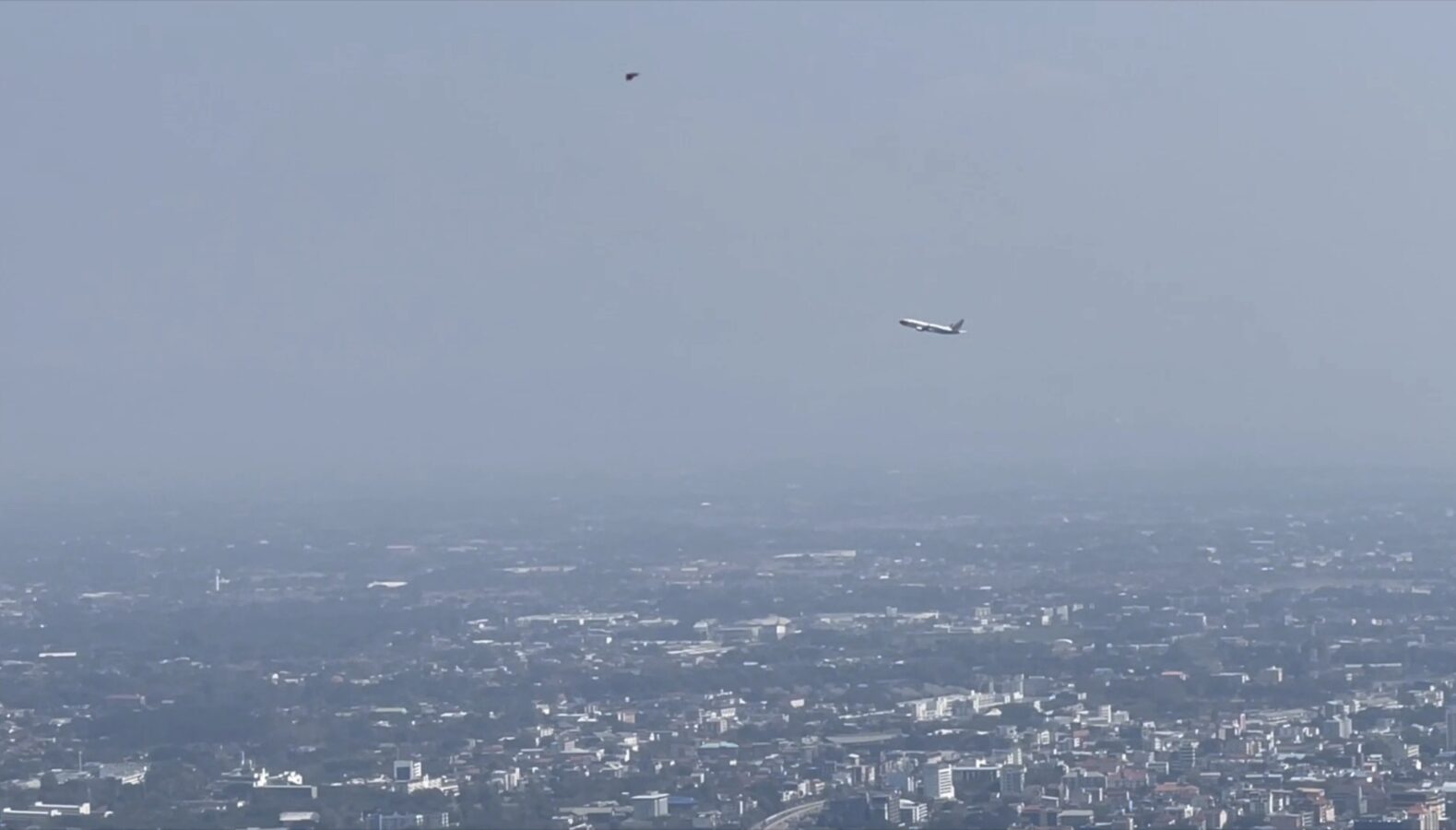
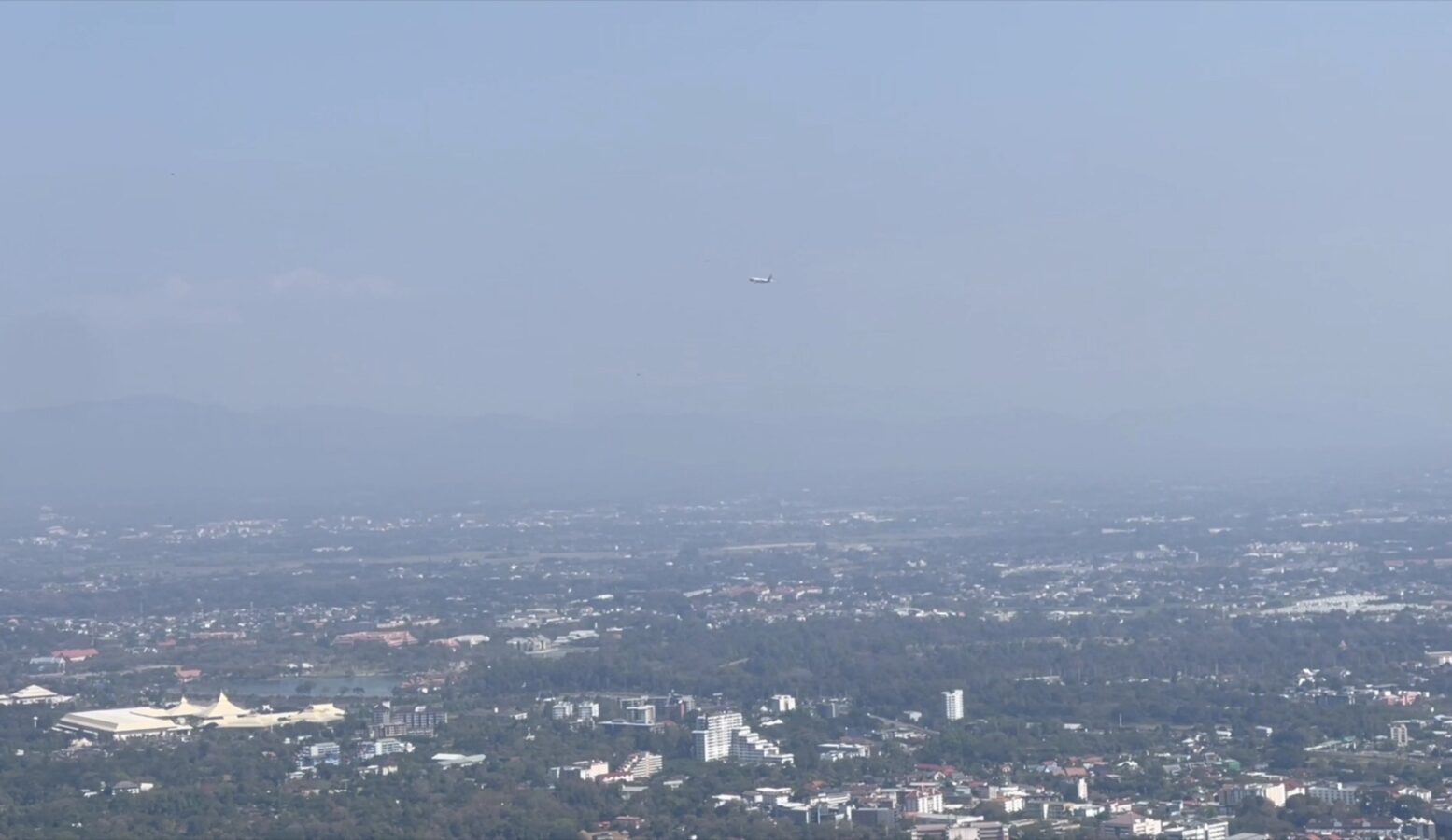
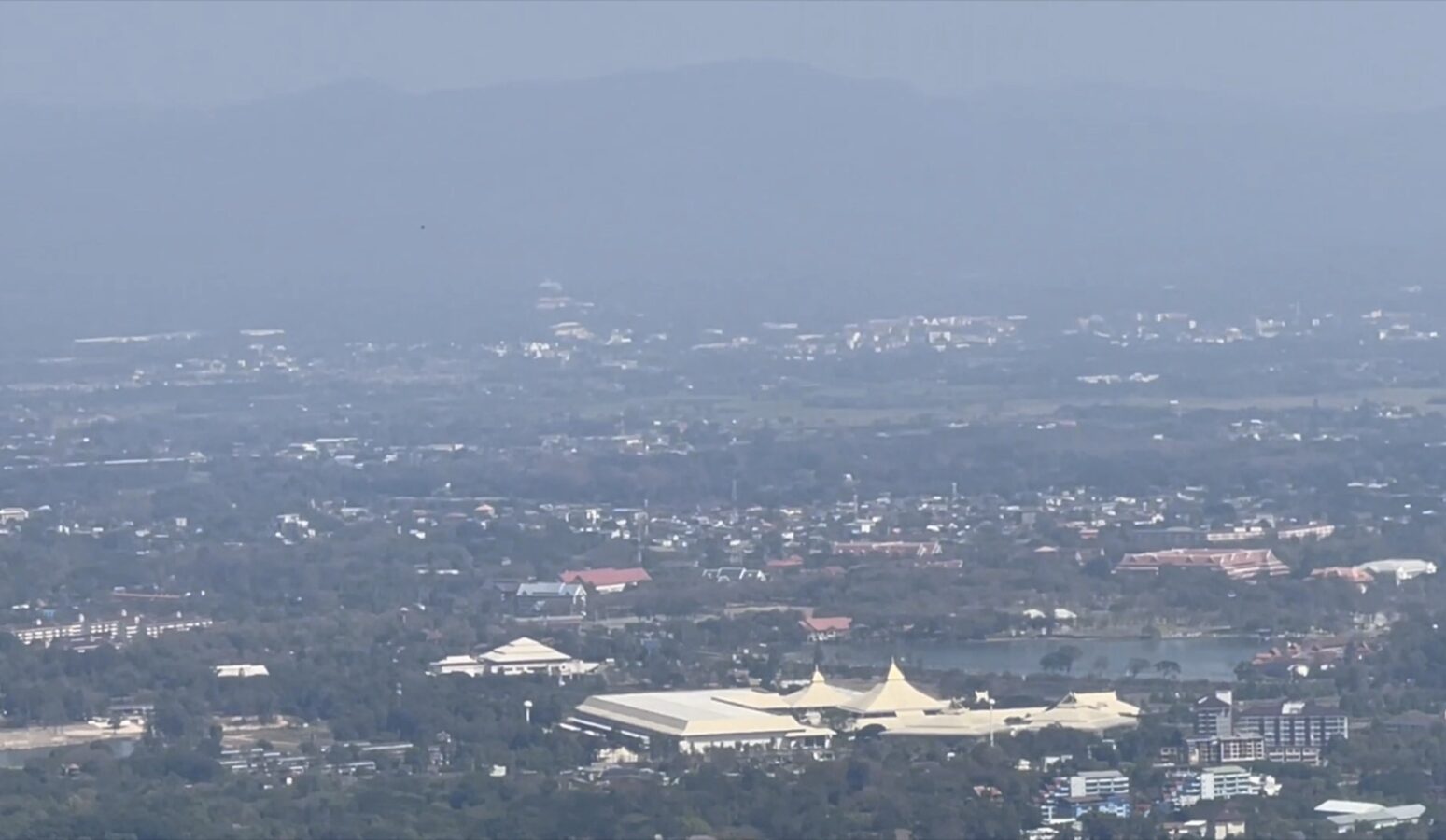
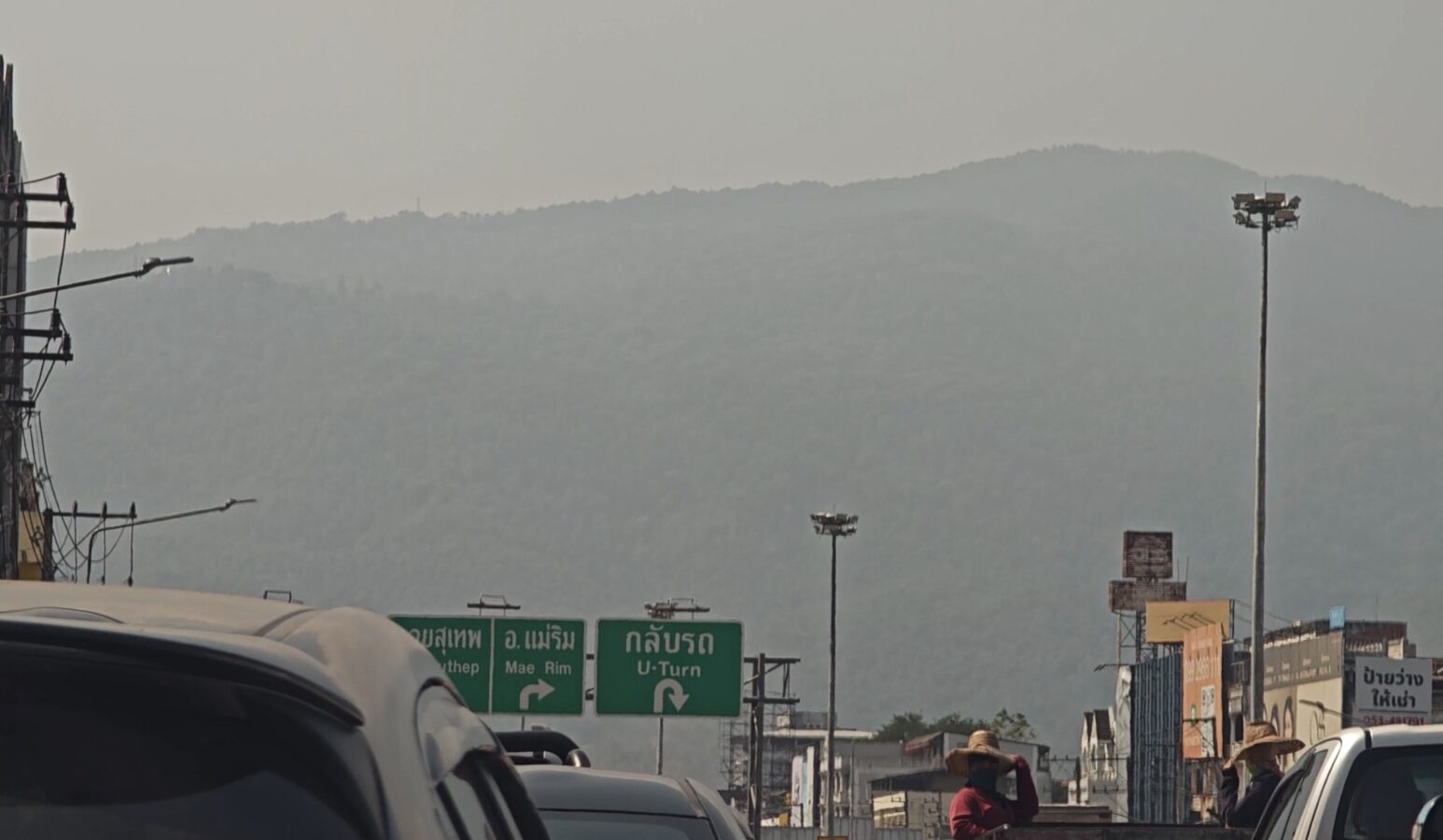
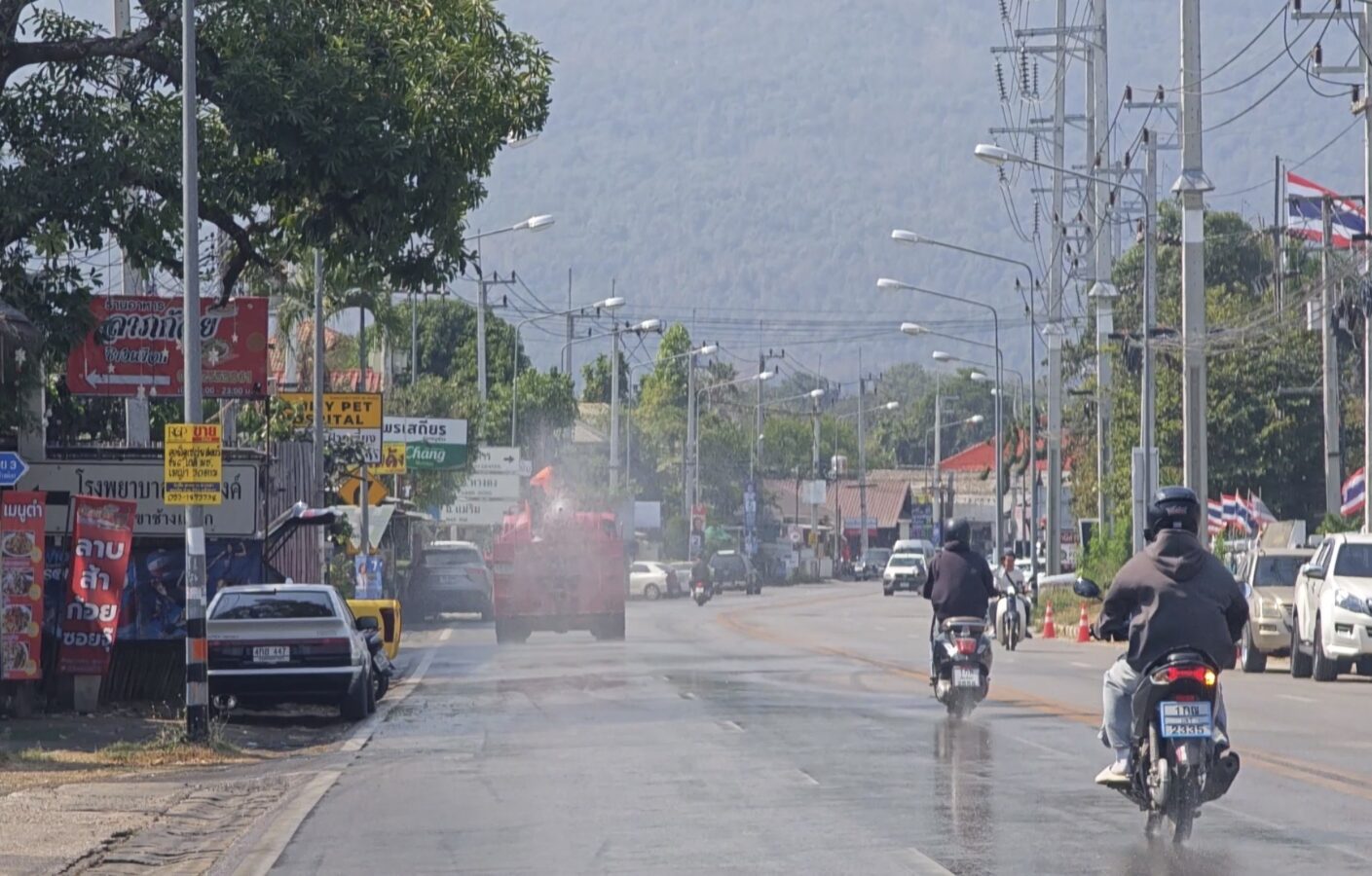
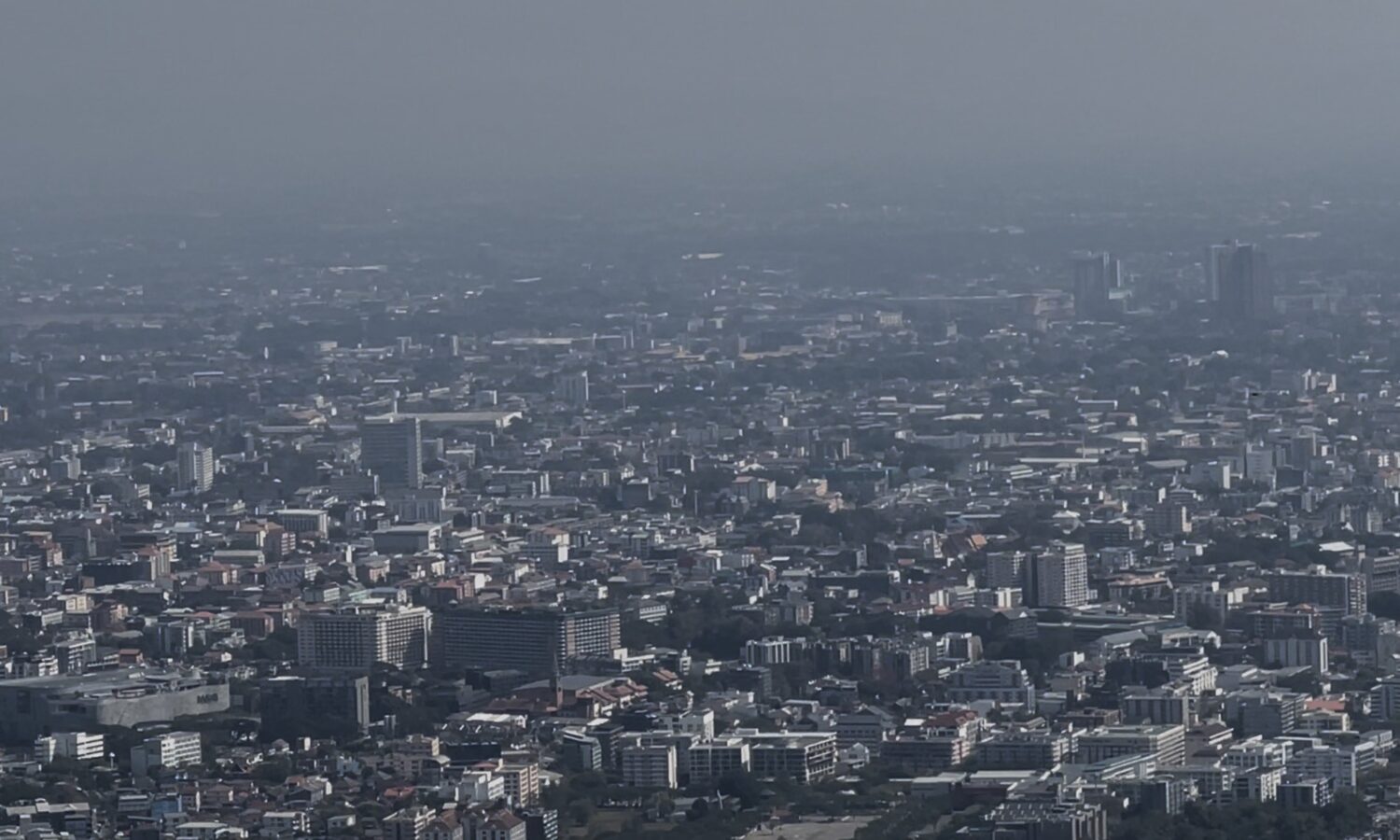
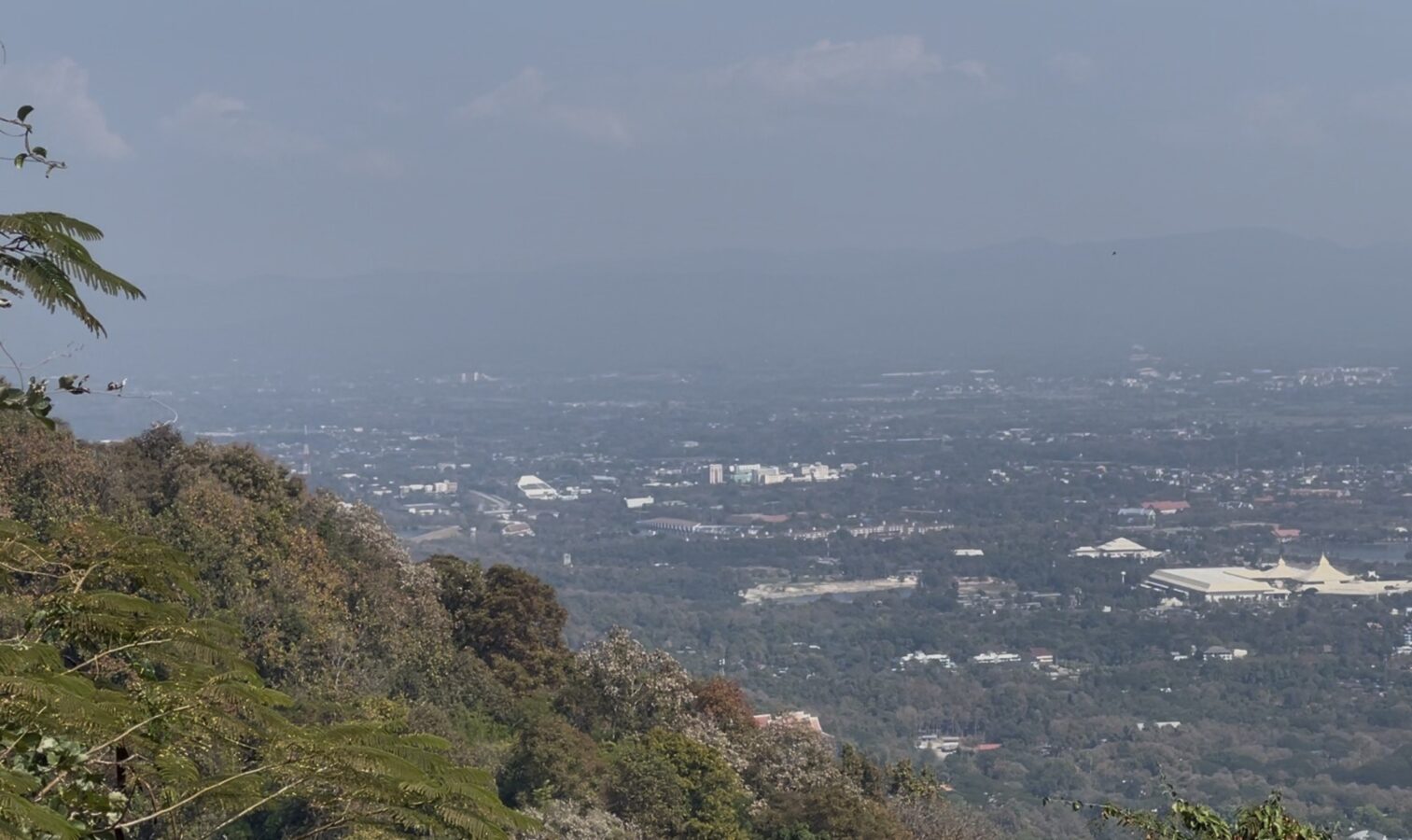
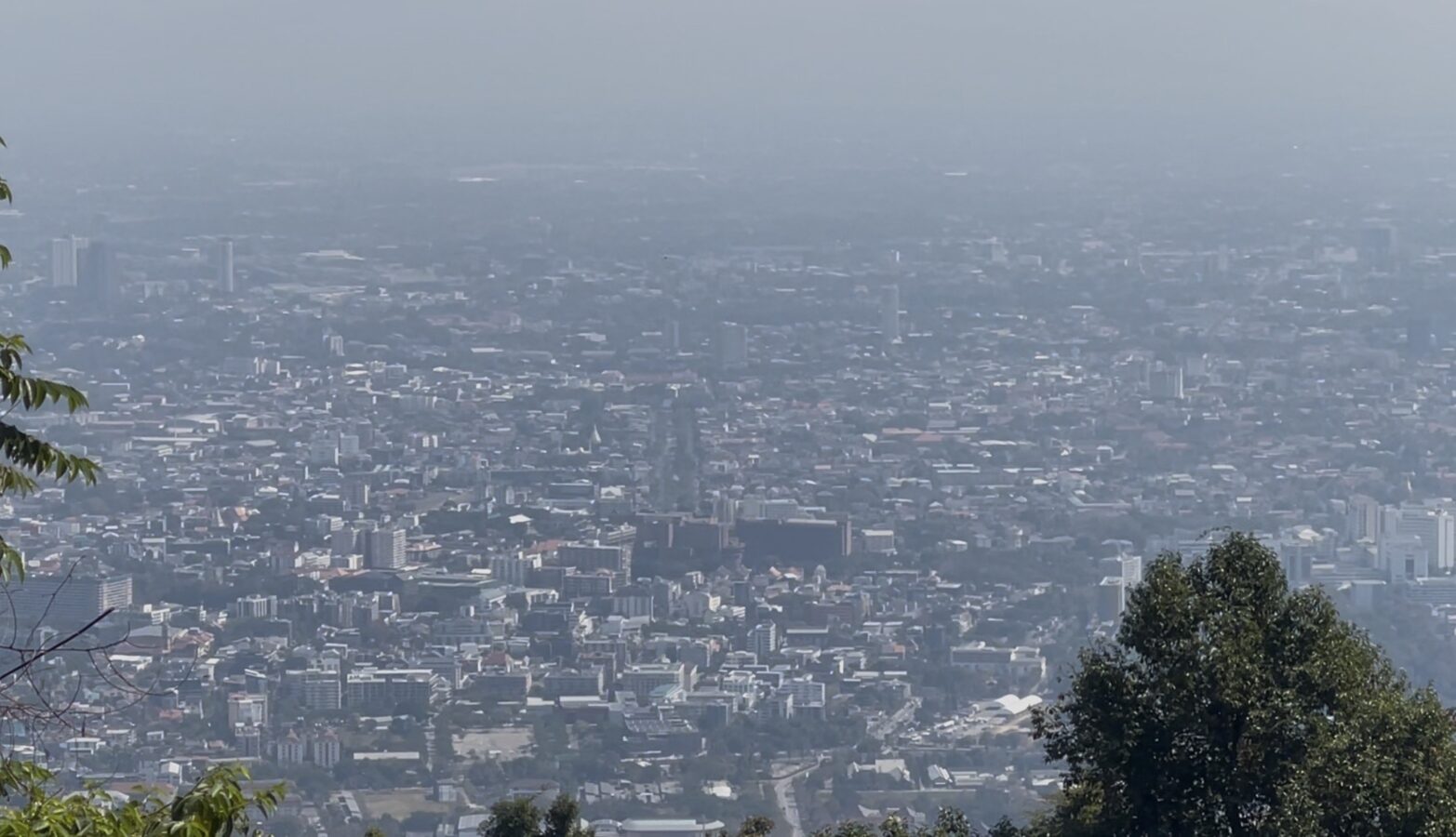
Air quality in Chiang Mai has begun to impact public health, with PM2.5 levels rising above safe standards in the city and several surrounding districts by late morning on the 3rd February 2026. From the Doi Suthep viewpoint in Muang Chiang Mai district, haze could be seen drifting over the city, while residents carrying out outdoor activities in urban areas have started wearing face masks for protection.
According to the Climate Change Data Centre at Chiang Mai University, hourly PM2.5 readings at 10am showed unhealthy pollution levels at multiple monitoring points. The highest level was recorded in Mae Ai district at 72 micrograms per cubic metre, followed by Nakhonping Hospital in the city area at 65 micrograms per cubic metre, and Chang Khoeng subdistrict in Mae Chaem district at 62 micrograms per cubic metre. These figures exceed Thailand’s national safety standard of 37.5 micrograms per cubic metre. Several other districts, including San Sai, Chiang Dao, Hang Dong, San Kamphaeng, Chai Prakan, Phrao, Fang, Omkoi and Doi Lo, also recorded PM2.5 levels above the standard, classified in the orange alert range, with averages between 40 and 55 micrograms per cubic metre.
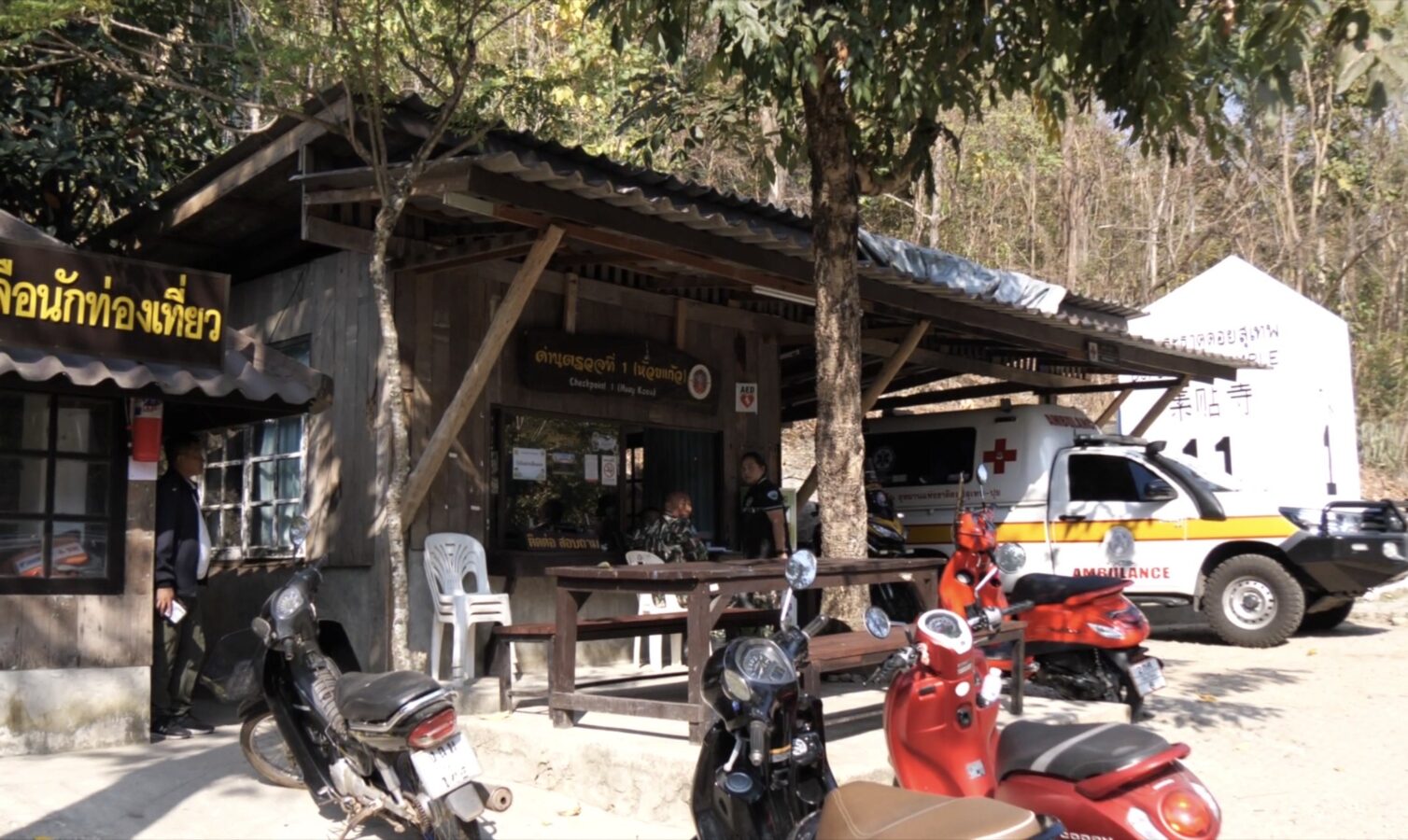
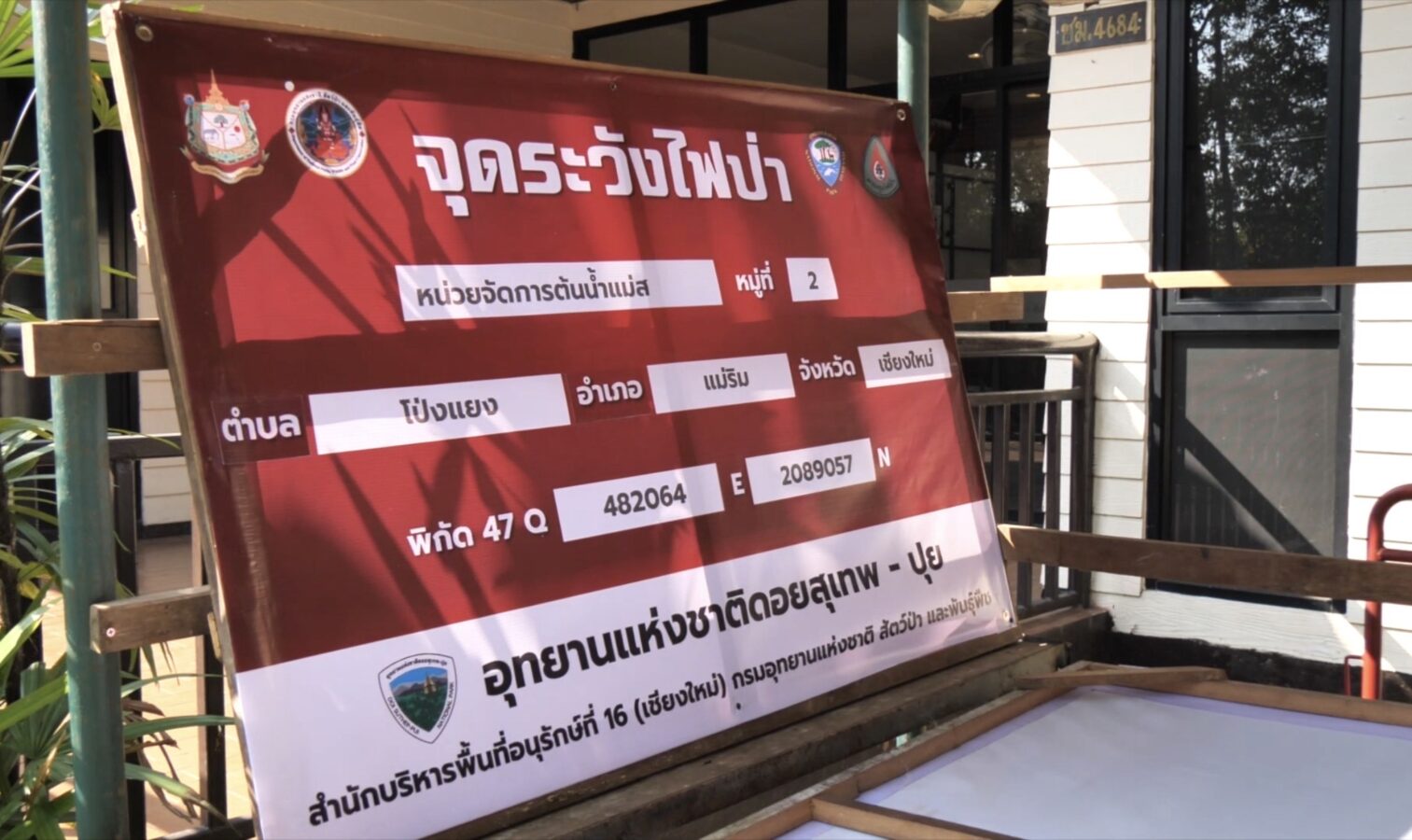
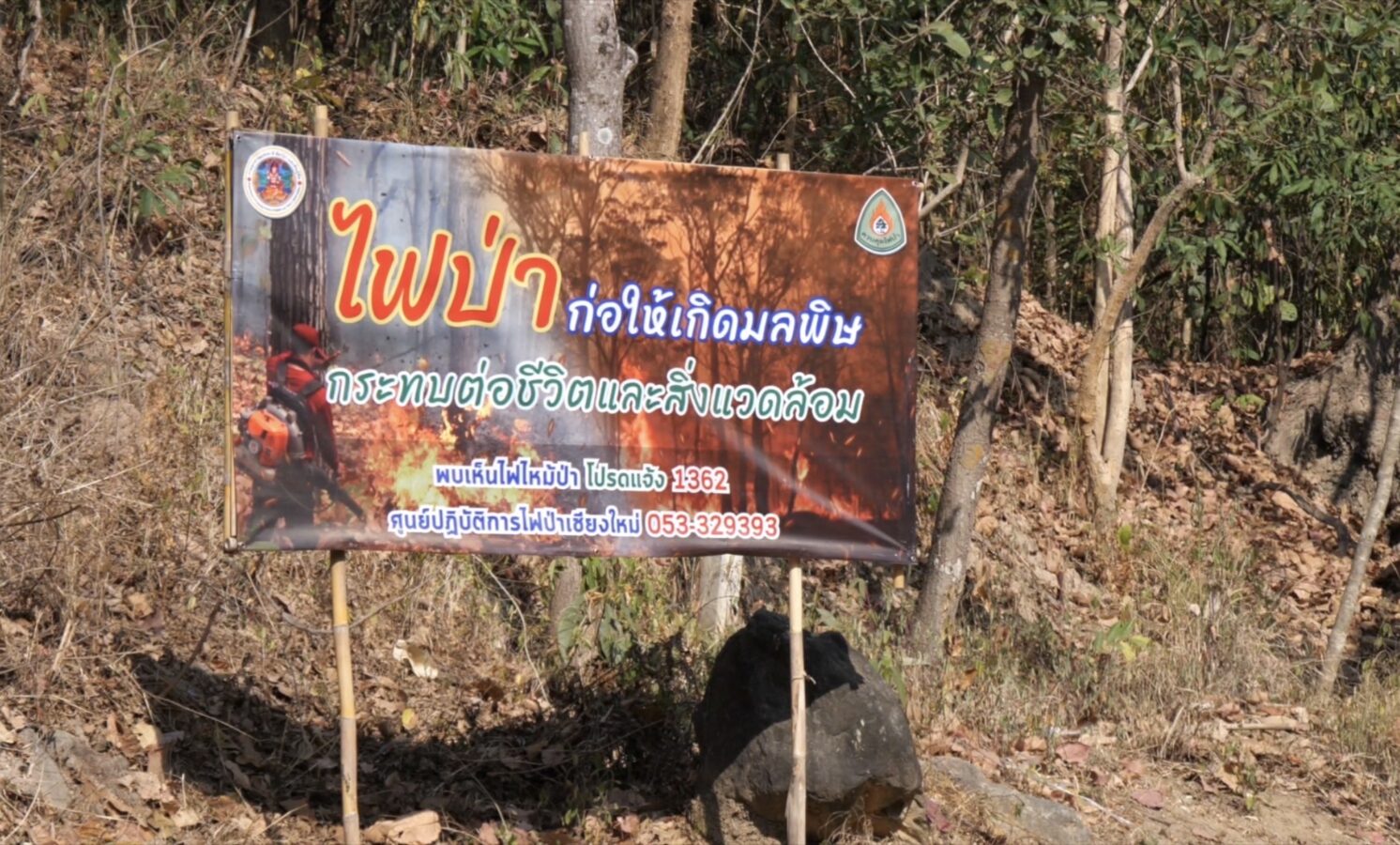
Kritsayam Khongsatree, Director of Protected Area Management Office 16, said forest areas within nine national parks have been temporarily closed to prevent illegal burning, a major cause of air pollution. The closures are in effect from 1st February to 30th April 2026, with some areas extending until 31st May. The affected parks include Doi Inthanon, Pha Daeng, Si Lanna, Doi Wiang Pha, Op Khan, Mae Tho, Op Luang, Mae Ping, and Bua Tong Waterfall–Chet Si Springs national parks.
He added that the forest closures will not affect tourism, as the restrictions apply only to non-tourism forest areas and are intended to prevent hunting, forest fires and other forestry-related offences. Tourist attractions within national parks remain open as normal, and additional parks are expected to announce partial forest closures from 1st March onwards.