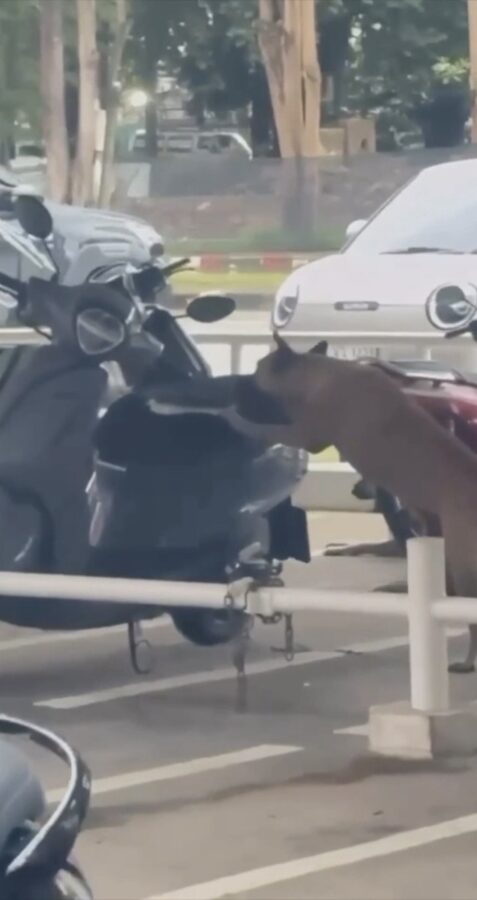
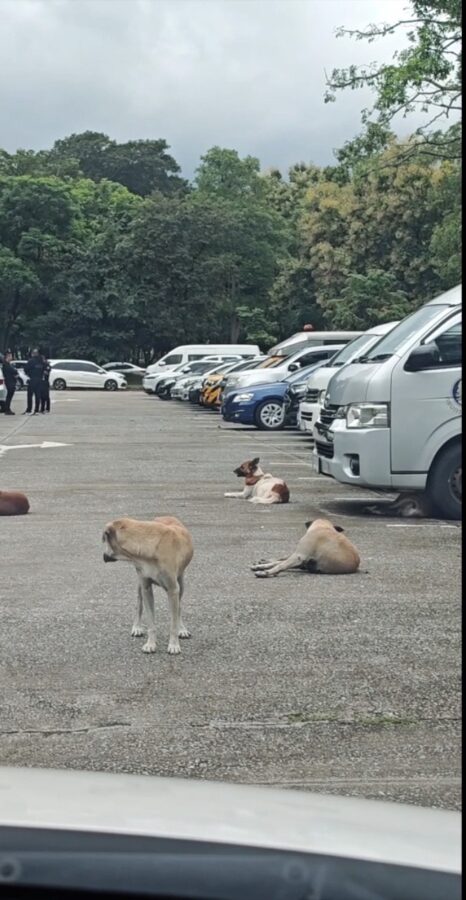
A long-running problem with stray dogs at the Chiang Mai Provincial Government Centre car park has escalated, with the animals now chewing through motorbike seats and leaving people who work at or visit the centre unable to safely approach their own vehicles.
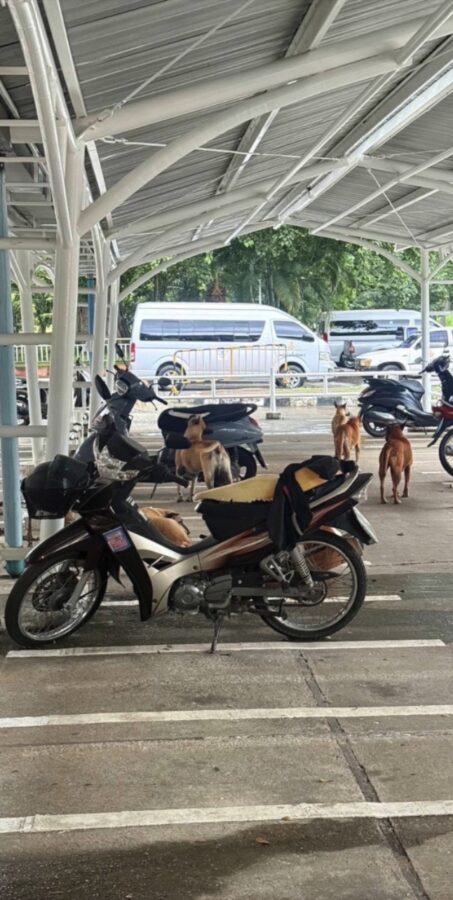
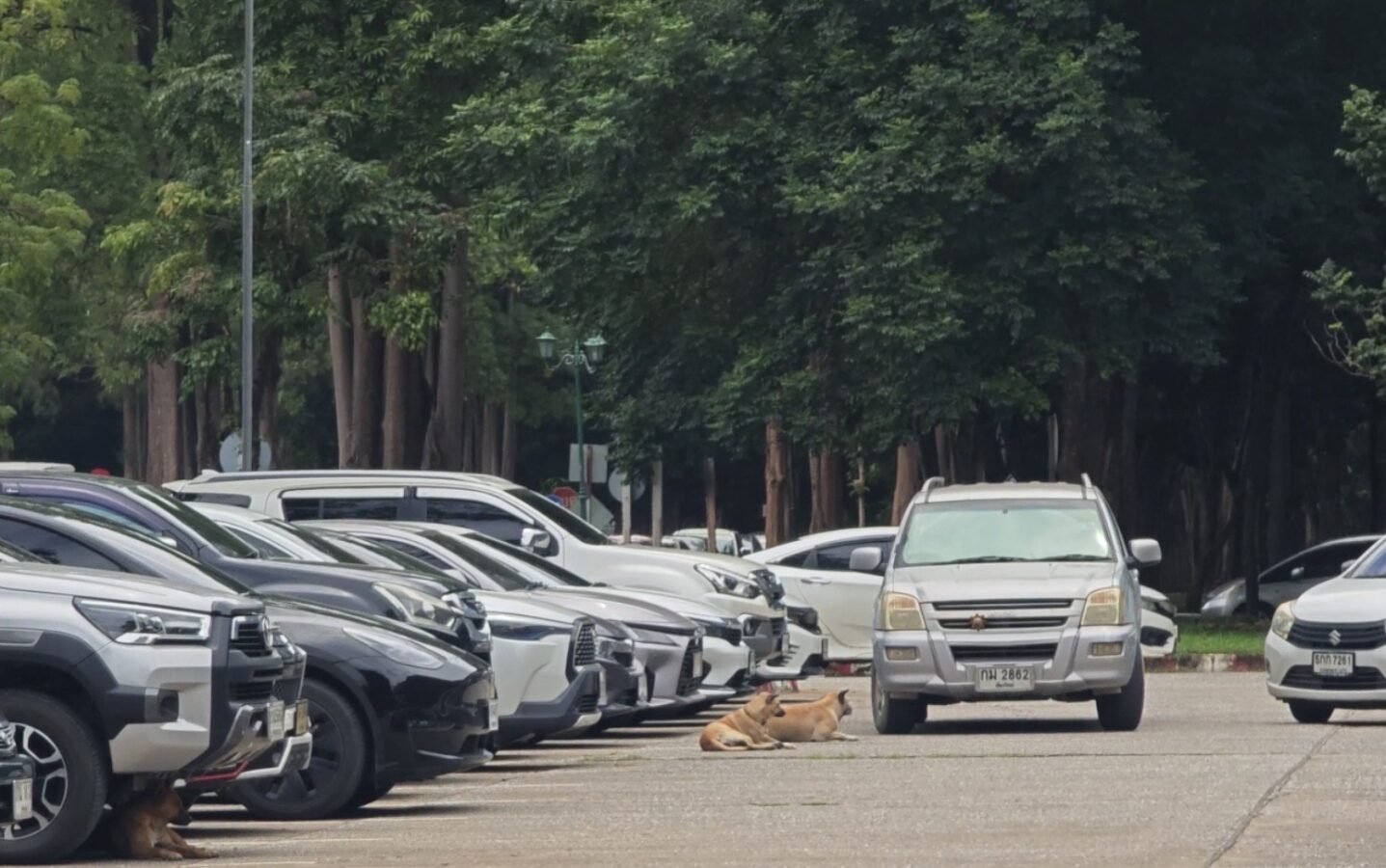
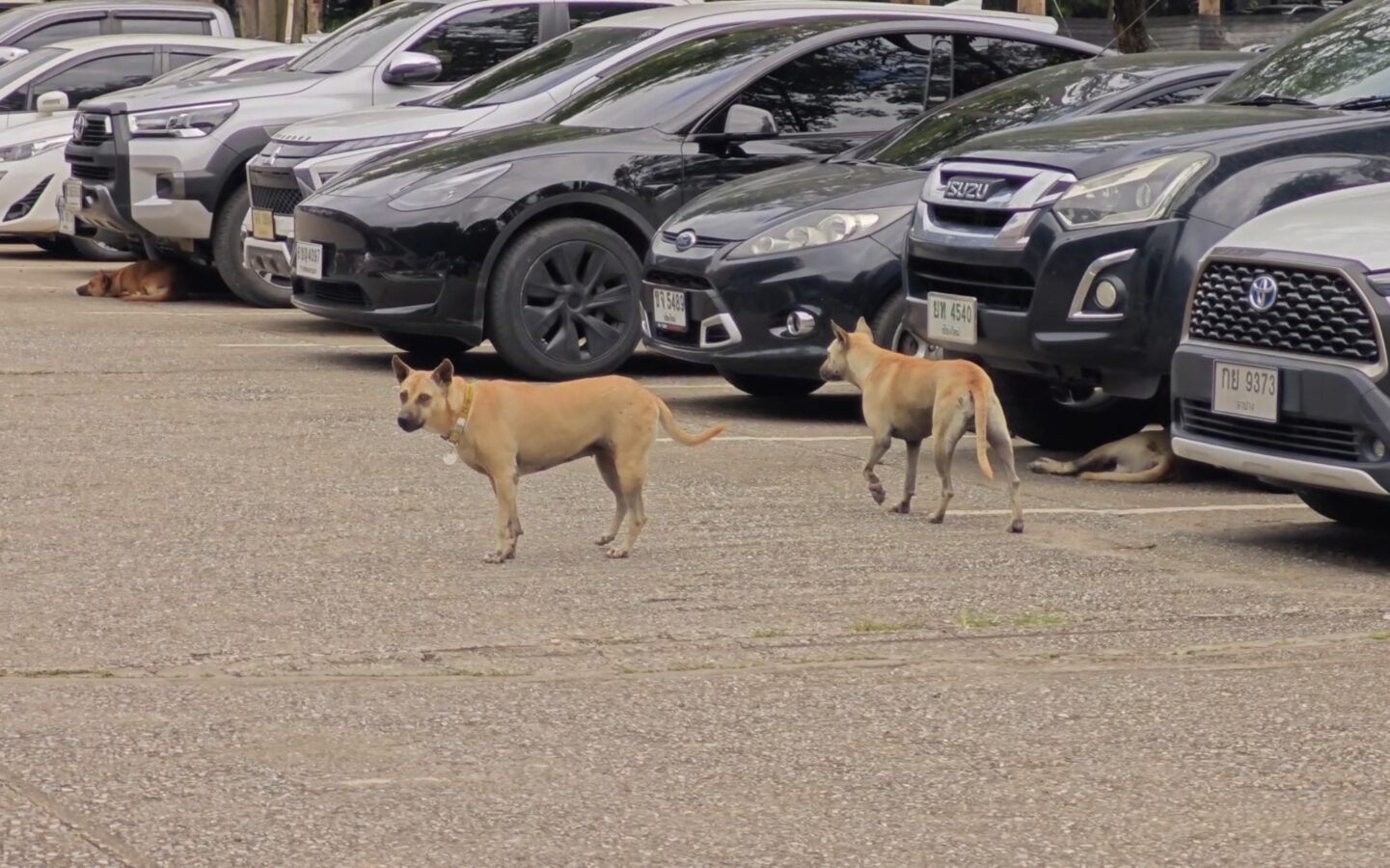
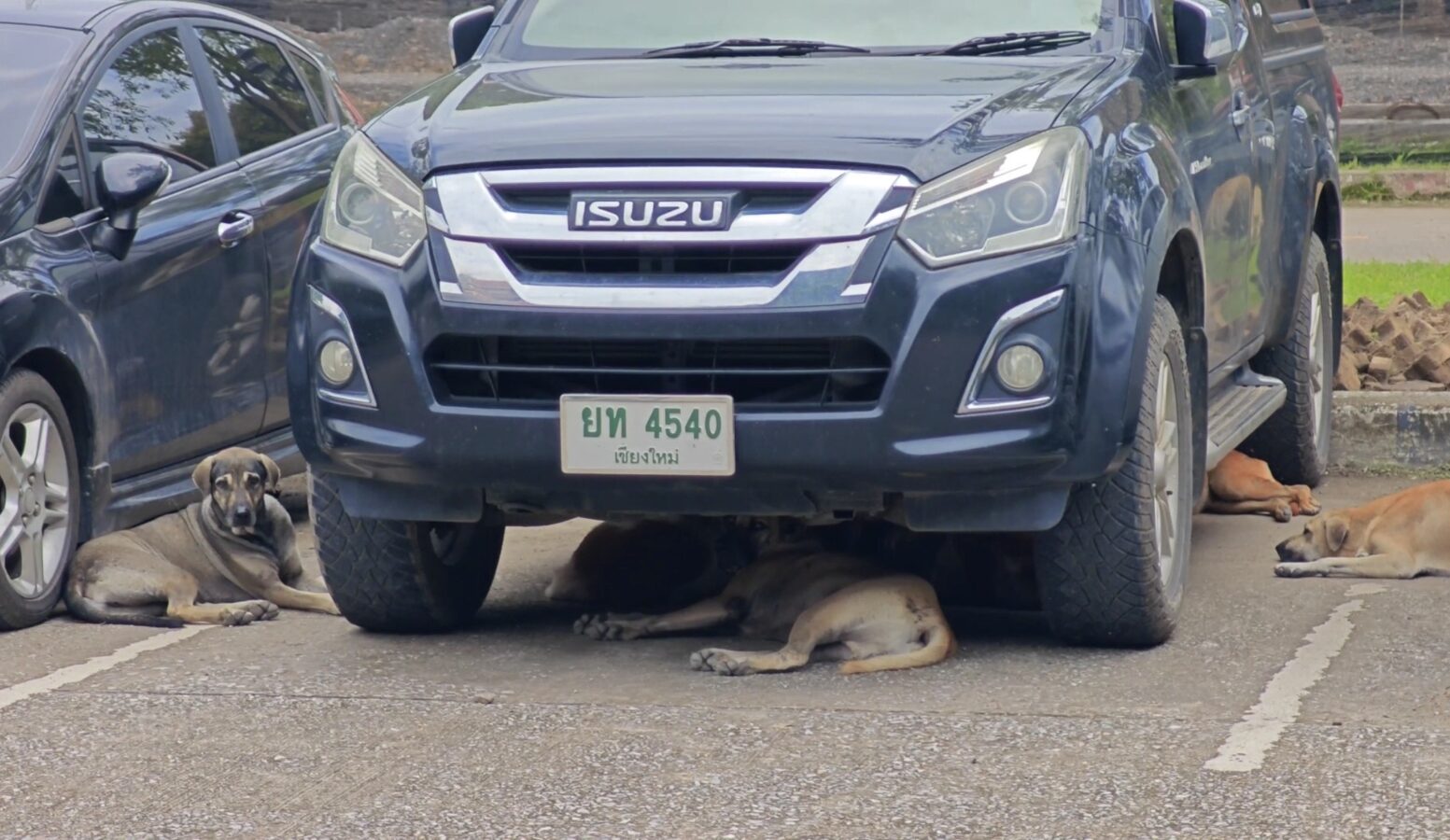
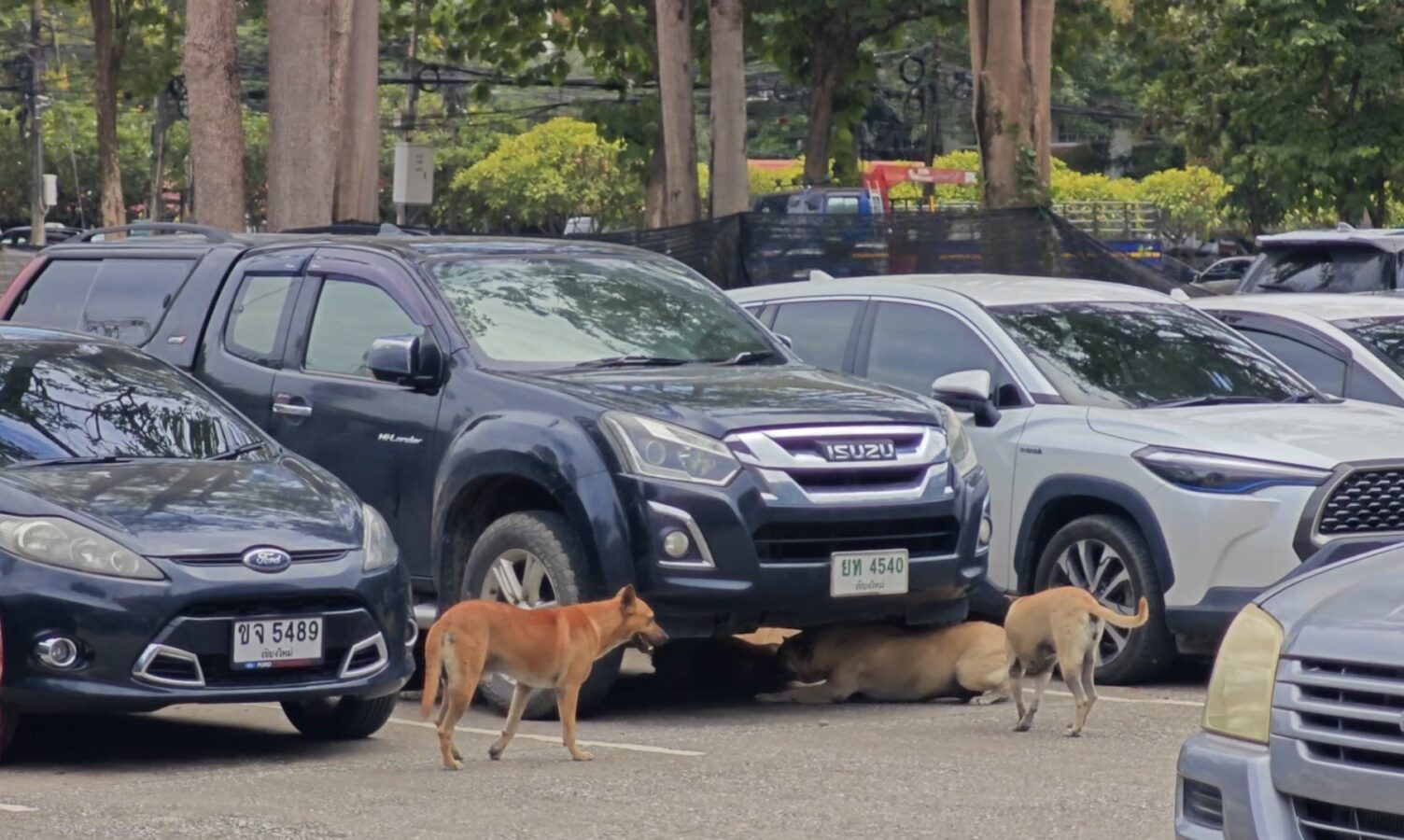
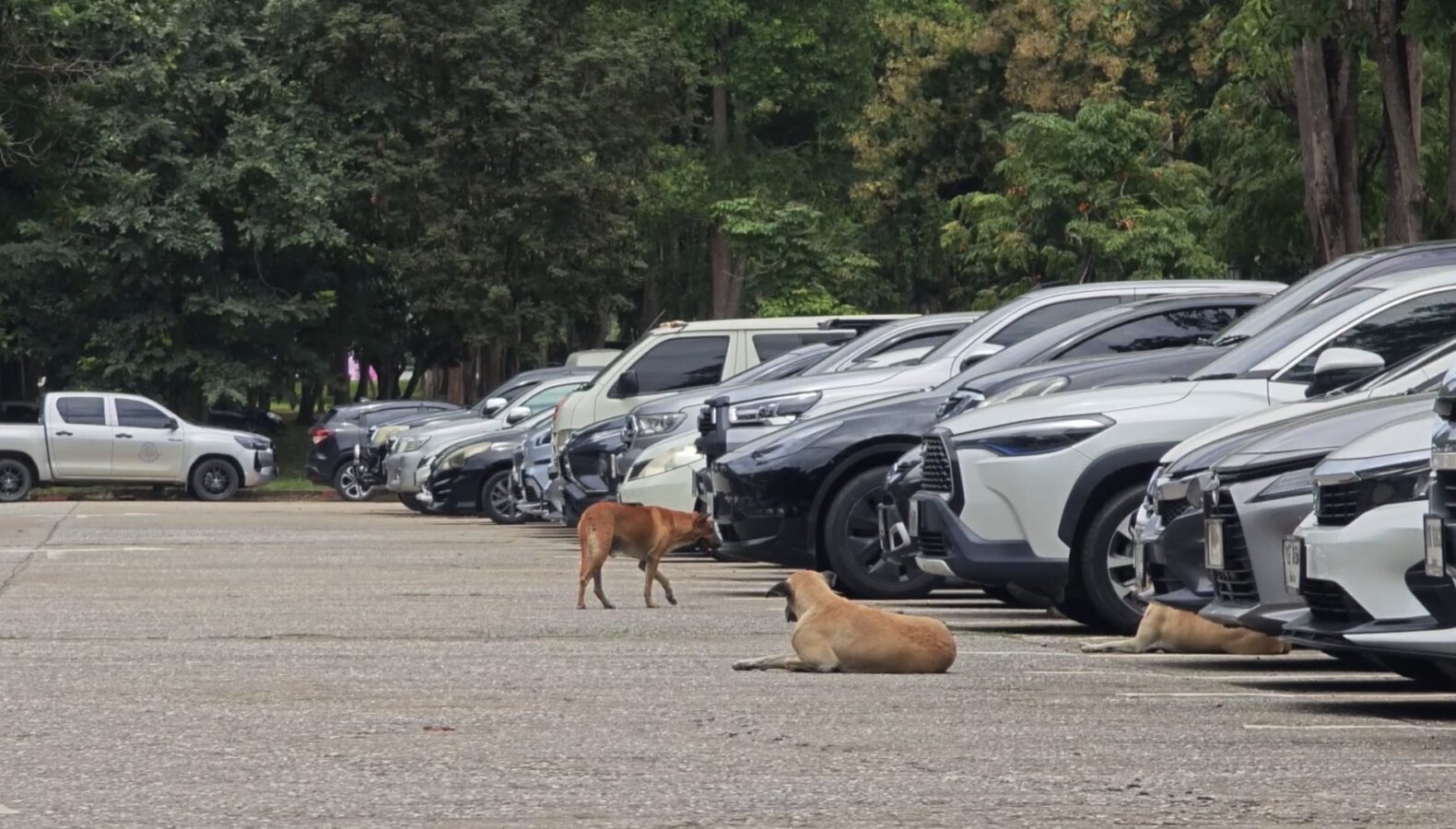
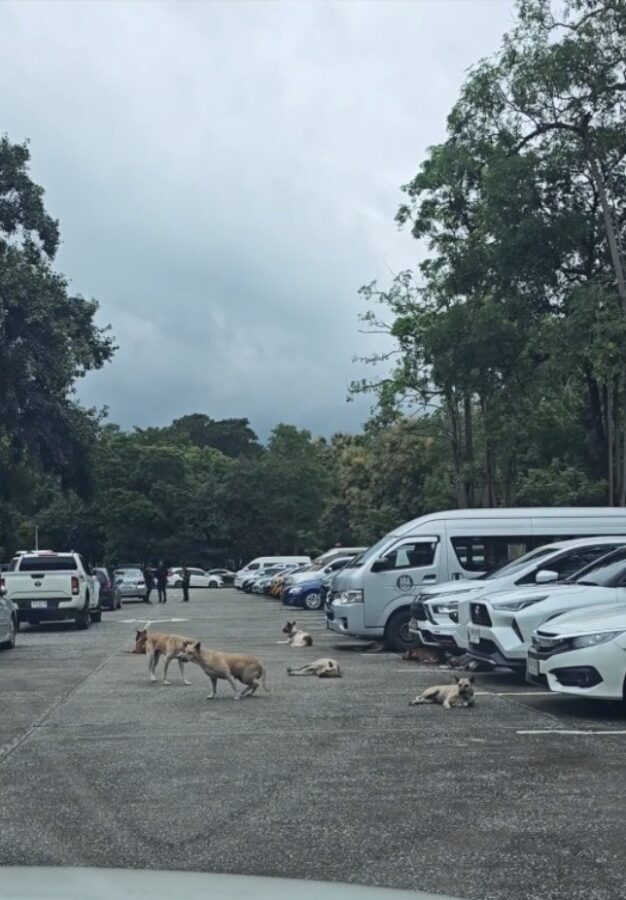
Members of the public visiting the government centre filmed the strays, which have made the car park their home, tearing into the seats of two parked motorbikes. Passers-by who tried to chase the dogs off were ignored, and nobody dared get close given the animals’ aggressive reputation. Dozens of dogs now occupy both the car and motorbike parking areas, with some sleeping in the middle of the road, forcing traffic to swerve around them, and others bedding down under parked cars, leaving owners to approach their vehicles with caution. On the day reporters visited, footpath repairs had temporarily pushed the dogs out of the motorbike area and into the car park instead.
The problem has built up over years, fed by people dumping unwanted dogs at the site and well-meaning locals feeding them, which keeps the animals from moving on. Past incidents have included damage to motorbike seats and car bumpers, and at least one person has been bitten.
Thanita Khuenta, director of the Chiang Mai Provincial Office’s General Administration Group, and Dr Phirun Chutiphongwiwek, a senior veterinarian with Chiang Mai Municipality’s Public Health and Environment Office, have jointly announced a six-month action plan. It includes registering every dog in the area, organising designated feeding points to stop dogs congregating in high-risk spots, a sterilisation and vaccination drive, relocating aggressive or dangerous dogs to shelters, and stricter enforcement of public health and animal welfare law, particularly around uncontrolled feeding and dumping of animals at the site.
A longer-term three-to-ten-year plan will focus on population control, preventing new generations of strays, setting up a dedicated task force for the site, promoting adoption, installing CCTV at risk spots and monitoring against further dumping — all aimed at making the government centre a safe, orderly public space.