

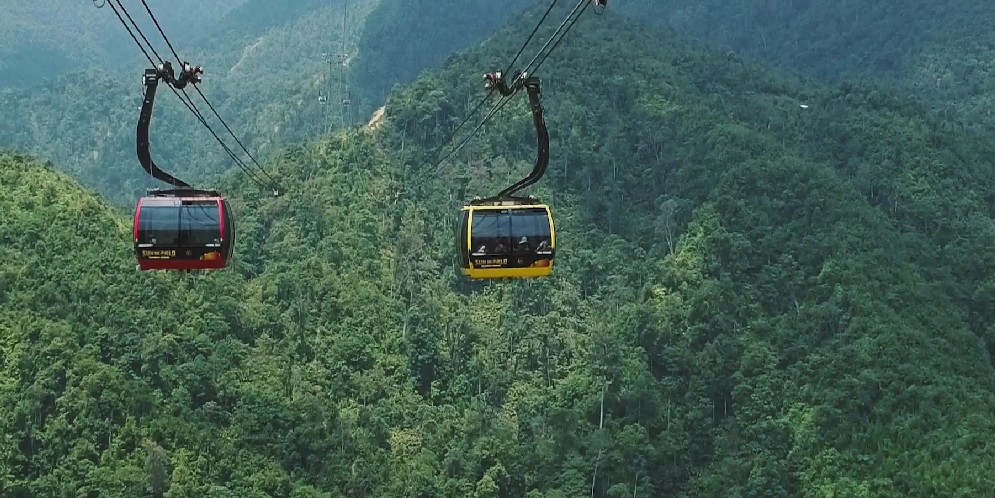
After almost six decades of debate, a new public opinion survey commissioned by the Chiang Mai Chamber of Commerce and conducted by the National Institute of Development Administration (NIDA) has revealed overwhelming public support for the proposed Doi Suthep Cable Car project signaling that Chiang Mai is ready for change.
The comprehensive poll indicates that 82.7% of the general public in Chiang Mai now enthusiastically support the initiative, which aims to enhance tourism, stimulate the local economy, and promote environmental sustainability.
Support was particularly strong among tourists (87%) and residents of the city and suburbs (87.5%). A minority (11.57%) declined to support the project, largely due to lack of awareness of key issues and were mostly represented by local traders and transport operators at top and bottom of Doi Suthep road who were concerned with loss of livelihoods and as well as environmental impacts. A small number (5.71%) failed to respond or their responses were unknown.
The survey was undertaken to provide detailed insights to assist in effective project planning and to ensure that the voices of the Chiang Mai community are properly represented and their concerns addressed in project development.
The survey’s findings highlight several key positive impacts anticipated from the cable car system:
1. Meeting Tourism and Transportation Needs: The cable car is seen as an innovative solution for public transport, urban mobility and tourism offering a new experience, convenience and reduced travel time. The cable car will create a new tourism landmark and a magnet to attract both foreign and Thai tourists who enjoy exciting views and nature. Over 63% of respondents indicated they would use the service if available and affordable.
2. Economic Stimulation: The project is expected to cater to diverse age groups (36-60+ years old were particularly enthusiastic), and 36-45 years old) and attract visitors with strong purchasing power, thereby boosting the local economy.
3. Environmental Protection and Public Health: By offering an alternative to private vehicles currently used by 77% and “Songtaew” taxis used by 10% of visitors to Doi Suthep, the cable car system can significantly reduce air pollution from exhaust emissions, noise, traffic congestion and accidents, contributing to a more sustainable environment and improved public health for Chiang Mai residents.
A significant number of survey respondents raised concerns about the importance of ensuring cable car systems were safe and that they were sourced and maintained professionally in accordance with the highest international standards. In this regard, it should be noted that the most experienced global cable car manufacturers are based in Europe, where cable cars have been used for over 100 years and where they must strictly adhere to the highest safety and environmental standards. The importance of safety and maintenance was emphasized to the Chiang Mai Chamber of Commerce
during the visit of Doppelmayr Group, the leading global manufacturer of cable cars and ropeway systems from Austria, to Chiang Mai in June 2025.
Follow up surveys and public consultations will still be required in order to select the most suitable route for the cable car up Doi Suthep. For example, feedback from the public on the “Doi Suthep Cable Car” Facebook page show that among the thousands who support the cable car project there is difference in opinion concerning the precise route to be taken by the cable car.
Dr. Kobkit Issarachevawat, Chairman of the Chiang Mai Chamber of Commerce, articulated the vision behind the Chamber’s involvement:
“Our support for this study is rooted in the belief that a city’s progress is measured by its ability to evolve without losing its soul. The NIDA poll results demonstrate a clear public desire for modern solutions, but as representatives of the business community, we view this not merely as a commercial venture, but as a commitment to ‘Balanced Development.’ We must ensure that infrastructure serves as a bridge between our glorious past and a sustainable future. Modernity must never overshadow our cultural heritage; rather, it must provide the means to preserve it more effectively for generations to come.”
Mr. Sughrit Kraseirsook, Deputy Secretary General of the Chiang Mai Chamber of Commerce and a dedicated conservationist, added a focused perspective on the project’s operational necessity:
“As a conservationist, I view this project not as a final solution, but as a potential
catalyst for a ‘Greener Chiang Mai.’ While it offers a path to reduce carbon emissions and allow the forest to recover, construction alone is not success. The true measure of this project will be its governance. It is vital that we implement rigorous management protocols to safeguard our sacred culture, execute world-class waste management systems, and launch strategic campaigns to ensure the public truly transitions to this green mode of transport. We must stand firmly on the principle of ‘proper management for conservation’ to ensure that this development serves both our environment and our heritage without leaving anyone behind.”

The aim of the NIDA poll survey for the Doi Suthep cable car project was to gather feedback from stakeholders concerning their support for the project. The data obtained will be used to enhance project planning and ensure decision making aligns with public needs and the promotion of sustainable development. This project was completed with the cooperation of the Chiang Mai Chamber of Commerce, who helped define the study’s framework and methodology and provided valuable advice.
For more information about the Doi Suthep Cable Car project, please visit www.doisuthepnext.com and www.facebook.com/doisuthepcablecar
Contact: Sakda Darawan Senior
Consultant/Coordinator
[email protected] / 0811168350